Eerie Alencar and the Orchard-Room Where Her Seeds Fell Quiet
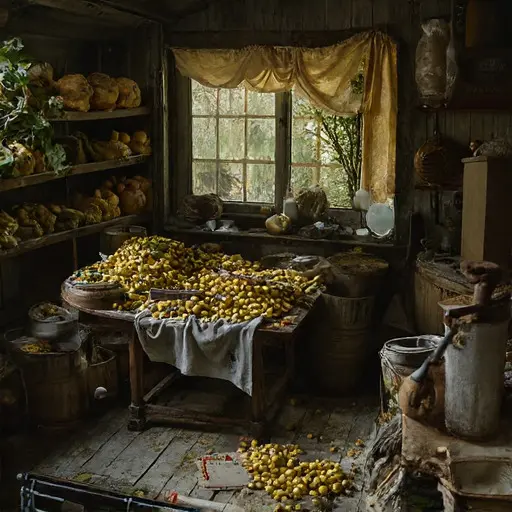
A dim, resin-scented quiet spreads through Alencar House, centered in the abandoned orchard-room where Helena Vitória Alencar, a Brazilian horticultural selector who experimented with seed variation at home, once examined tiny differences in rind and pit. Now the faltering pulse across her last envelope remains the softest trace of a decision she could not complete.
A Pulse in the Selector’s Gentle Method
Helena, born 1878 in Bahia, learned fruit-lineage study from her father Artur Alencar, whose cracked seed gauge sits crooked on the table.
Her afternoons unfurled in unhurried routine: slicing fruit by lamplight, weighing seeds in a tin scale, recording traits in a narrow, looping hand. Her order lingers—glass jars grouped by yield, pulp cloths folded into squares, knives aligned beside the sorting board. Even the curve in the wicker chair recalls her posture, bent forward as she tested patterns that promised more than they proved.
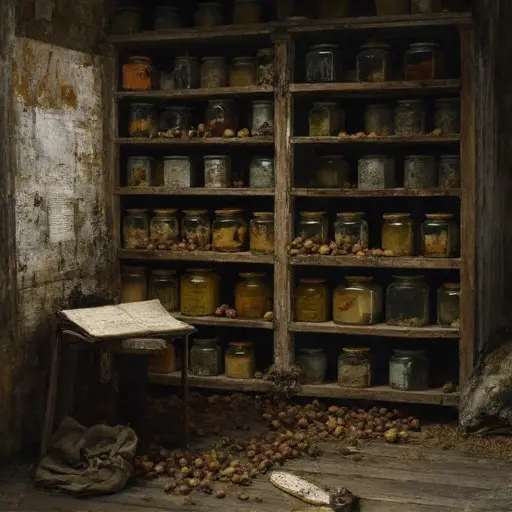
When Her Study Drifted Out of Season
Whispers suggested Helena recommended a promising seed line to a neighbor’s small grove—one that later yielded poorly and sparked quiet disappointment. In the narrow hallway, Artur’s seed gauge case lies torn at the seam. A folded note rests on the console, its final figures overwritten. A jar of pulp samples has tipped over, leaving pale flecks across the boards. A draft labeled “Yield Ratios” has slid beneath a doorframe, margins streaked by hurried revision. None of it confirms misjudgment, yet each sign leans toward a burden she carried alone.
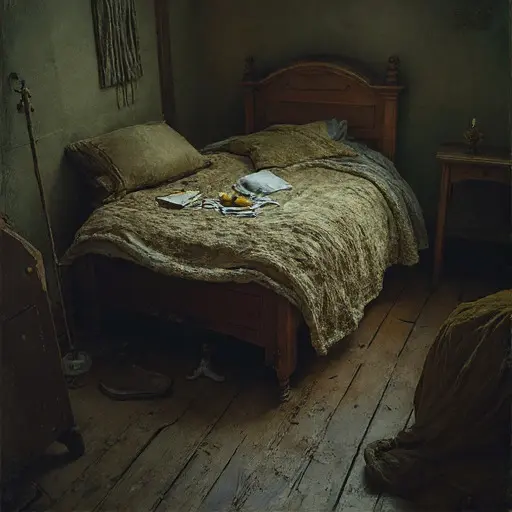
Only the wavering pulse of ink on her final envelope remains—an unfinished appraisal folded into quiet. Whatever stilled Helena’s study lingers in these abandoned rooms.
Alencar House remains abandoned still.