Hidden Jafari and the Cedar Study Where His Measures Dissolved
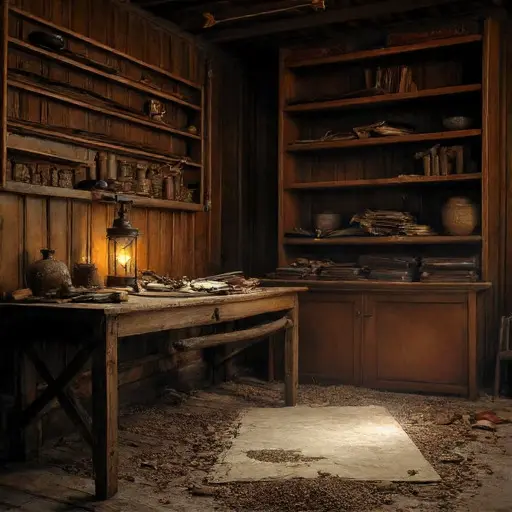
A muted hush drifts through Jafari House, thickest in the abandoned cedar study, where Farhad Karim Jafari, an Iranian caravan accountant, once shaped meticulous tallies beneath domestic lamplight. Now the smudged grain at the base of his unfinished column whispers of an answer he approached, then left to silence.
A Grain Inside the Accountant’s Measured Routine
Farhad, born 1870 in Shiraz, learned reckoning from his uncle Bahram Jafari, whose cracked abacus remains near the desk’s leg.
His evenings followed strict rhythm: ink warmed by a lantern, beads tapped in steady cadence, receipts stacked with almost ceremonial precision. Order lingers—weights arranged by value, quills trimmed to needle-like points, margin notes aligned in disciplined rows. Even a slight depression in the cedar grain marks the usual spot where his elbow rested when he paused to reconsider a troublesome sum that refused to sit cleanly in sequence.
When His Sums Drifted Beyond Control
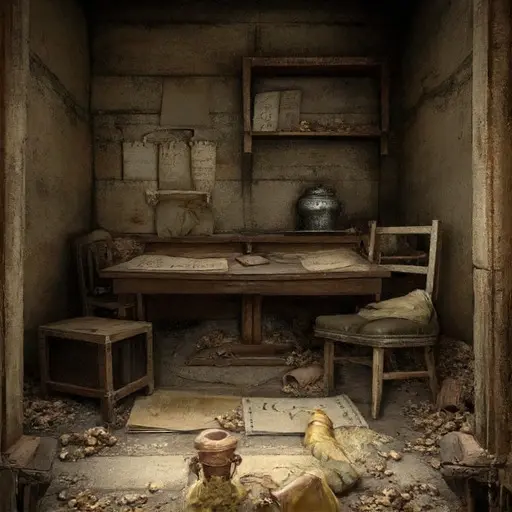
Rumor claimed Farhad misrecorded a merchant’s caravan weights, provoking disputes over duties owed along the route. In the upper hallway, Bahram’s abacus pouch lies torn beside a dented lantern cage. A rolled invoice sits crushed under the console, its seal fractured. A correction sheet has fallen near the stair tread, its final figures overwritten to near-illegibility. A loose bead from an abacus track gleams faintly beneath a cracked tile. None of it declares guilt, yet each sign inclines toward a mind shaken from its once-steady proportions.
Only the broken grain of ink on his final column remains—an unresolved measure suspended in quiet air. Whatever stilled Farhad’s sums endures in these abandoned rooms. Jafari House remains abandoned still.