Silent Endō and the Tatami Study Where His Inks Lost Their Course
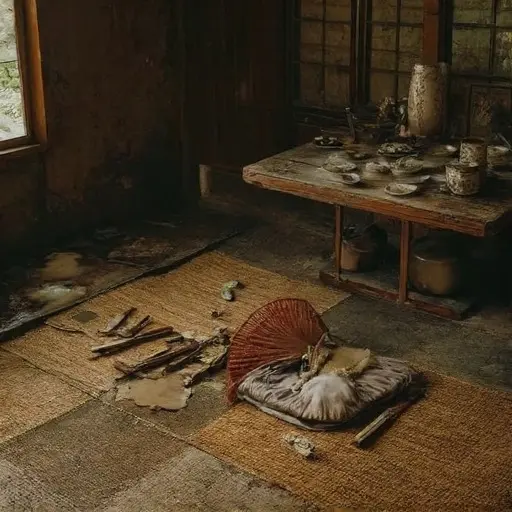
A tempered hush rests inside Endō House, gathering most densely in the abandoned tatami study, where Shigeru Masayoshi Endō, a Japanese railway clerk turned aspiring calligrapher, once used household quiet to shape characters of careful weight. Now the wavering stroke near the screen whispers of hesitation he never dared to voice.
A Stroke Within the Calligrapher’s Gentle Routine
Shigeru, born 1879 in Nagasaki, first practiced brushwork under his aunt Keiko Endō, whose cracked inkstick lies beside the writing table.
His evenings flowed through humble patterns: grinding ink in patient circles, cooling tea in a chipped cup, rehearsing kanji in steady sequences across repurposed receipts. His sense of order lingers—brushes grouped by bristle strength, paperweights arranged like small sentinels, inkstones rinsed then set to dry on linen cloth. Even the fold in the tatami bears the imprint of his kneeling posture, angled toward the margin where meaning often gathered.
When His Discipline Drifted from Its Line
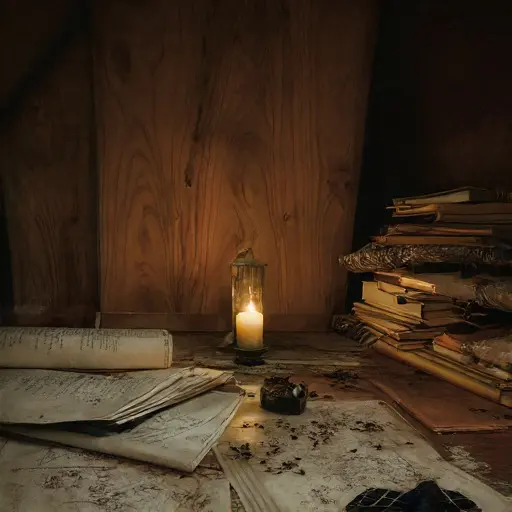
Whispers murmured that Shigeru miswrote a ceremonial inscription for a merchant’s family, altering a crucial character and sparking quiet offense. In the narrow corridor, a fallen ink pot leaves a splotch darkened to rust. Keiko’s cracked inkstick shows a fresh chip along its edge. A folded cloth, stiff with dried ink, slumps near the stair rail. A page bearing rehearsed kanji has slid beneath a chest, its final lines trembling from a hurried hand. None of these details confirm his misstep, yet they lean toward a burden he could not quite articulate.
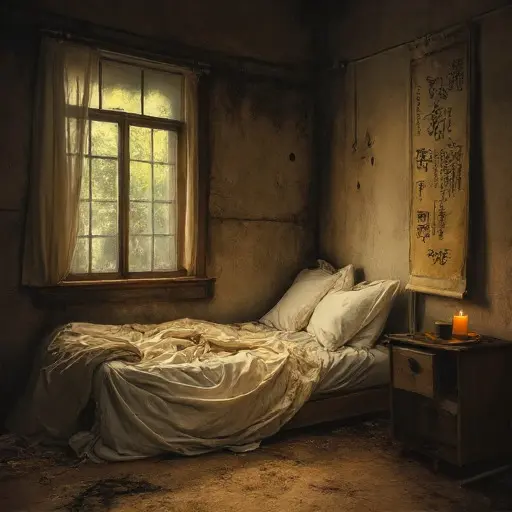
Only the wavering stroke by the screen endures—an unfinished gesture poised on the brink of clarity. Whatever stilled Shigeru’s final character lingers inside these abandoned rooms.
Endō House remains abandoned still.