Veiled Azevedo Signal Room and the Note That Shifted
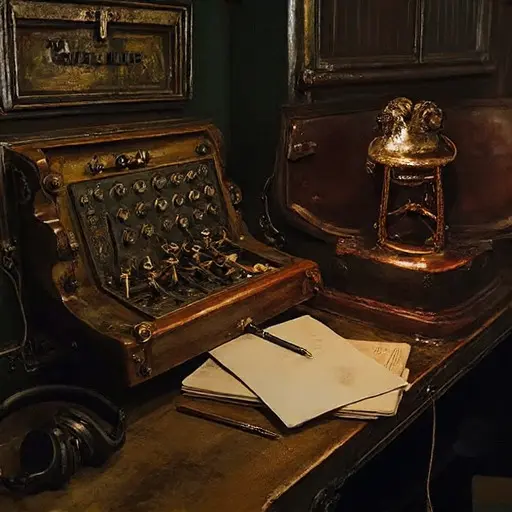
A close hush gathers in Azevedo House, wrapped inside the signal room, where dust dulls the lamp’s reflection. Here Raimundo César Azevedo once trained his ear to the subtle cadence of distant clicks. Now the note left on the desk holds the room in a breath, hinting at trouble that crossed the line before he could answer.
A Signal Through His Steady Practice
Raimundo, telegraph operator, born 1878 in Belém do Pará, favored precision shaped by Amazon river trade routes. A small gourd maraca gifted by his sister Isadora Azevedo rests beside wire spools wrapped in jute. His days spun in careful sequence: morning calibration of coils, midday message relays, evening verification of long-code passages. Evidence of this routine lingers—sounders aligned by height, spare keys cushioned in cloth, and punched slips sorted in tidy layers that echo his patient temperament.
When His Line Began to Fray
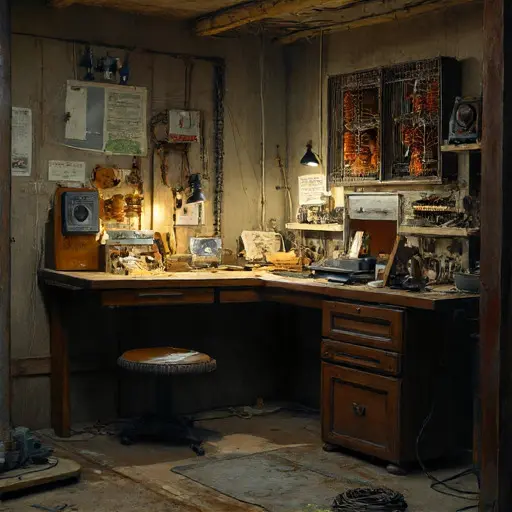
Late in the season, a shipping agent accused Raimundo of misrouting a crucial cargo alert. In the supply niche, a bundle of punched tape lies torn where teeth misfed; the fragment’s end is darkened as if grasped too tightly. A cracked earpiece rests on a folded uniform sleeve he never reclaimed. Isadora’s maraca bears a small dent along its rim, not matching any tool nearby. A message slip, half-decoded, shows jittered markings that drift from his normally even hand.
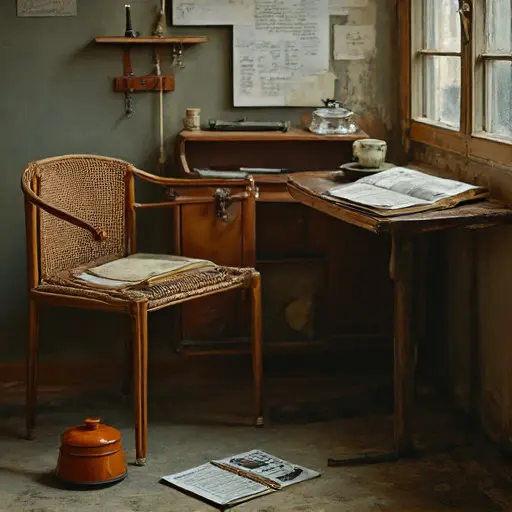
In the end, the folded note remains, its kink deepening the longer it waits. Whatever compelled Raimundo to stop mid-message left only this slight shift, preserved in the room’s strained stillness.
Azevedo House remains abandoned still.