Silent Armitage Clock-Cellar and the Gear That Jammed
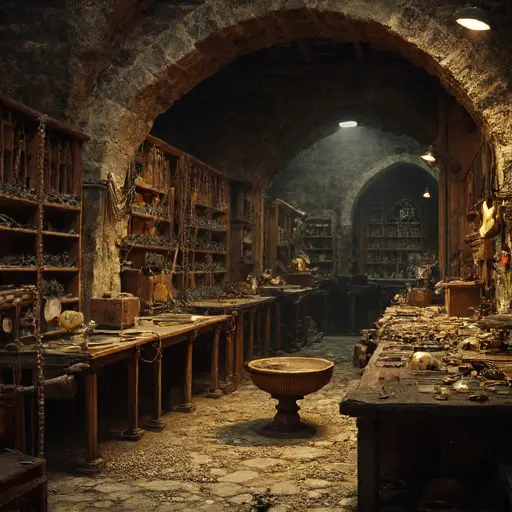
A muted dusk settles through Armitage House, deep within the clock-cellar, where metallic scents cling to stone. Here Nathaniel Pierce Armitage once coaxed stubborn mechanisms into ordered cadence. Now one jammed gear sits crooked in its vise, holding the room in a breath it cannot release.
Even the lantern’s dim arc feels stalled, as though the air itself hesitates.
Pulse in a Mechanic’s Calling
Nathaniel, clock mechanic, born 1879 in Manchester, carried his craft with reserved pride. A tin of suet oil rests beside a caliper marked by his father Henry Armitage’s initials. His routine favored precision: morning cleaning of escapements, afternoon balance checks, late-night tuning of chimes brought from mills. His benches still show this: tools aligned by tooth-count, rag cloths folded neatly, small weights arranged in predictable rows. These fragments echo the steady temperament he guarded throughout his quieter years.
When His Rhythm Failed
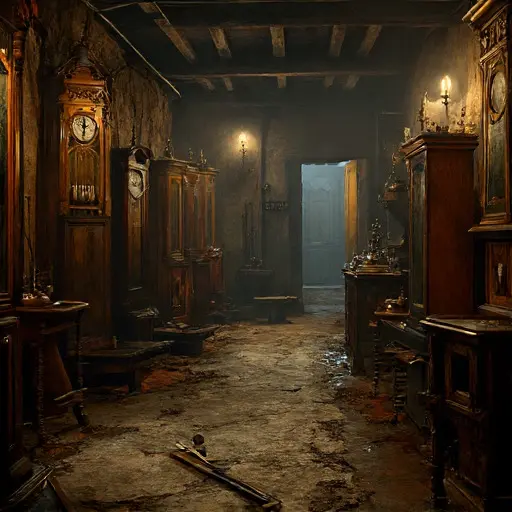
Whispers spread that Nathaniel misaligned the striking train in a factory’s prized regulator. In the supply alcove, a mainspring tin is dented deeply. Filings scatter beneath a fallen drift punch; Henry’s monogrammed tin shows a fresh scratch across its lid. A set of balance screws lies spilled in a crooked arc, brushed aside during a tense moment. A ledger scrap bears ink blurred by an uneven stroke, hinting at a trembling hand. None of this clarifies the jammed gear gripping the vise, defying the cellar’s practiced order.
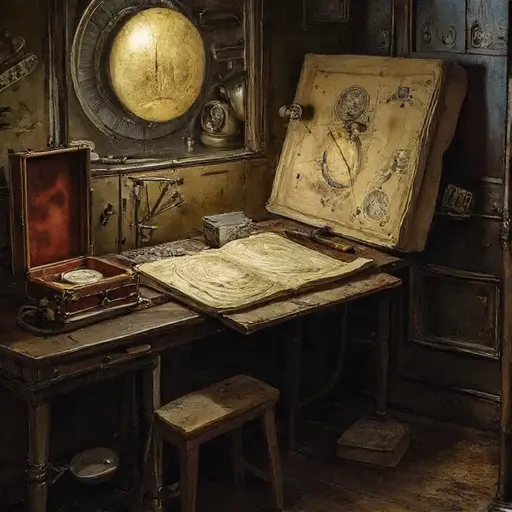
In the end, only the crooked gear remains, refusing every imagined correction. Whatever halted Nathaniel’s final repair lingers in the cellar’s weighted hush, holding its meaning just beyond reach.
Armitage House remains abandoned still.