Lost Koenig Music Room and the Score That Stopped
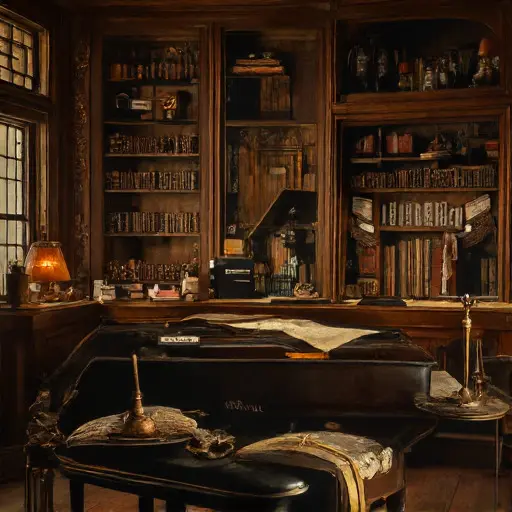
A softened hush hangs in Koenig House, tightened within the music room where dust gathers along the piano’s curve. Here Matthias Albrecht Koenig once coaxed harmony from stubborn strings. Now the last score waits open, its penciled crescendos dimmed by stillness, as if breath withdrew before the next chord could form.
A Lilt in the Piano Tuner’s Days
Matthias, piano tuner, born 1873 in Leipzig, shaped his life around tempered intervals. A porcelain stein painted with Saxon shields rests near cotton mutes; his sister, Elsa Koenig, stitched the embroidered cloth draped over the fallboard. Mornings began with fork tests at the cabinet, afternoons spent refining action parts, evenings adjusting practice uprights for local students. His discipline lingers: leather pouches labeled with meticulous care, hammers sorted by hardness, spare keys arranged in quiet expectation.

When the Work Drifted Off-Key
As winter deepened, Matthias struggled with bouts of dizziness. Complaints grew from clients that their pianos sounded “uneven,” contrary to his reputation. In the side corridor, a fork lies bent at its stem, wrapped in cloth he never tied. A practice keyboard shows uneven wear, its middle octaves rubbed down to bare wood. Elsa’s stitched cloth bears a scorch at one corner, not matching any lamp nearby. On the piano’s rim, smeared grease marks trace a gesture that halted abruptly, as though steady hands faltered at a critical note.
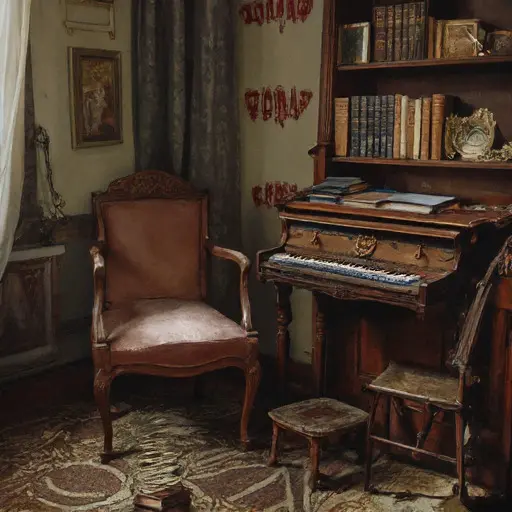
Only the open score remains, its penciled markings softened into near silence. Whatever pulled Matthias from his craft left no decisive clue—just the unfinished passage waiting for hands that never returned.
Koenig House remains abandoned still.