Haunting Kuroda Tea-Room and the Cup That Cooled
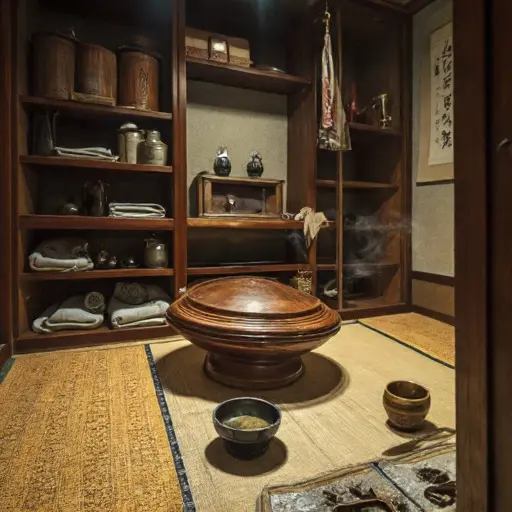
Silence settles inside Kuroda House, held close within its tea-room, where light descends in soft planes over cedar beams. Here Haruto Masanori Kuroda once practiced the choreographies of tea, each movement restrained, each sound controlled. Now, the cooled bowl waits at the room’s heart, holding the careful calm of a ceremony interrupted.
A Trace of His Devoted Craft
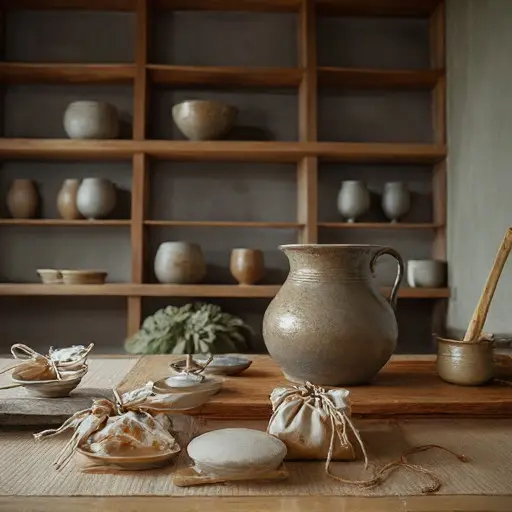
Haruto, tea master, born 1870 in Kyoto, carried the precision of an artisan dedicated to harmony and measure. A small incense case carved in chrysanthemum motifs hints at his upbringing; a brocade pouch embroidered by his sister Aiko Kuroda rests beside the brazier tools. His days followed structure: selecting seasonal ceramics at dawn, blending matcha by afternoon, preparing intimate evening ceremonies. His implements remain ordered—handled ladles aligned on folded cloths, bowls rotated for purity of line, waste-water jar poised just off-center by design.
Where the Ceremony Faltered
During his later years, Haruto faced whispers that a noble client considered his tea “unsettlingly bitter.” In the prep niche, a caddy is overturned, spilling green dust in a thin line toward the hearth. A ladle’s bowl bears a hairline fracture, wrapped with thread he had not finished knotting. Aiko’s brocade pouch shows a torn corner, its drawstring snagged on the brazier stand. A set of calligraphy tags marking seasonal selections has been shuffled out of order, edges smudged as though corrected and re-corrected with mounting unease.
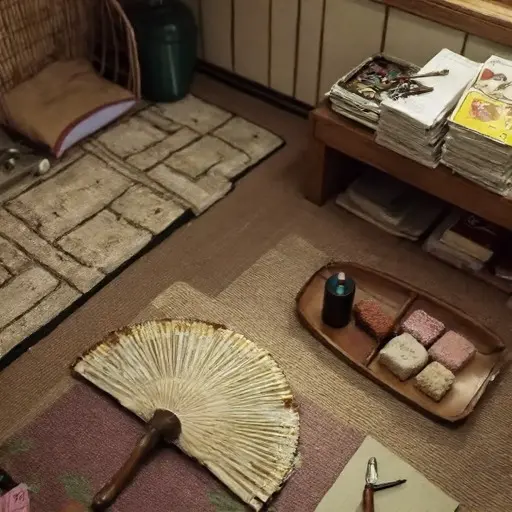
In the end, the cooled bowl remains, carrying only the faint trace of its last whisked surface. Whatever stirred Haruto from his ritual left no clear answer—only quiet, suspended intent.
Kuroda House remains abandoned still.