Hidden Bellini Attic Study and the Curtain That Shifted
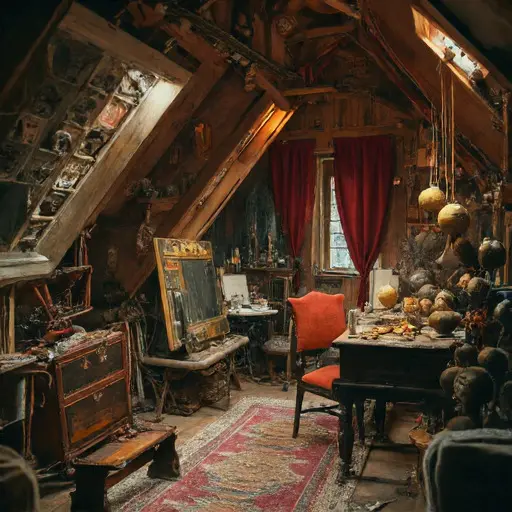
The beams above Bellini House creak with a hush that is heavier than dust. Within the attic study, brushes remain damp, as though Giovanni Matteo Bellini stepped out only a moment ago. A marionette’s head tilts toward a half-finished stage screen; its eyes, unpainted, follow nothing.
Something in the placement of the puppets—slightly askew, edges touching—suggests a night when intention faltered, and silence settled where movement should have been.
Echoes in the Marionette Maker’s Past
Giovanni, marionette maker, born 1875 in Florence, carried the poise of a modest artisan. A Florentine pietra-dura box near the stairwell hints at his origins; beside it rests a child’s wooden tambourine, signed by his niece Rosa Bellini. His days unfolded in ritual: mixing pigments at dawn, carving light-grained linden in the afternoon, testing joint motion by lamplight. Here lie clues to his method—chisels aligned with near-religious order, tiny lead counterweights labeled in a graceful hand. Neighbors once admired his traveling stages, but the intimate shows held in this loft remained his fiercest devotion.

When the Echo Broke the Line
In Giovanni’s later months, a tremor in his hands worsened. A physician’s bill tucked beneath a cracked palette reveals failed treatments. In the narrow stair nook, one puppet frame hangs twisted, its strings tangled around a baluster as if caught during sudden frustration. Rosa’s tambourine bears a dent that does not match its soft wood. A costume trunk shows signs of water damage from a spill he never cleaned; its mildewed hem carries the scent of something undone.

When all is sifted, only the curtain’s subtle shift remains—a sign of a last rehearsal aborted, perhaps by fear, by illness, or by farewell left unsaid. No final clue resolves the moment Giovanni walked away.
Bellini House remains abandoned still.