The Haunting Sørensen Workroom and Its Unwound Hour
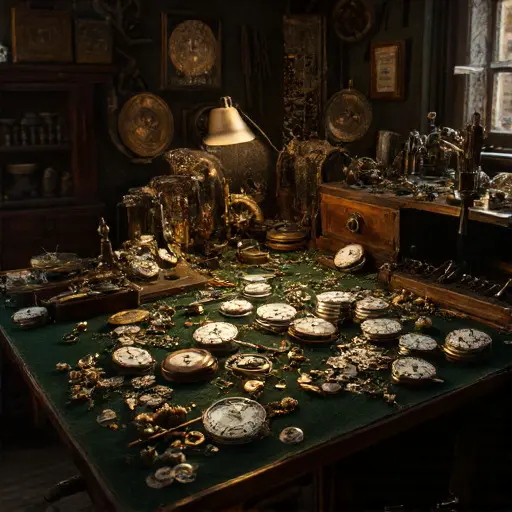
The quiet here draws inward, past the ticking that no longer moves. In Sørensen House, the workroom breathes a shallow hush, its air tinged with oil and tin polish. A chair is pulled slightly away from the bench, as if someone rose in haste.
A single pocket watch lies open, its spiral spring unseated and trembling faintly when the floorboards settle. Nothing explains why this careful room froze mid-task, or why its rhythm ended at all.
A Life Set to Fine Teeth of Brass
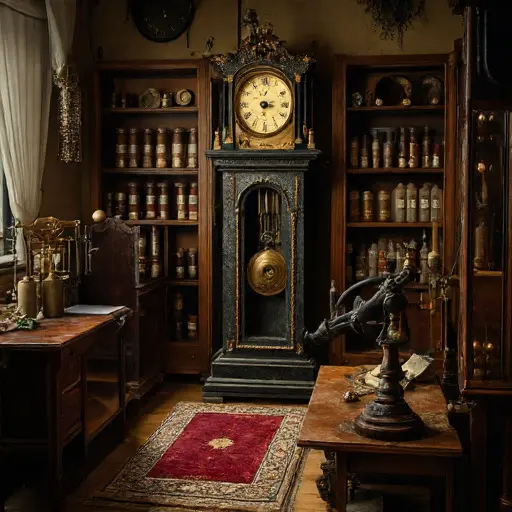
Edvard Leif Sørensen, watchmaker, born 1872 in Bergen, refined mechanisms with scholarly reserve. Modest, provincial furniture hints at a Norwegian upbringing—pine drawers, embroidered cushions, a hymnbook tucked beside a metronome. His mother, Signe Sørensen, once visited often; her spectacles remain folded on a corner tray. Edvard’s routine was steady: morning calibration, afternoon repairs, evening journaling of measurements. The house’s pulse followed his: small tools aligned by intention, clocks chiming in staggered harmony.
Where the Spiral Faltered
Edvard’s decline began in whispers of flawed commissions—tiny inaccuracies that clients swore were unlike him. A cracked gear pinned beneath the bench suggests he forced a repair beyond prudence. In the hall cabinet, correspondence from a litigious buyer is crumpled behind tins of oil. A ledger’s spine is split at an entry he later crossed out with trembling strokes. Signe’s gift, a silver fob chain, is torn and embedded in a drawer seam, as if caught during a sudden movement.
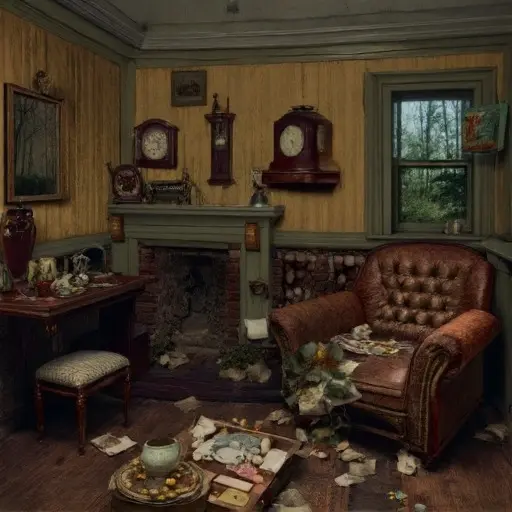
In the end, only the open pocket watch remains: its displaced spring quivers with the slightest draft, hinting at a final gesture—repair attempted, or abandoned. The moment just before Edvard stepped away lingers without verdict, a breath suspended in brass and cotton.
The house offers no fuller truth, and Sørensen House remains abandoned still.