The Hidden Bellini Lasting Stand and the Sole That Shifted

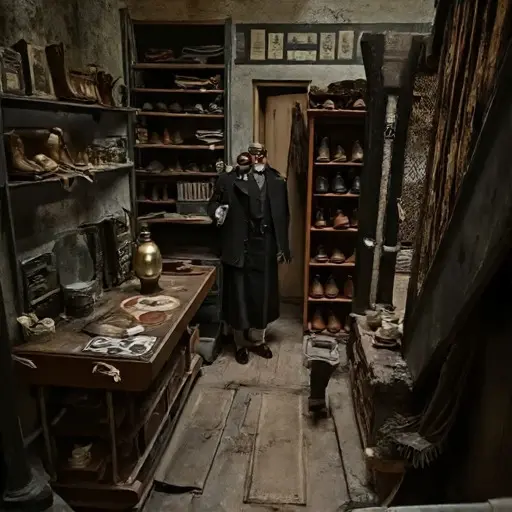
The Shoe Room is hushed, thick with tannic aroma where leather once warmed beneath steady palms. A single upper slumps over the lasting stand, its welt pins holding an uncertain curve. A thin ribbon of thread slips from a bobbin and touches floorboards worn by habitual pacing.
Near the bench, a small notch carved into a heel block marks a point of adjustment he never finished—an interruption quiet enough to unsettle everything around it.
The Working Life of Giulio Matteo Bellini, Shoemaker
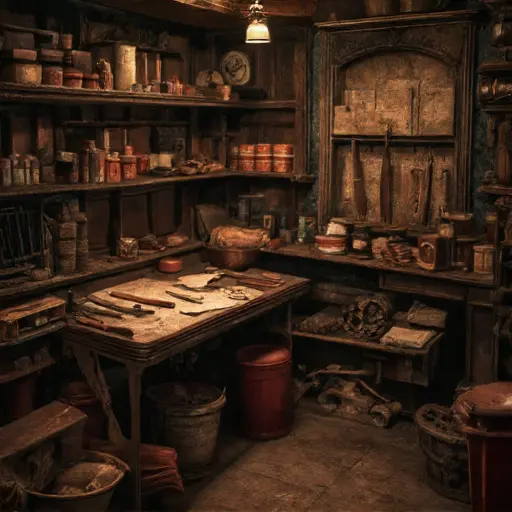
Traces across these rooms recall Giulio Matteo Bellini, born 1875 in Parma, trained in the modest cordwainer shops that valued fit over flourish. In the Tool Alcove, Italian awls and burnishers sit arranged by handle weight; narrow boxes labeled in Tuscan ink shelter heel plates bundled neatly with twine. A row of calfskin hides drape over a cedar bar, their warm, supple fold showing his preference for quality despite modest means.
He rose early to cut patterns by lamplight, spent afternoons stitching welts with steady rhythm, and finished evenings burnishing edges until they glowed. The Front Parlour, furnished but spare, displays shoes he once repaired—pairs with carefully restored seams and softened creases, proof of painstaking care. His temperament seems tranquil yet exacting, revealed in how each tool returns to the same spot with habitual precision.
Where Strain Crept Into His Craft
Disturbances linger in furnished corners. In the Upper Washstand Room, a cracked jar of polish stains the marble top, its leak recent and oddly unattended. A merchant’s invoice tucked behind the basin lists overdue payments for imported hides. His travel satchel lies open on a chair—inside, only spare laces and a rolled leather apron, nothing truly packed. A pair of mismatched lasts—impossible to use together—sit beside the hearth, their positions uneasy, as though discarded after a misfit he could not justify.
The Guest Nook reveals a half-repaired boot, its sole stitched unevenly across one edge. Such asymmetry contradicts everything these rooms say of Giulio’s discipline. Perhaps his eyesight faltered, or accusations of poor workmanship reached him before he could correct the fault. No note confirms it; the air simply drifts in quiet apprehension.
The Notch Hinting at His Final Choice
Returning to the Shoe Room, all unease gathers at the heel block’s tiny notch. The cut is fresh, its edge too sharp to have aged long. Beside it, welt pins scatter in a pattern that does not match his measured habits. A trimming knife lies angled off the bench, its handle marked by a thin smear of polish. On the lasting stand, the suspended upper curls inward, its leather stiffening where moisture dried out—evidence of a pause that stretched beyond intention.
Beneath the lasting stand waits his final attempt: a nearly finished boot whose inner seam falters midway, the stitch length wavering as though his confidence loosened at the last pull. No letter explains the misstep; no voice lingers to clarify why he set the work aside.
The house stays silent, and it remains abandoned still.