The Silent Kovács Darkroom Basin and the Image That Never Formed
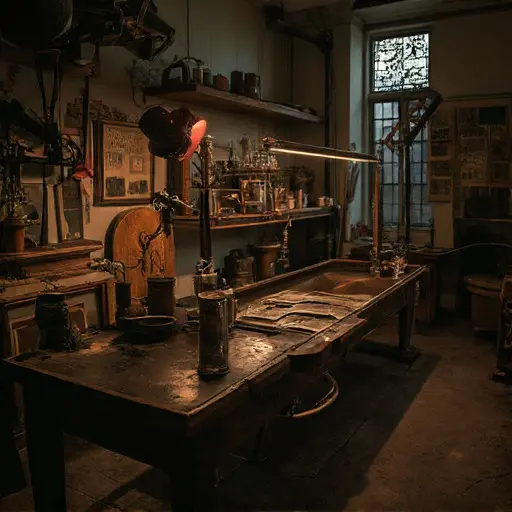
The Darkroom Basin sits perfectly dry, though chemical shadows stain its enamel like faint afterimages. Along the oak table, a strip of glass negative has slipped halfway from its sleeve, its emulsion dulled. A penciled exposure note lies beneath it, smudged where fingertips once steadied themselves.
At the room’s threshold, the weakened hinge groans softly when touched, as if the house remembers someone departing in quiet uncertainty. The displaced balance of tools suggests the work paused for only a moment—yet that moment stretched into years. Even the faint smell of thiosulfate clings to the corners, refusing to answer why the final shutter release left its echo unfinished.
The Lenswork of Miklós József Kovács, Photographer
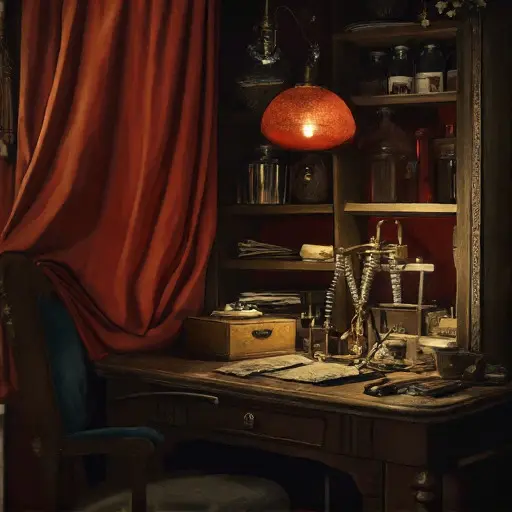
In the furnished rooms, traces of Miklós József Kovács, born 1879 in Szeged, linger in silvered surfaces and Hungarian-labeled chemical jars. The Studio Salon displays velvet backdrops pinned with careful geometry, and a walnut tripod stands near a brass-bodied camera whose focusing rail is worn smooth. He tuned his lenses each morning, aligning ground-glass plates by touch, then spent long afternoons coaxing portraits from hesitant sitters.
Judging by the meticulous order of tint brushes and plate holders stacked by size, Miklós cultivated a calm, solitary discipline. In the Retouching Alcove, graphite pencils lie aligned beside tiny cotton pads stained with delicate tints, revealing his practice of softening harsh shadows on faces. His temperament emerges through precision, restraint, and an almost devotional regard for the purpose of light.
When Subtle Doubts Entered His Craft
Hints of strain touch unexpected corners. In the Upper Wardrobe Room, a travel coat lies atop a chest, one pocket weighted by an unopened invoice from a Berlin supplier; prices for plates had risen beyond what his quiet practice could absorb. A cracked negative frame rests on a blanket, its splinter unclamped—unlike his usual disciplined repairs. In the Guest Chamber, a satchel stands half-packed with smoked glass filters and wrapped bottles of collodion, though nothing suggests a decisive journey. A faint chemical spill crusts along the molding, telling of distracted hands or a moment of faltering confidence that undercut his once fluid routine.
A Shuttered Gesture He Never Resolved
Returning to the Darkroom Basin, the room’s hush dwindles around the smudged exposure note. The glass negative’s emulsion bears a tiny ripple, as if it dried too fast, neglected during a moment of private hesitation. Beneath the oak table, a discarded focusing cloth lies in a loose coil, its edges marked by nervous folds. Even the enlarger’s position feels unsettled—the bellows extended too far for storage, hinting that he stepped away mid-adjustment.
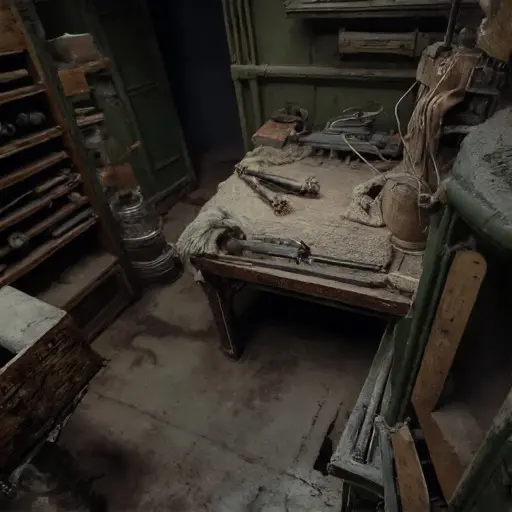
Beneath the basin’s lower shelf rests his final attempt: a single plate whose developed image fades unevenly, the central figure dissolving before it ever truly formed. No inscription clarifies what troubled him—whether light leaked, hands shook, or doubt clouded his judgment in that suspended moment.
The house holds its silence, and it remains abandoned still.