The Eerie Dubois Linen Closet and Its Quiet Division
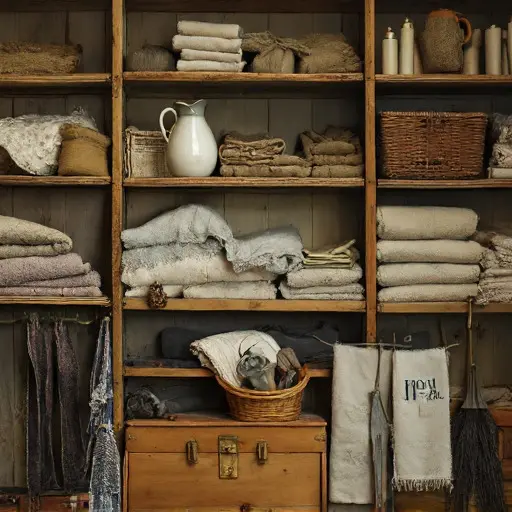
In the Linen Closet, the faint aroma of starch presses into the stillness. A missing towel leaves a rectangular shadow on the shelf, and a spool of thread lies toppled near the threshold, as if nudged mid-task. Nothing is in ruin, nothing in haste—yet every folded edge feels paused.
A hush slips between linens, each crease suggesting a domestic rhythm broken without warning.
Marks Left by Élise Marianne Dubois, Seamstress
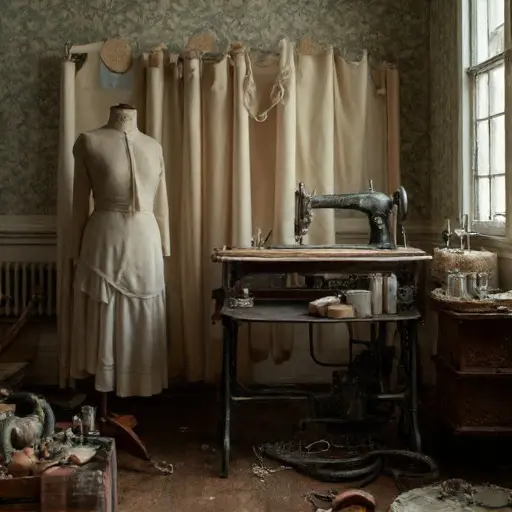
Across the rooms, the quiet presence of Élise Marianne Dubois, born 1879 in Lyon, lingers in stitches and carefully pressed fabrics. Her seamstress’s trade shows in the Workroom, where a treadle machine stands balanced beside a jar of French pins. Pattern papers, annotated in looping script, rest under a tailor’s ham. A box of imported lace—its motifs unmistakably continental—indicates her modest, steady income and scrupulous discipline.
She rose before dawn to hem napkins for clients, then spent late evenings refining bodice seams beneath a shaded lamp. In the Dining Room, chair covers she once reupholstered remain taut, the handiwork even and meticulous. A gentle temperament is implied in the symmetrical spacing of her stitches and the careful storage of chalk pencils, each sharpened to identical points.
A Threshold She Could Not Cross
Signs of strain collect quietly. In the Upstairs Bedroom, a bodice torn at the gusset lies draped across a cedar chest. Its rip is jagged—unlike her usual precision—hinting at shaking hands. A small envelope stamped with an unfamiliar tailor’s mark remains sealed on a nightstand. Perhaps it carried news of a rejected commission or an offer that threatened her livelihood. A thimble bent out of shape sits in a drawer, its dent fresh.
Back in the Linen Closet, the displaced spool near the threshold draws attention. Thread trails faintly toward the floor, looping once around a shelf bracket. A pressing cloth, still warm-stiff, suggests she stepped out mid-fold. The lantern hook overhead shows traces of soot, as if she worked longer hours than she admitted.
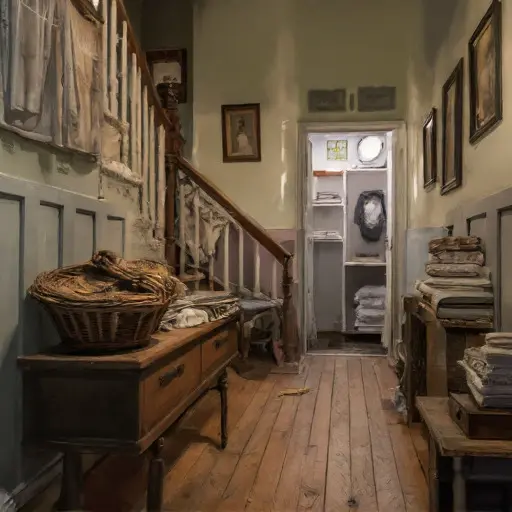
A final cloth tucked behind the top shelf tells the quiet truth: half-hemmed, its running stitch falters midway, the tension pulled uneven. No farewell explains the broken rhythm. No note names the reason she stepped away.
The house keeps its silence, and it remains abandoned still.