The Lost Finnegan Pantry and the Silence of Its Last Meal
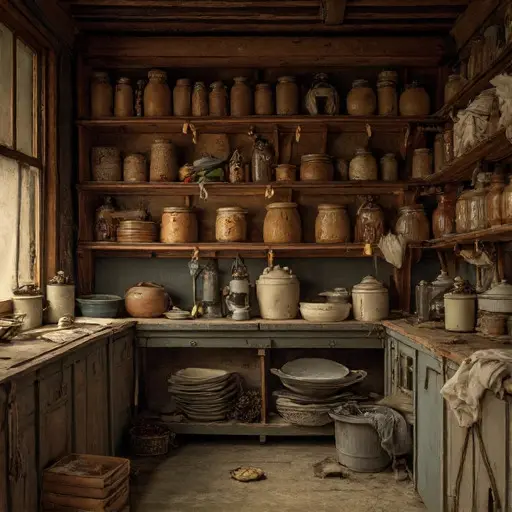
A stovepipe in the Pantry angles awkwardly toward the ceiling, its blackened rim framing a pause that no one explains. From the grooves worn into the long counter to the faint aroma of beeswax on linens, the room stands fully furnished yet emotionally vacant. A wooden spoon left inside a mixing bowl hints at interrupted preparation.
Something here went wrong in ways the house refuses to clarify.
Tracing the Working Life of Máire Catherine Finnegan
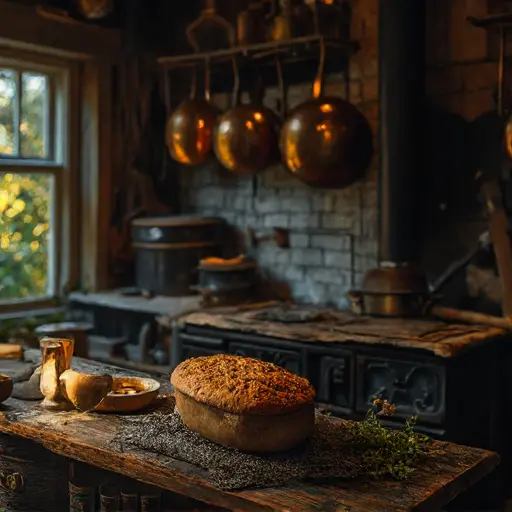
Clues across the interior unveil Máire Catherine Finnegan, born 1874 in County Clare, a respected cook who once served a modest landowning family. Her profession reveals itself in the ordered copper pans dangling in the Kitchen, the meticulous notches on a rolling pin for measuring pastry widths, and a tin of imported tea suggesting quiet pride in small luxuries. Her training appears in the precision of her herb bundles, labeled in Gaelic script, and the steady routines implied by a soot-kissed apron draped over a chair.
Before her decline, she moved through mornings with practiced grace—mixing dough before sunrise, tending simmering broths through midday, and recording portion guesses on slate near the scullery sink. She was patient, deliberate, and known, at least to these rooms, for restoring calm through repetition.
Strains That Gathered Without Warning
Her decline rests in subtleties. A locked drawer in the Buttery was pried open, revealing an empty purse and a folded broadsheet advertising a new culinary school in another region. A cleaver missing from its wall hook hints at hurried choices or perhaps fear. A cracked ceramic serving dish—kept despite the damage—suggests a disagreement she never voiced. Upstairs, a narrow wardrobe in the Servants’ Room holds only sturdy skirts and a single shawl with a tear along the hem, as if caught during an abrupt departure.
The Stovepipe and the Last Attempt at Order
Near the Pantry door, flour dust forms an uneven arc around a toppled jar, and the skewed stovepipe above the counter betrays recent handling. Someone tried to adjust it—maybe repairing a draft, maybe hiding something small behind the shielding plate. The metal is faintly smudged by fingertips that seem both determined and uncertain.
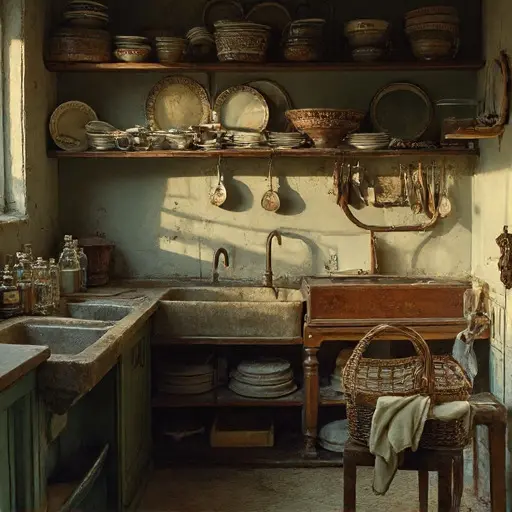
A final detail remains: a small tin of caraway seeds placed neatly beside a folded recipe, the handwriting halting near the end. No note, no farewell—only the suggestion of a plan interrupted. Whatever compelled Máire to leave, the house offers no verdict.
It stands abandoned still.