The Hidden O’Sullivan Letterpress Loft Where the Sorts Slipped from Their Order
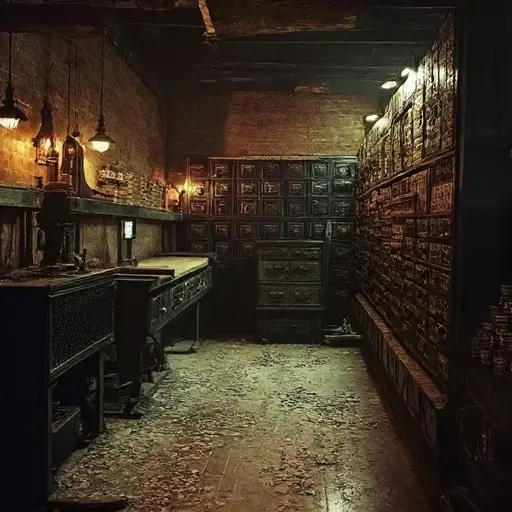
A faint metallic chill lingers in the room. On the central stone, a column of type rises cleanly for several lines before collapsing into irregular spacing, as if the compositor’s eye skipped a beat. A bent “e” lies near a broken quoin.
A tray of ink shows a skin forming over its surface. Nothing violent haunts the loft—only the thinning pulse of precision where logic once held word against word.
A Compositor Trained in Balance, Impression, and Order
This letterpress loft belonged to Declan Aidan O’Sullivan, compositor and small-run printer, born 1870 in County Cork. Raised in a modest household of linen traders, he apprenticed under a traveling printer who taught him to lock type with steady pressure, justify lines by instinct, and let meaning emerge from the calculated quiet between slugs. A faded green thread from his sister, Maeve O’Sullivan, ties a bundle of proof sheets.
Declan shaped his days by the rhythm of metal and ink: dawn sorting of type drawers, midday composing of broadsides, dusk tightening quoins under the lamplight. His workspace still carries the neat authority of habit—chases stacked by size, furniture blocks aligned in tidy grids, ink tins nestled beneath the press. Patrons once admired his broadsides for their clarity and calm restraint.
When Lines Lost Their Bearing
In earlier years, the loft thrummed with subtle industry. Type drawers slid open with sure sound, slugs clicked into neat galleys, and proofs dried along twine lines in crisp alignment.
Soon, disruptions seeped through. A line widens unevenly. A letter flips in mirror reversal. A serif fractures on a dropped piece of type. His commission ledger shows the name of an academic patron written, crossed out, rewritten, then smudged in ink. A clipped Irish note beside it reads: “Deir siad go ndearna mé an téacs a shaobhadh”—they say I twisted the text.
Rumor rolled through print shops: a scholarly tract he printed arrived misaligned—sentences drifting across margins, a key quotation marred by transposed characters. The patron accused him of carelessness bordering on sabotage. Others murmured he refused to reset a passage to flatter the patron’s interpretation, sowing quiet resentment.
The TURNING POINT Locked in Type and Unease
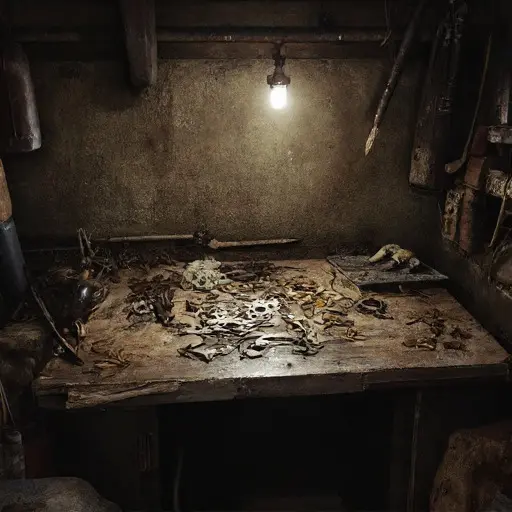
One night left faint but insistent marks. A disputed broadside rests half-corrected on the stone—top paragraphs crisp, lower lines collapsing into unpredictable gaps. A composing stick lies warped near its handle. A chase sits open, one quoin forced too tight, cracking the frame.
Pinned beneath an abandoned proof is a torn scrap: “Iarrann siad cúiteamh don náire.” They demand compensation for disgrace. Another fragment, blurred where ink pooled, reads: “Lean mé an bhrí… diúltaíonn siad di.” I followed the meaning… they reject it. His handwriting staggers downward, spacing widening like breath pulled too thin. Even the type drawers—normally straight as a hymn—sit slightly ajar, their contents unsettled.
Across a side bench, a line of small capitals lies half-sorted, the alphabet breaking off mid-sequence.
A Small Hollow Behind the Type Cabinets
Behind the tall cabinet of minion and pica sorts, a loose panel slides inward. Inside waits a small keepsake chapbook Declan meant for Maeve: the first leaf set with gentle precision, the succeeding leaves blank but lightly penciled for spacing. A folded note, edges ink-smudged, reads: “Do Mhaeve—nuair a dtiocfaidh m’eagar ar ais.” For Maeve—when my order returns. The final word trails into weak, fading strokes.
Beside it rests a pristine bundle of type slugs newly cast, untouched, waiting for the hand that never resumed its craft.
The Last Uneven Line
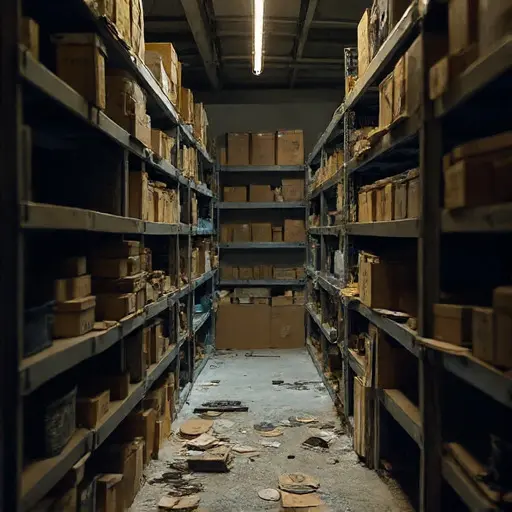
In a shallow drawer beneath the abandoned press lies a test proof: its first lines locked with perfect clarity before the text staggers, spacing widening into a hesitant drift. Beneath it Declan wrote: “Even meaning falters when resolve breaks its order.”
The letterpress loft sinks into ink-scented quiet, words lingering in half-formed alignment.
And the house, holding its abandoned printer’s chamber, remains abandoned.