Varga’s hidden music-room with warped pianola
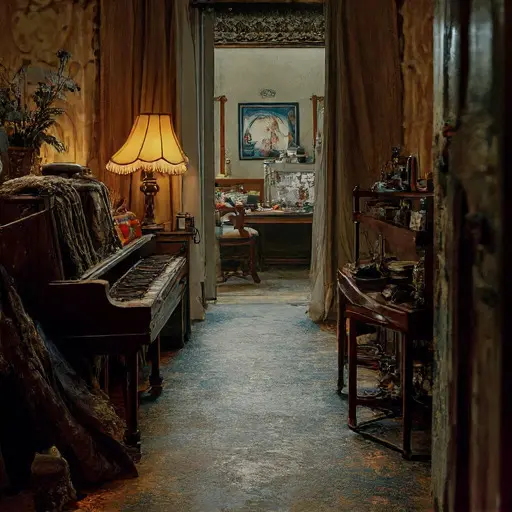
The first thing that clings to the throat is not mold, but a faint tang of resin and old leather—shellac warmed and cooled too many times, and the dry animal sweetness of bellows cloth stored in drawers. It lingers in the Hallway rugs and in the nap of the upholstery, as if the house once depended on that smell to mean employment, supper, and the end of worry. Nothing here is vacant.
Ambition is present in a single object: a small, ornate music roll case lined in velvet, monogrammed not with Varga’s initials but with a patron’s crest. It is the kind of commission that promised prestige—work done not for taverns, but for drawing rooms that demanded perfection. In a drawer, there is a draft of an advertisement, neatly lettered, offering “precision repairs” and “silent action,” the phrases underlined twice as if words could prevent failure.
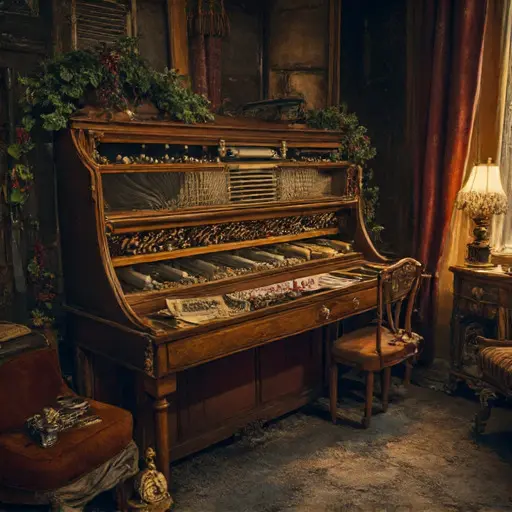
Turning point: the seal across the cabinet door
The rupture is recorded in damage that is too official to be accidental. On the Music Room cabinet, a smear of red wax has soaked into the wood grain, and a torn strip of paper still clings at one end, as if it was meant to forbid touch. The cabinet’s lock plate is scarred by a tool forced under it. A neat square of lighter varnish on the cabinet door shows where a notice was once pasted and later ripped away, taking finish with it.
Ilona’s sewing basket has been pushed into a corner under a chair as if it offended someone. A single glove lies on the floor, fingers curled inward. On the upstairs landing, the nailed carpet strip has pulled loose on one side, lifting like a lip. Small signs of care stop being renewed.
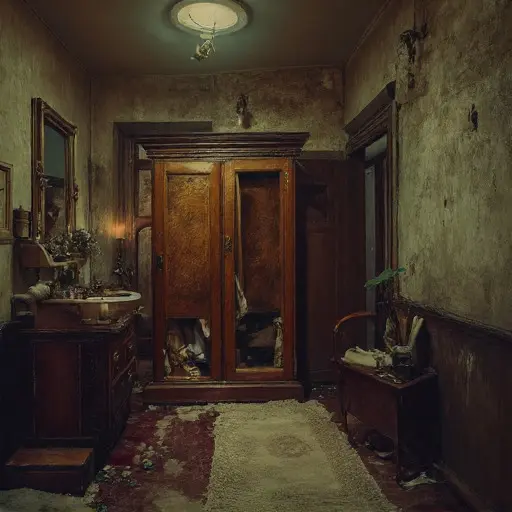
In the Music Room, the most intimate discovery is not a document of accusation, but a single roll still in its tube, wrapped in cloth and tied with a child’s ribbon. The ribbon’s knot is clumsy, tightened too hard—Marika’s hands, not an adult’s. When the tube is eased open, the roll slides out stiffly, its paper swollen by damp but not destroyed. Along its edge, in Árpád’s fine hand, a title is written in Hungarian: “Altató.” Lullaby.
Dust thickens on the ribbon, on the cabinet’s wax scar, on the crescent of worn carpet before the instrument, and the rooms stay crowded with the life that left them; the house remains abandoned.