The Thornhallow House Ledger and the Ash-Stained Chair
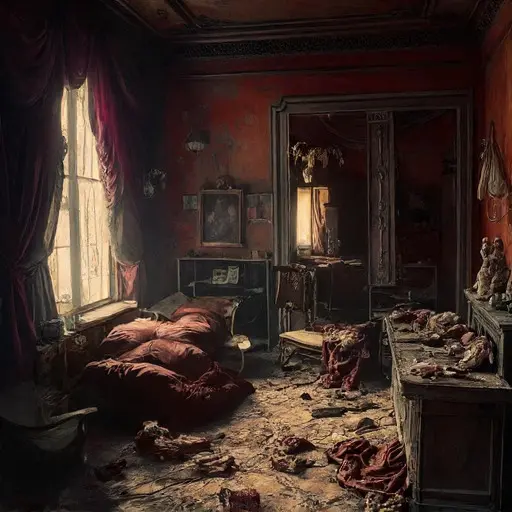
The air inside Thornhallow House is weighted, motionless, and faintly tinged with the metallic scent of cooled soot and the sweetness of decayed upholstery. Each piece of furniture seems anchored by stillness rather than placement. There is no sense of sudden departure—only the long settling of routines abandoned over months, then years, until the house drifted fully into silence.
The Quiet, Ordered Life of Reginald Bram Thornhallow
Reginald Bram Thornhallow, a district tariff clerk known for his restrained speech and immaculate handwriting, lived here with his wife, Celeste, and their daughter, Marianne. Reginald’s work demanded calculation: ledgers balanced to the penny, petitions logged precisely, and correspondence copied in ink so fine it reads now like threads across old paper. His habits permeated the house—tools arranged by size, account books wrapped neatly in muslin, household receipts sorted into labeled envelopes.
Celeste tended the domestic sphere with steady, artistic warmth. Her sewing baskets, recipe notes, and pressed flowers remain throughout the rooms: careful evidence of a life carried with intention. Marianne’s belongings remain too—practiced handwriting exercises, clipped nursery rhymes, a small paintbox with cakes of pigment cracked into intricate geometries.
As administrative reforms tightened Reginald’s workload, the tone of his ledger entries shifted. Early entries are fluid, elegant; later ones become cramped, annotated, sometimes smudged where he paused too long. Celeste’s illness pulled him from both office and home order, and her passing disassembled what remained of his structure. Marianne was sent to stay with relatives. Reginald continued briefly, then faltered—tasks half-finished, letters unwritten, rooms left untouched. Eventually, he left Thornhallow House not abruptly but eroded by quiet fatigue.
The Corridor of Thinning Footsteps
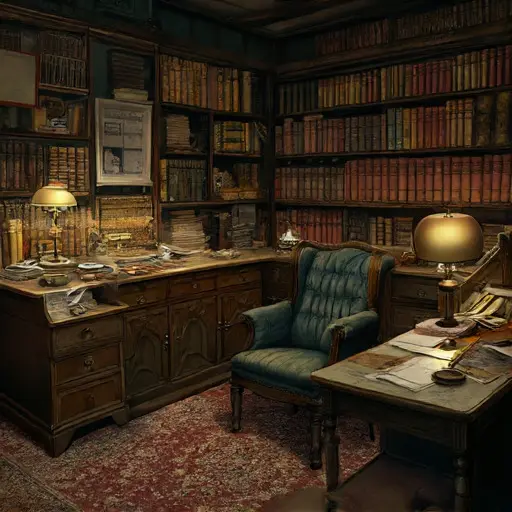
Upstairs, the corridor reveals the family’s gradual contraction. The runner rug is pinched into folds where Reginald once paced the length of the hallway. A hall table holds a tangle of glove buttons, collar studs, and an appointment book that ends mid-month. Nail holes pepper the wallpaper in pale rectangles where portraits were slowly removed for safekeeping.
Domestic Work Waiting for Hands That Never Returned
In the Sewing Room, Celeste’s last tasks remain preserved in stillness. A half-hemmed gown rests beneath the treadle machine’s presser foot. Pincushions bloom with rusted needles, and ribbon spools lie toppled in a small cascade across the table. Folded muslin pieces, intended for remaking Marianne’s dresses, sit stiffened from disuse. The room feels paused rather than abandoned.
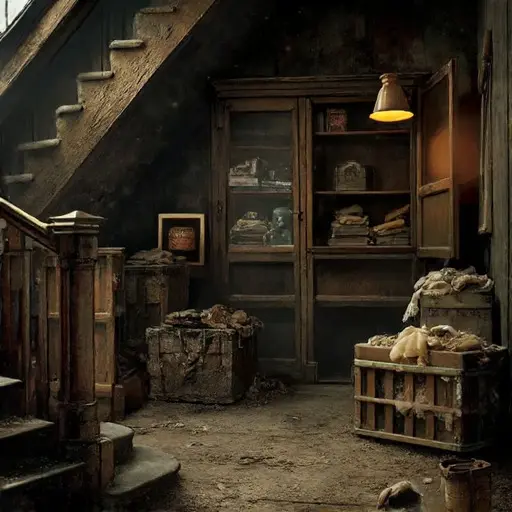
Behind the crates, a folded slip in Reginald’s hand reads simply: “To resume when time permits.” It remains untouched, and Thornhallow House lies abandoned, its rooms resting in silent suspension.