The Forgotten Rooms of Bellhallow House
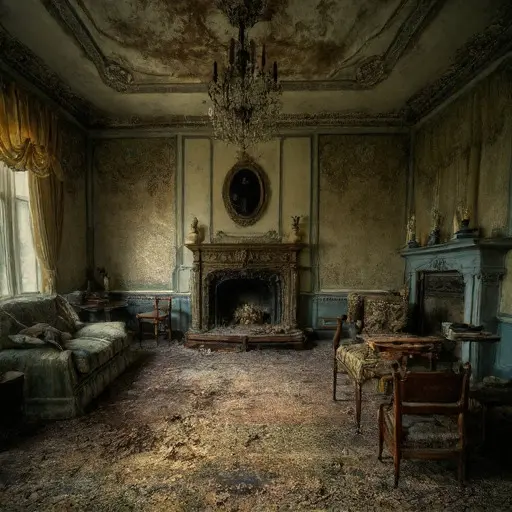
A draft brushes past the velvet wall tapestries of Bellhallow House, yet nothing stirs. The wooden floors creak not under foot, but from the burden of years passed unheeded. Once the pride of a quiet family’s ambition, it now slumbers with its secrets layered in dust.
Bellhallow’s silence is not immediate. It builds as you step room to room—an accumulating hush. In the morning room, the pages of a guestbook still lie open. In the kitchen, flour has petrified into plaster in an unwashed bowl. In the closet under the stairs, an umbrella still drips dried mud onto a now-warped floorboard.
The keyword forgotten becomes less descriptive than literal. The house has not been vandalized, nor looted, nor restored. It has simply not been remembered. And this, more than any visible decay, shapes the sadness that permeates its halls.
The Surgeon Who Refused to Leave
Dr. Clive Peregrine Wenslow, b. 1861, came to this house as a man of quiet intensity. A London-trained surgeon turned reclusive practitioner, he moved to Bellhallow with his sister Edith, a composer of modest acclaim who, after one failed performance at the Brighton Conservatory, withdrew from the public eye entirely.
Dr. Wenslow practiced from the rear surgery room, where medical ledgers from 1894 to 1910 still sit stacked on a sideboard, documenting treatments for everything from frostbite to hysteria. His methods were firm, modern, and unsettling to the village’s older folk. He removed two appendixes in the house itself.
By 1915, his practice had dwindled to occasional visits from former patients. In a journal left beneath the cracked leather of his medical bag, he wrote: “The house does not need to be filled with voices. It has ours.”
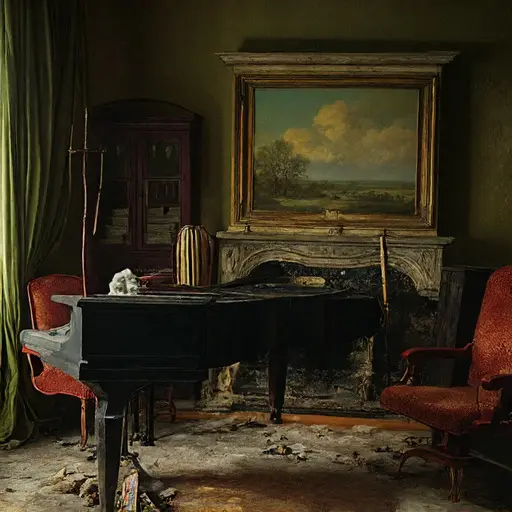
Edith’s deterioration is chronicled in music sheets found scattered across the music room, many unfinished, some annotated in agitated strokes. Her piano, once tuned every fortnight, stands mute with three ivory keys missing.
A Forgotten Label, Still Tied to the Door
In the servants’ hallway, behind a cracked larder door, hangs a winter coat still buttoned, a paper tag attached with string. It reads: “Wenslow – departure 1917.” Yet no evidence suggests they ever left. No forwarding addresses. No legal sale. No closure.
Upstairs, the linen cupboard still holds towels folded with lavender. A guest room bed remains turned down, its candle stub burned to the holder’s lip. The attic stairs are blocked by a broken chair shoved against the door.
No legal records suggest abandonment. Only absence.
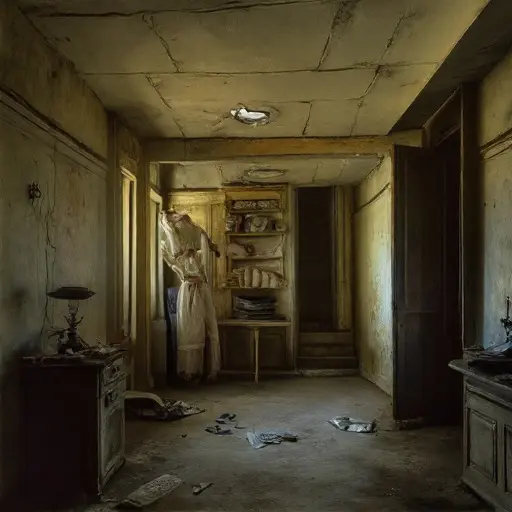
Bellhallow remains on no maps, and no family has returned.
The rooms still wait,
though no one is expected.
