The Lost Chronicle of Aethelred Vault
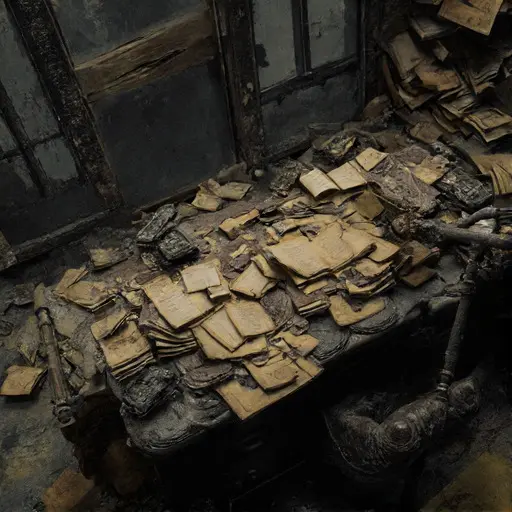
The atmosphere inside the Aethelred Vault is intensely cold, a dense, particulate silence saturated with the dry, sharp scent of old iron and crumbling paper. The Entrance Foyer is a heavy, almost sepulchral space, its polished stone floor now opaque beneath layers of undisturbed grit. A massive, ornate, cast-iron radiator against the wall is cold, its decorative grille caked with dust.
The entire house serves as the silent, unedited chronicle of Elias Aethelred, a man whose life was a ruthless pursuit of order, ended by a single, catastrophic error he could not correct.
Elias Aethelred’s Tyranny of Numbers
The proprietor who sealed the house’s fate was Elias Aethelred (1855–1909), a retired, meticulous municipal treasurer and bond auditor. His profession was the management of public funds; his personality was defined by an unshakeable adherence to absolute accuracy and a profound, chilling emotional detachment. His social role was the unyielding pillar of financial probity, living with his unmarried, silent wife, Martha. Elias’s single, all-consuming fear was the loss of control—the public discovery of a financial error, which he viewed as the ultimate personal and professional disgrace.
The house, completed in 1898, was his final, material accounting. Every room was rigidly controlled, often labeled, and inventoried. The Ground Floor Study was the true command center, containing his archives and personal financial instruments. The house’s tragic decline began after Elias, convinced of his infallible logic, made a massive, unauthorized investment of personal capital in a complex railway bond scheme that failed spectacularly in 1908. His response was a total retreat. He started sleeping in the Third Floor Archive Room, a cold space filled with municipal records, desperately trying to find a misplaced historical ordinance that would justify his disastrous bond purchase—a futile, obsessive attempt to correct the past.
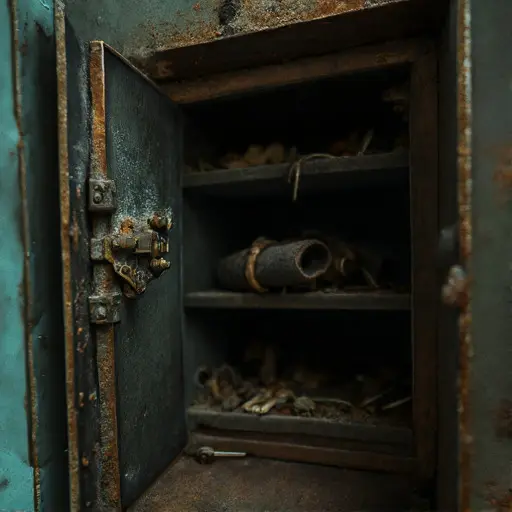
The Labeled Boxes in the Archive Room
The evidence of Elias’s final, desperate months is found in the Third Floor Archive Room. The room is lined with wooden shelving, upon which dozens of plain, canvas-covered boxes are stacked. Each box is meticulously labeled in Elias’s script: “Municipal Records, 1865-1870,” “Tax Audits, Block 4,” etc. However, inside the final, open box, labeled “Ordinances, 1908,” there are no municipal records, only shredded, torn pieces of personal correspondence and a handful of dried, crumbled bank drafts—the physical debris of his ruined scheme.
Martha’s Unopened Trunk by the Stair
The abandonment was total and immediate. Martha Aethelred, his wife, had lived in silent terror of her husband’s volatile temperament and rigid control. She knew nothing of the financial disaster until the bank representative called at the house in the summer of 1909. Evidence of her silent flight is found on the Second Floor Service Stair Landing. A large, heavy, wooden travel trunk sits abandoned, unlatched, its contents entirely untouched: neatly folded white linen clothing and a small, empty silver thimble. Martha had packed the trunk days before, waiting for her chance to leave. Elias Aethelred was found dead in the Archive Room that morning, having succumbed to a sudden, fatal cerebral hemorrhage.
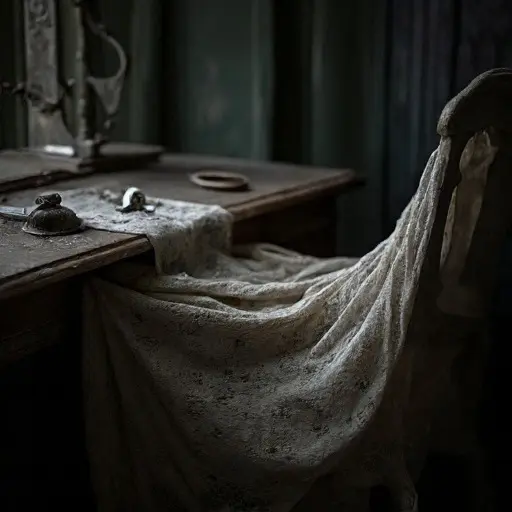
Martha was notified of her husband’s death but refused to return to the house, sending the bank representative the key and signing over all claims to the property and its contents. She used the small sum she had secretly saved to disappear. The bank, finding the estate technically bankrupt and the title mired in a complex municipal bond audit scandal, simply secured the imposing doors. The Aethelred Vault stands today, every room holding the material record of a life utterly destroyed by an unbending fear of error and a catastrophic loss of control, forever silent and abandoned.