The Lost Keys of Aelred Keep
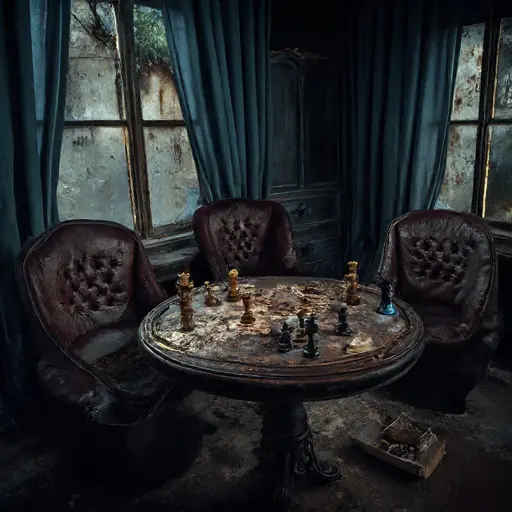
The atmosphere within Aelred Keep was a cold, dense shroud woven from silence and decay. To move through the Entry Foyer was to feel like an intruder in a museum of suspended time, where the exhibits were not priceless art, but the heartbreaking detritus of a suddenly ceased domestic life. The air was dry, carrying the brittle scent of old paper and leather rot.
Here, in the Keep, abandonment was not a result of slow decline, but of an abrupt, panicked retreat, leaving behind a wealth of objects that now silently documented a life irrevocably and forgottenly broken.
Barnaby Rookwood: The Failed Inventor
The history of Aelred Keep belongs to Barnaby Rookwood, an industrialist and amateur inventor whose entire existence was a cycle of grand ambition and catastrophic failure. He made his initial fortune manufacturing simple cotton gins in the 1870s, but his obsession was with perpetual motion machines and unorthodox flying contraptions. His social role was one of a brilliant but increasingly eccentric figure. He married Eleanor, a woman from a respectable, if not wealthy, family, and they had one son, Frederick.
The mansion’s architecture was molded by Barnaby’s feverish mind. The Upstairs Workshop, a vast space originally intended as a ballroom, was entirely converted into his personal laboratory. The room is still filled with his projects: half-finished mechanical gears, stacks of copper wiring, blueprints rolled and tied with brittle twine, and bizarre, elaborate wooden frames meant for flying machines. His life was defined by the relentless pursuit of his inventions, neglecting his business and family in the process.
The Fading Light in the Conservatory
Eleanor Rookwood found her meager solace in the Conservatory, a glass-walled structure attached to the east wing. Unlike the cold, sterile workshop, the Conservatory was meant to hold warmth and light. Though the glass panes are now cracked and the terracotta floor is covered in grit, the space still holds the evidence of her last, best efforts. She had a passion for photography, a private hobby Barnaby scorned as frivolous.
The turning point for the family is subtly recorded here. On a small work table, beneath an overturned chemical tray, lies a small, water-damaged booklet—her Photography Journal. The last pages record her increasing despair and fear over Barnaby’s spiraling debt, incurred by mortgaging the house to fund his most insane invention yet: a personal submarine. The final entries speak of a desperate attempt to pawn her mother’s jewelry in the nearby town. The very last photograph in the journal is a blurred, out-of-focus image of the children’s toy sailboat, taken in the tub.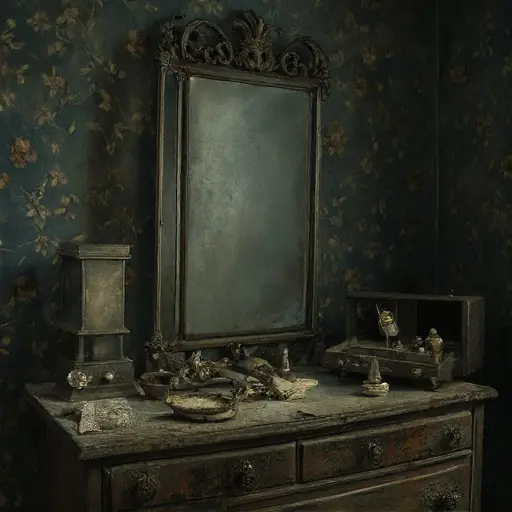
The Evidence in the Linen Press
Barnaby’s final, ruinous invention—the submarine—was seized by creditors in 1905, simultaneously exposing the full extent of his mortgaged debts. The house was to be foreclosed upon. The final, heartbreaking turning point is concealed in the Upper Landing Linen Press. This large, floor-to-ceiling cabinet, full of folded, brittle white sheets and towels, hides a small, rough-hewn wooden box at the very bottom. Inside the box are not deeds, but dozens of intricately carved, miniature wooden toys—boats, trains, and planes—that Barnaby had made for his young son, Frederick, when he was not consumed by his grand, abstract inventions.
Folded among these toys is a single, official document: a Final Eviction Notice, delivered just hours before the family vanished. They did not wait for the bailiffs. They simply locked the doors behind them and walked away from the Keep, leaving every possession to the creditors who never bothered to clear the contents, only to seal the doors.
The Aelred Keep stands as a magnificent, decaying monument to a man who tried to build flying machines and submarines but could not build a secure life for his family. Every room is full, yet empty of resolution. The vast inventory of his life remains, utterly forgotten, waiting in a silence thicker than dust.