The Damp Whisper of the Weft-Sorrow
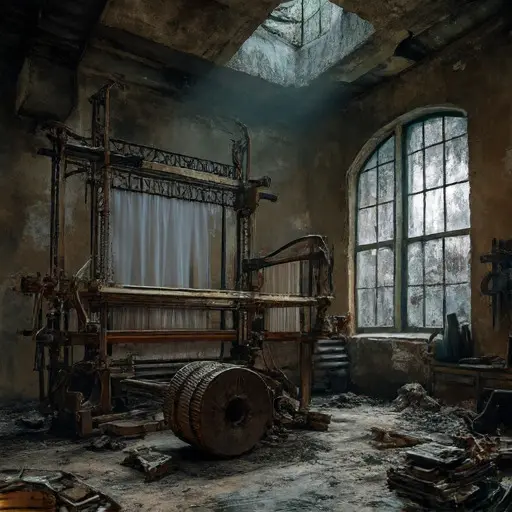
The Weft-Sorrow, a sprawling, severe structure of dark brick and heavy, carved timber, was completed in 1880, intended to project an image of sober domestic industry and artistic textile work. Its name suggests the fine, horizontal lines of weaving (weft) intertwined with a profound sadness (sorrow). To step into its service wing is to encounter an immediate, profound coldness and a silence so deep it seems to actively absorb any sound, giving rise to only the faint, damp whisper of the room’s misery.
The immense Textile Workshop, the creative heart of the home, is now a stage for magnificent, cold decay, its immense loom a monument to a life that ended in final silence and the weave of a terrible grief.
The Obsessive Weaver, Eleanor Thorne
The mansion was built by Eleanor Thorne (1845–1900), a woman whose entire existence was dedicated to textile art, specializing in highly complex and secretive tapestries. Her profession was that of a privately funded artist and designer. Her life was defined by the relentless pursuit of detailed needlework, demanding absolute privacy and freedom from interruption. Socially, she was a recluse, viewing every human interaction as a drain on her artistic focus.
Eleanor married Elias Vance in 1865, a quiet man whose chief role was to manage the estate’s finances. They had one child, a son named Henry. Eleanor’s personality was defined by her crippling emotional distance and her rigid demand for order; her daily routine revolved around the strict scheduling of her time in the Textile Workshop. Her ambition was to create a tapestry of such complexity that it would achieve artistic immortality; her greatest fear was the destruction of her unpublished masterpiece, a weave of profound sorrow, and the subsequent exposure of the emotional truth she had hidden in the damp whisper of the fibers.
The house was her artistic fortress. She installed a small, dedicated Dye Bath Chamber—a heavy, steel-lined vat built into the floor of her Workshop—where she systematically destroyed all her flawed sketches and unwanted fabrics, ensuring that only the final, approved tapestry would survive.
The Ruin in the Textile Workshop
The tragedy that destroyed the Thorne family was a final, terrible act of self-censorship and emotional despair. Henry, the son, was utterly crushed by his mother’s emotional indifference and rigid demands, preferring mathematics and engineering to art. He planned to run away and pursue a career in mechanics, a path Eleanor had expressly forbidden.
In 1900, Henry was caught by Eleanor while secretly sketching a mechanical device in the Textile Workshop. The confrontation was volatile. Henry, in a final act of desperation to wound his mother, grabbed the half-completed master tapestry—the single most important object in Eleanor’s life—and threw it into the acidic dye bath in the Dye Bath Chamber.
The shock of seeing her life’s work, her immortality, being consumed by the corrosive dye triggered a massive, fatal stroke. Eleanor collapsed instantly on the Workshop floor, dying as the last of her great weft work dissolved into a colorless chemical ruin. The unfinished tapestry contained a hidden pattern—a cryptographic rendering of her profound regret at neglecting her son, the ultimate weft-sorrow.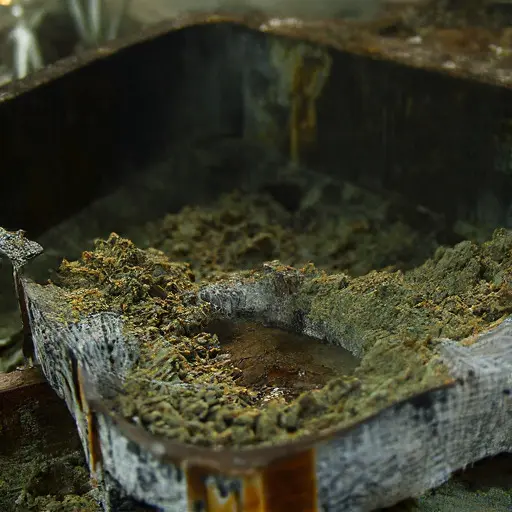
The Abandoned Spool in the Workshop
Elias Vance, the husband, was left with a dead wife, a disgraced son, and a house entirely saturated with the smell of dye and despair. Henry, overwhelmed by guilt over his mother’s death, immediately severed all ties with the house and left the country, never to return.
Elias’s final act was one of final, cold indifference. He took only his most personal ledgers and walked out of the Weft-Sorrow a week later. He refused to liquidate or sell any of the heavy, immovable objects, ensuring the house would stand as a monument to his wife’s destroyed dream. He allowed the taxes to lapse immediately, ensuring the house’s abandonment was absolute.
In Eleanor’s formal Textile Workshop, one final, poignant object remains on the overturned loom. It is a large, empty wooden spool, the one she used to hold the main, golden thread of her masterpiece, now resting on the dusty, splintered frame.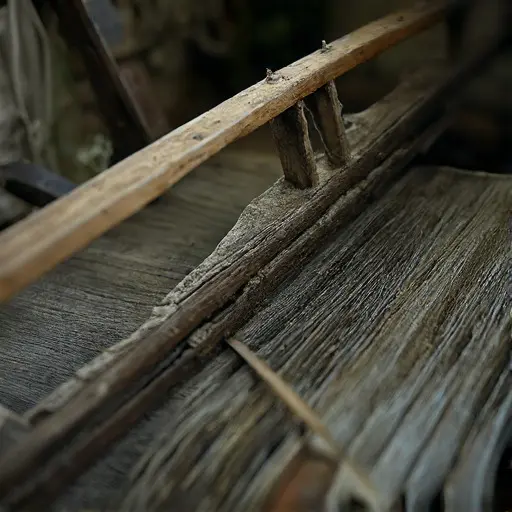
The Weft-Sorrow was eventually seized by the state but remained perpetually vacant, its immense, cold Textile Workshop and acidic Dye Bath Chamber standing as a desolate, practical monument. Its ultimate silence is the cold, physical fact of the damp whisper—the total, absolute destruction of a life’s ambition by the very son it was meant to outlive, condemning the house to hold its weft-sorrow forever in its desolate, silent heart.