The Lost Heart of the Galt-Chantry
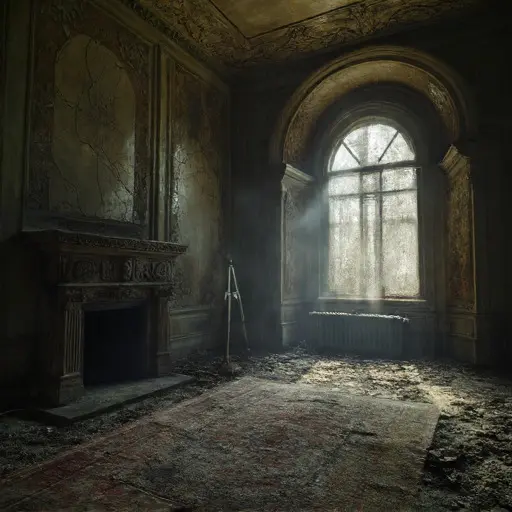
The Galt-Chantry, a masterpiece of asymmetrical Queen Anne design completed in 1890, stands today as a skeletal structure of reddish-brown brick and intricate terra-cotta ornamentation. It is a house too large to simply vanish, condemned instead to a slow, deliberate rot. Entering the main hall is like stepping into a refrigerated vault—the air is instantly cold and carries the distinct, sharp scent of mildewed velvet and damp plaster.
The Drawing Room, situated off the hall, is where the house’s emotional temperature is lowest. Every piece of furniture, every decorative element, is smothered under a thick blanket of dust, preserving the lost life of the mansion in a state of arrested decay.
The Imprudent Dreamer, Alistair Galt
The mansion was built by Alistair Galt (1855–1908), a man whose profession was rooted in the ephemeral world of theatrical production and speculative finance. He was an impresario and a visionary, accustomed to risk and the dramatic gesture. Socially, he was charming, gregarious, and ultimately, deeply unreliable.
Alistair married Eleanor Beaumont in 1880, a quiet woman from a family of steady, conservative bankers, a match that provided the financial stability he lacked. They had two children: Julian and Caroline. Alistair’s personality was marked by an incurable optimism and a tendency toward reckless spending. His daily life was defined by late nights, feverish correspondence, and chasing the next grand idea, often carried out in his small, opulent Music Room. His ambition was to live a life as dramatic and lavish as his stage productions; his greatest fear was the mundane reality of financial failure.
The house was his final, most expensive production. He insisted on a massive, horseshoe-shaped Atelier on the third floor, a room that consumed nearly half the construction budget, intended for painting massive stage backdrops and theatrical planning—a clear overreach for a domestic structure.
The Silence in the Music Room
The tragedy that brought down the Galt-Chantry was not a sudden catastrophe but a slow, bleeding wound of debt, exacerbated by the Commodore’s refusal to economize. Alistair Galt launched a series of overly ambitious theatrical tours across the continent. Each failed, bleeding Eleanor’s inheritance dry.
The final financial collapse came in 1908. A desperate, last-minute plea to his wife’s family was rejected. Alistair returned home one evening to find the house dark and silent. He retreated immediately to the Music Room, a small, elegant space he had filled with instruments. He was found the next morning seated at the piano, his financial ledger open on the music stand, having taken a fatal dose of laudanum. The sudden, ignominious failure of his life was too much for the man who lived on applause.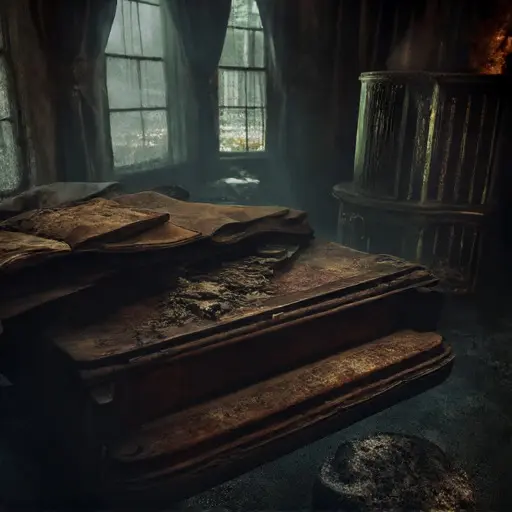
The Unclaimed Canvas in the Atelier
After Alistair’s death, Eleanor Galt was left with ruinous debt and two young children. Her conservative family, ashamed by the scandal and the suicide, offered only minimal support, refusing to assume the debts on the massive house.
Eleanor was forced to sell every piece of furniture, every collectible, and every item of value in the house to pay off the most aggressive creditors. She stripped the Galt-Chantry bare, selling the carpets, the draperies, and even the light fixtures in a series of desperate, clandestine auctions to avoid a full public foreclosure.
Her final act was one of deliberate, heartbreaking preservation. She took her children and left the city, refusing to sell the bare house, instead letting the tax payments lapse immediately. She wanted the shell of the mansion to stand as a permanent, humiliating monument to her husband’s ruin.
In the vast, high-ceilinged Atelier on the top floor, one thing remains. Due to its sheer size, it could not be easily sold or moved: a massive, canvas stage backdrop, still stretched taut on its frame. It is half-painted with a vibrant, idealized landscape—a scene from Alistair’s final, never-produced play.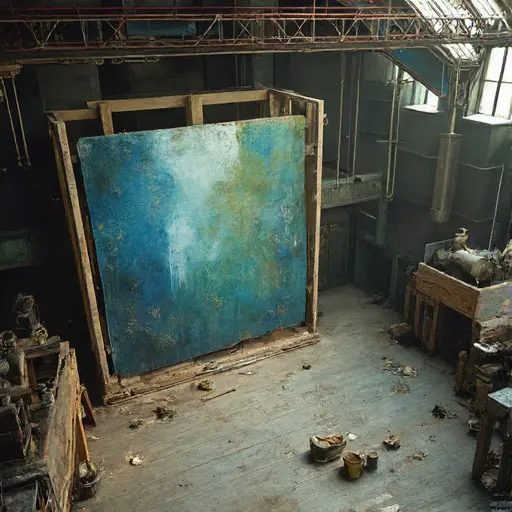
The Galt-Chantry remains today, a massive, echoing shell of brick and wood. The debt was eventually settled by the state in the 1930s, but the property was deemed too dilapidated and too poorly situated for immediate resale. The house was not merely abandoned; it was systematically emptied and then left as a cold, imposing husk—a permanent, lost theatrical set where the final curtain fell before the play could even begin.