The Silent Shame of the Cinder-Skein
The Cinder-Skein, a severe and sprawling mansion built in the Second Empire style in 1880, is defined by its slate mansard roof and its somber, dark-red brick façade. It sits low in a valley, giving it a perpetually shadowed appearance. To step across its threshold is to be met by a cold, dry atmosphere, heavy with the scent of aged fabric and silent shame.
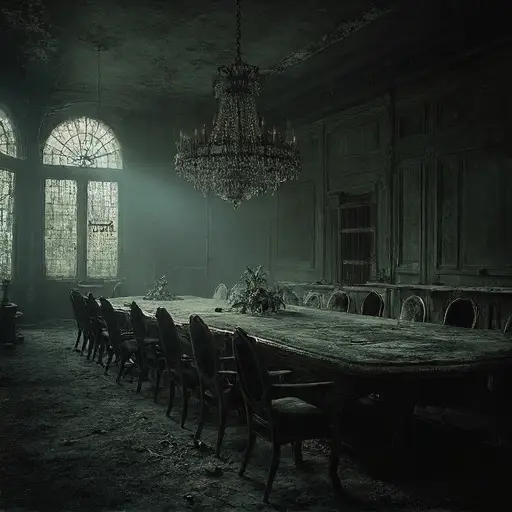
The Dining Room, designed for the display of social standing, is now a stage for magnificent decay. Every surface—the immense table, the collapsing chairs—is smothered under a thick, undisturbed layer of dust, preserving the history of a social collapse that was absolute and irreversible.
The Secretive Speculator, Elias Van Der Meer
The mansion was built by Elias Van Der Meer (1845–1901), a man whose profession was high-risk, international commodity speculation. His work required secrecy, ruthlessness, and an ability to manipulate market perceptions. Socially, he was a flamboyant host, known for his extravagant dinner parties in the Dining Room, which served as a smoke screen for his volatile finances.
Elias married Charlotte Hastings in 1870, a woman from old wealth whose reputation provided the respectability Elias lacked. They had two children: Arthur and Helen. Elias’s personality was defined by his compulsive need for risk and his utter intolerance for failure; his daily routine was built around market fluctuations and the careful cultivation of his image. His ambition was to achieve such vast wealth that his questionable origins would be silently forgotten. His greatest fear was public disgrace.
The house was his backdrop. He installed a small, narrow, concealed Dumbwaiter connecting the Dining Room directly to his subterranean Wine Cellar, ensuring he could control the flow of rare vintages without the intrusion of servants.
The Exposure on the Dumbwaiter
The tragedy that destroyed the Van Der Meer family was an internal exposure of fraud that brought down Elias’s entire financial empire. Arthur, the son, worked as his father’s clerk and was privy to the depth of the illegal market manipulations Elias was performing. Arthur was terrified of the impending scandal and its effect on his mother and sister.
In 1901, facing a disastrous audit and an inevitable investigation, Arthur decided to expose his father before the public disgrace became total. He waited until his father was hosting a large, formal dinner. Arthur slipped a sealed envelope containing the evidence—a set of Elias’s fraudulent internal ledgers—onto the Dumbwaiter tray and sent it up, not to the Dining Room (where it would have been found by a servant), but to a landing halfway up the shaft, where he knew only his father’s chief footman would collect it later. The footman was loyal to Arthur’s mother, Charlotte.
Elias, alerted to the crisis, realized what his son had done. The exposure, executed with cold calculation by his own heir, triggered a massive, fatal heart attack at the head of the Dining Room table, mid-toast.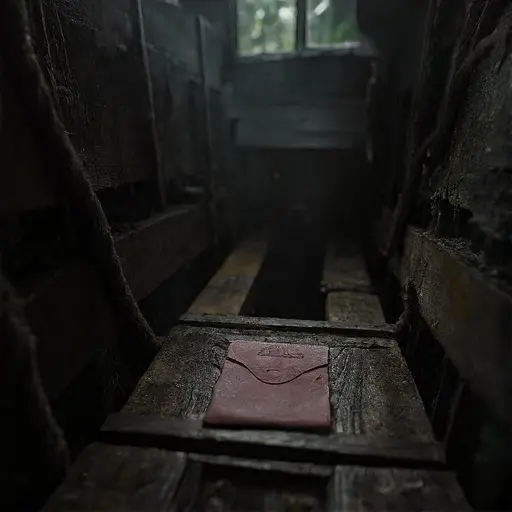
The Unclaimed Place Card in the Scullery
Charlotte Van Der Meer, the widow, was left with a deceased husband, two children, and the immediate, crushing shame of the public scandal that erupted after the ledgers were revealed. She lost everything, including her social standing.
Charlotte’s response was one of final, silent abdication. She sold off every single piece of portable silver, furniture, and art to cover the immediate, massive debts. She took only a few personal jewels and fled the city with her children, refusing to look back. She ensured that the Cinder-Skein itself—the house that hosted the lies—was not sold quickly, allowing the taxes to lapse and the remaining complex liens to make it an unsaleable liability.
In the rear Scullery, where the dishes were washed, one final item was left behind from the fatal dinner. It is a single, expensive, embossed card, the place card marking Elias’s seat at the head of the table.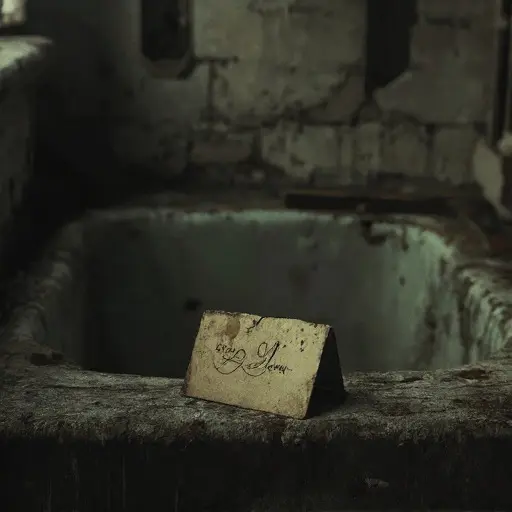
The Cinder-Skein stands today, its heavy brick façade masking the empty Dining Room and the silent Dumbwaiter. Its structure remains sound, but its atmosphere is irrevocably poisoned by the silent shame of the fraud and the betrayal carried out by the son against the father, leading to the collapse of the entire family structure.