The Forgotten Reflection of the Mirror-Glen
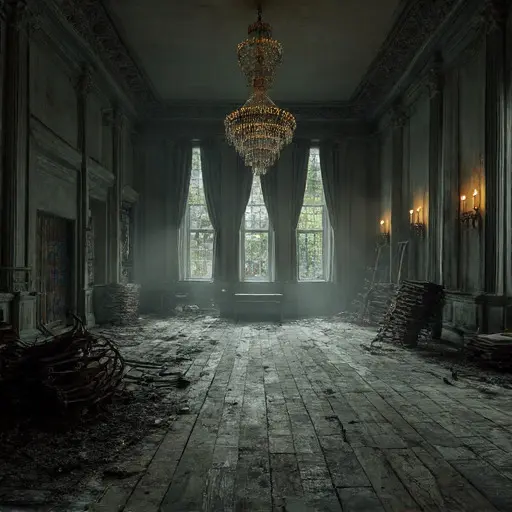
The Mirror-Glen, a formidable structure of gray limestone built in 1875, is characterized by its heavy Romanesque Revival style, with rounded arches and deep-set windows that give it a severe, almost unwelcoming air. The name evokes images of clear, still water, a cruel irony given its history. Stepping across the threshold means encountering a pervasive, penetrating coldness, a silence so complete that the distant sound of the wind outside seems to be a deliberate effort to stay forgotten.
The vast Ballroom, now a desolate echo chamber, is the clearest statement of a life that abruptly ceased, leaving behind an indelible mark of internal pain.
The Ambiguous Hostess, Evelyn Thorne
The mansion was the property of Evelyn Thorne (1840–1905), a woman of inherited wealth whose profession was maintaining a flawless social façade. She was a prominent society figure, defined by the constant need to host elaborate, memorable events within the Ballroom. Socially, she was admired for her grace and efficiency, but secretly feared for her sharp wit and emotional detachment.
Evelyn married Charles Vance in 1865, a quiet, unremarkable man who worked in insurance and served primarily as her financial anchor and arm candy. They had one daughter, Victoria. Evelyn’s personality was obsessive about control and presentation; her daily routine revolved around managing the house staff and planning her next social triumph. Her ambition was to achieve a permanent, unassailable position at the pinnacle of society; her greatest fear was scandal and exposure.
The Ballroom was her domain, and she insisted on an attached, small, private service kitchen—a space entirely hidden from the main house—where she could ensure the quality of her catering was perfect, free from the prying eyes of her main staff.
The Secret in the Service Kitchen
The tragedy that ultimately shattered the Mirror-Glen was one of private scandal and quiet, devastating blackmail. Victoria, the daughter, was secretly engaged in a liaison with a man far below her social station. When Evelyn discovered the affair in 1904, she was horrified, recognizing the threat to her carefully constructed social standing.
Evelyn used her considerable influence to ruin the man and force Victoria into an engagement with an acceptable suitor. Victoria, in retaliation, discovered her mother’s own, long-kept, hidden secret: Evelyn was systematically defrauding her husband’s insurance clients to fund her lavish parties and maintain the house, a secret Charles was entirely unaware of. Victoria used this information to blackmail her mother into allowing her to escape the forced engagement and leave the country.
The final, fatal confrontation occurred late one evening in the Private Service Kitchen. Evelyn, cornered and facing both exposure and financial ruin, physically collapsed from the stress, suffering a massive stroke. She was found the next morning by a kitchen maid, paralyzed and mute, clutching a set of forged ledger pages.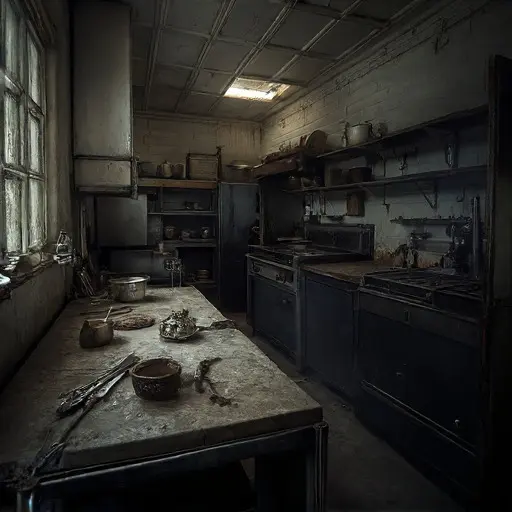
The Unworn Gown in the Cedar Closet
Charles Vance, Evelyn’s husband, discovered the financial ruin only after his wife’s collapse. He was a decent, but weak, man, horrified by the scale of the fraud and the resulting social stigma. With his wife paralyzed and his daughter gone, Charles was faced with absolute ruin.
He refused to sell the house or liquidate any of the contents, determined to protect his now-incapacitated wife’s façade of wealth, an act of final, pathetic loyalty. He managed to secure a temporary loan from a distant, sympathetic relative, which allowed him to pay taxes and minimal staff for two years. He lived entirely in the Master Bedroom, never entering the Ballroom again.
Evelyn died in 1907. Charles, unable to face the crippling debt and the weight of the hidden scandal, took his own life shortly thereafter in the Study, leaving no note.
The house was immediately foreclosed upon, but the discovery of Evelyn’s financial fraud and the sheer cost of legal resolution made the property toxic. It sat, entirely full of its original, unsaleable contents, for years as the legal battle over the insurance claims dragged on.
In the vast Cedar Closet off the master suite, one last poignant item remains. It is a dress form, still dressed in the elaborate, custom-made ball gown Evelyn had intended to wear at the party scheduled for the week after her stroke. The silk is now brittle and yellowed, covered in dust, never having been worn.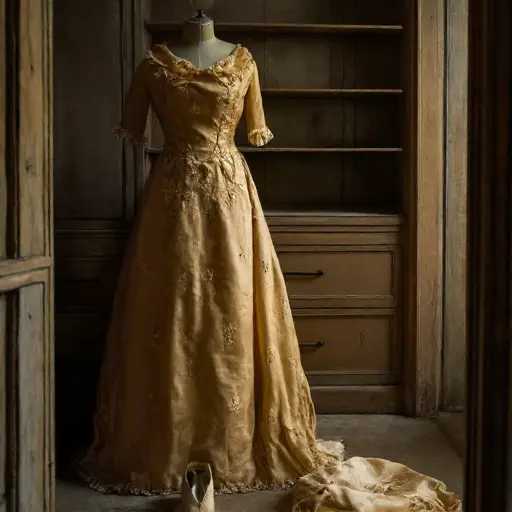
The Mirror-Glen remains today, its massive stone bulk keeping its final, cold vigil. Its forgotten reflection is evident in the silence of the Ballroom and the ghostly presence of the unworn gown—a magnificent mausoleum built on lies and ultimately destroyed by the very social pressures it was designed to conquer.