The Shattered Chord of the Fret-Mortise
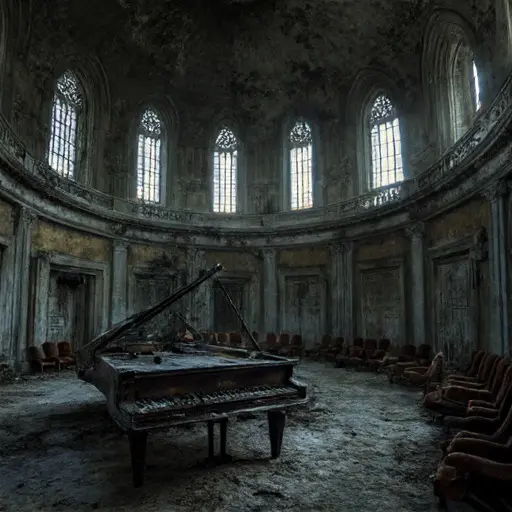
The Fret-Mortise, an elaborate and dramatic structure of Queen Anne and Shingle Style influence, completed in 1893, sits deep within a dense, shaded grove of evergreens. Its complex rooflines and intricate wooden joinery (mortise) give it a sense of fragile complexity. The name evokes both the tension of a stringed instrument (fret) and the deep, permanent joinery of the wood.
To step inside is to be met by a cold, dry atmosphere, heavy with the scent of aged wood and dust. The Music Salon, positioned in the largest turret, was clearly designed for performance, but it now holds a profound, absolute silence. Every detail—from the dust on the piano keys to the broken strings—is a visual testament to a life suddenly halted and a final, shattered chord of music left ringing in the empty air.
The Impulsive Composer, Julian Delacroix
The mansion was built by Julian Delacroix (1858–1912), a man whose entire existence was dedicated to music. His profession was that of a renowned orchestra conductor and composer, a role demanding absolute creative control and an ego commensurate with the stage. Socially, he was charismatic but deeply impulsive, a brilliant artist who often acted on volatile whims.
Julian married Eliza Thorne in 1885, a dedicated amateur cellist who loved him despite his temperamental nature. They had one child, a daughter named Clara. Julian’s personality was defined by artistic obsession and emotional recklessness; his daily routine was built around composing and rigorous rehearsals in the Music Salon. His ambition was to create a single, universally acclaimed opera; his greatest fear was creative stagnation and the ultimate failure of his art to achieve true resonance.
The Music Salon was the heart of the home, built with specialized acoustic paneling. Crucially, Julian insisted on a separate, small, reinforced Smoking Alcove—a windowless space with a strong chimney draft—where he could indulge his pipe habit while composing, ensuring the rest of the house was free of smoke.
The Poison in the Smoking Alcove
The tragedy that ultimately shattered the Fret-Mortise was not one of betrayal or bankruptcy, but one of accidental poisoning and a desperate attempt to silence a scandal. Eliza, Julian’s wife, had grown weary of his obsessive neglect and volatile temperament. She began an affair with Julian’s protégé, a young violinist who often practiced in the Music Salon.
In 1912, Julian discovered the affair. His rage was instantaneous and volatile. He impulsively decided to poison the protégé, using a rare, colorless poison he had acquired years earlier for a ‘research’ project. He laced a glass of brandy and left it in the Smoking Alcove, knowing the protégé often used the space for private practice breaks.
However, Julian, in his agitated state, forgot his own routine. Returning to the house later, stressed and needing to compose, he entered the dark Smoking Alcove and drank the brandy himself. He suffered a violent, fatal seizure in the alcove, dying instantly. The protégé, finding the body, panicked and immediately fled, carrying the secret of the intended victim.
Julian’s death was ruled a sudden, massive stroke. The poisoning was never suspected. But the Smoking Alcove—the scene of the shattered chord—was locked immediately by the terrified staff and remained sealed for decades.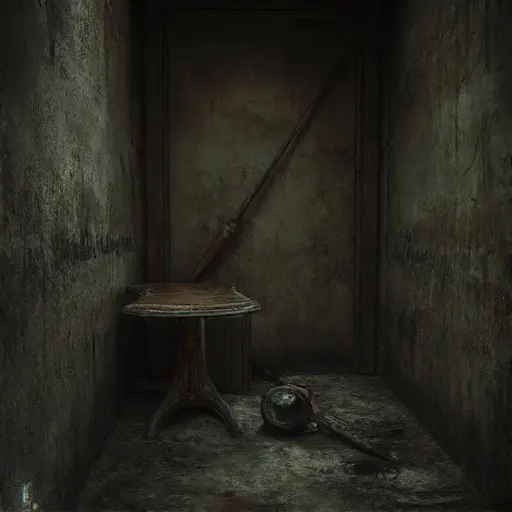
The Abandoned Instrument in the Conservatory
Eliza Delacroix, the widow, was left with a deceased husband, the crushing guilt of her betrayal, and the terrible knowledge that her husband had died trying to murder her lover. The Fret-Mortise became an unbearable monument to her crime and her husband’s last, fatal impulse.
She immediately ordered the sealing of the Smoking Alcove and the closing of the Music Salon. She took her daughter, Clara, and fled the city, selling only enough liquid assets to fund her escape. She left the vast, immovable contents of the house—including the grand piano with its shattered chord—to the state, refusing to touch the profits of a home built on music and destroyed by murder.
The house quickly fell into tax delinquency. The grand piano and the Music Salon were deemed too difficult to sell or move, and the Fret-Mortise became permanently abandoned.
In the small, sunlit Conservatory, where Eliza used to practice, one object remains: her beautiful, expensive, but now dust-covered cello, left leaning against a damp wall, still in its cracked, open case.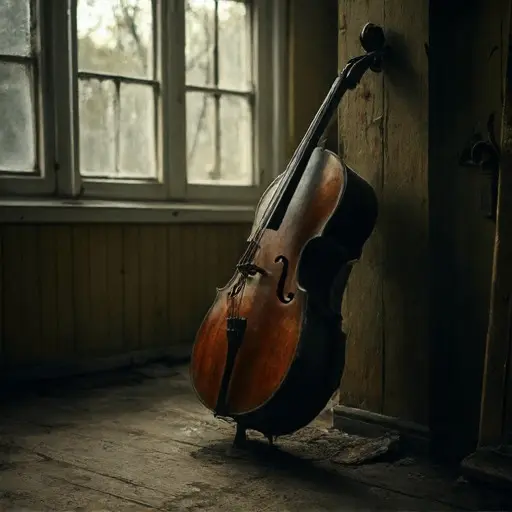
The Fret-Mortise stands today, its elaborate trim decaying and its roof structure slowly succumbing to the elements. Its ultimate silence is the cold, physical fact of the shattered chord—the secret of a murder that failed, leaving the wrong victim dead and the house to hold the truth in its silent, sealed rooms, a permanent testament to the music that ended in tragedy.