The Hidden Story of the Stone-Acre Retreat
The Stone-Acre Retreat—a sprawling Italianate villa built in 1865—sits low and heavy on its foundations, its distinctive square tower and overhanging eaves giving it a watchful, almost brooding air. It was a home designed for comfort and the expansive display of a family’s success. To enter is to immediately encounter the cold reality of a past life instantly suspended.
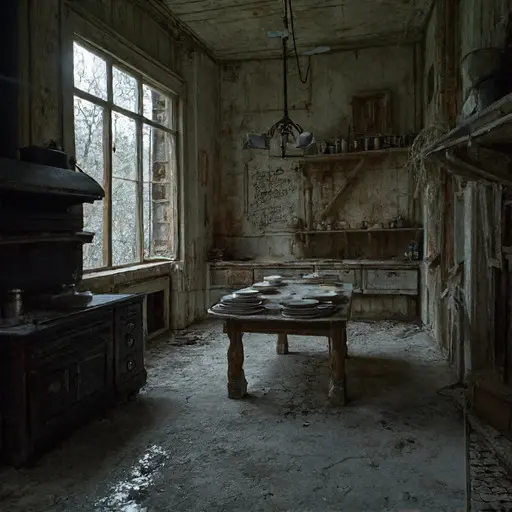
The kitchen, located at the back of the house, is the clearest indicator of this suspension. The scene is one of hidden disarray, a domestic tableau frozen in the midst of its daily routine. Dust lies thick and evenly distributed, a suffocating blanket over the mundane evidence of a family that vanished almost overnight.
The Disciplined Life of Marcus Lowell
The Retreat was the property of Marcus Lowell (1825–1885), a retired Navy Commodore who transitioned his rigid discipline into the business of high-stakes commodity trading. His profession involved the control of complex logistical chains, making him an authoritarian figure both professionally and domestically. Socially, he was respected for his wealth but feared for his temper.
Marcus married Annabelle Stern in 1850. They had four children, but only two survived into adulthood: Elizabeth and Robert. Marcus’s personality was defined by an unshakeable belief in hierarchy and order. His daily routine was built around precise timing; meals were served exactly on the hour, and he enforced a strict silence during the evening hours. His ambition was to establish an estate that functioned with the precision of a naval vessel.
The architecture reflected this. He added a long, enclosed service corridor to the kitchen wing, ensuring that the necessary domestic chaos and the movement of the servants would remain entirely hidden from the family’s formal living spaces.
The Ruin in the Service Corridor
The tragedy that brought down the Lowell family was one of sudden, explosive violence rooted in the Commodore’s discipline. Robert Lowell, the son, was an aspiring engineer with a rebellious streak, constantly chafing under his father’s strict control. He was due to inherit the trading business, but he secretly planned to abandon it for an industrial venture in the West.
In the summer of 1885, a massive fire consumed a vital Lowell warehouse on the docks. The Commodore immediately suspected corporate espionage by a rival. However, the true cause was a faulty electrical experiment Robert had been conducting in a hidden shed near the docks, an attempt to secure start-up funding for his own venture. Robert, terrified of his father’s wrath, chose not to confess.
The final, devastating confrontation occurred in the service corridor late one evening. Robert was attempting to retrieve a piece of sensitive evidence from his father’s coat pocket before it was discovered. The Commodore, mistaking his son for a thief, wrestled him to the ground. In the ensuing struggle, Robert struck his head on the stone floor, an impact that proved immediately fatal.
The Commodore, a man who had survived war and the sea, was instantly broken. The irony that his own brutal discipline had killed his heir in the hidden service passage—a place meant only for the flow of servants—was too much to bear.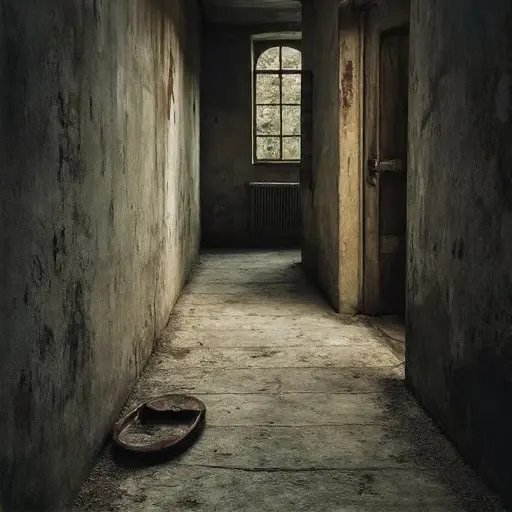
The Unspoken Pledge in the Nursery
The Commodore never recovered. He confessed the accidental death but never revealed the true reason for his son’s late-night presence in the corridor, protecting the hidden secret of Robert’s destructive ambition. He died of a sudden, self-imposed starvation six weeks later.
The family was destroyed. Annabelle, utterly spent by grief and scandal, placed the entire estate in the hands of a law firm. She sold nothing, took nothing but a few clothes, and moved back to her original family home, never to return. The remaining daughter, Elizabeth, was already married and estranged, and she wanted no part of the cursed property.
In the third-floor nursery, where Annabelle had tended to the children, the evidence of her final, heartbroken moment remains. A simple wooden cradle sits near the window. Inside, she placed a small, silver locket containing two locks of hair—one from Robert, one from Elizabeth—and secured a note beneath it: “Let this place be still.”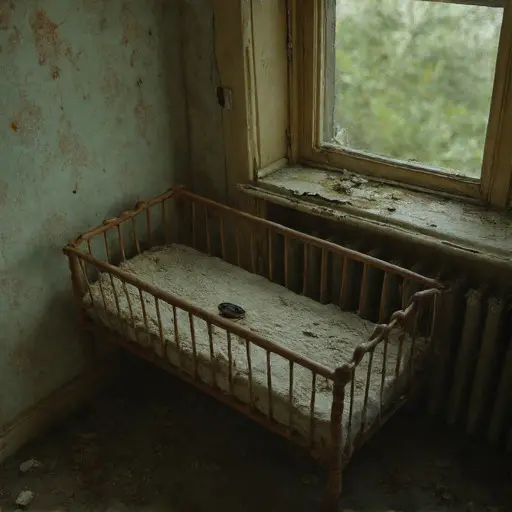
The law firm managed the taxes for two decades, but the estate’s value plummeted due to the scandal. Eventually, the firm dissolved, and the Stone-Acre Retreat slipped into that legal void of unclaimable property. It remains, a vast, complex machine that stopped instantly, preserving the hidden wreckage of a father’s fatal mistake in the depths of its service corridor, forever waiting for the silence to be broken.