Chronos-Grip: The Watchmaker’s Broken Hour
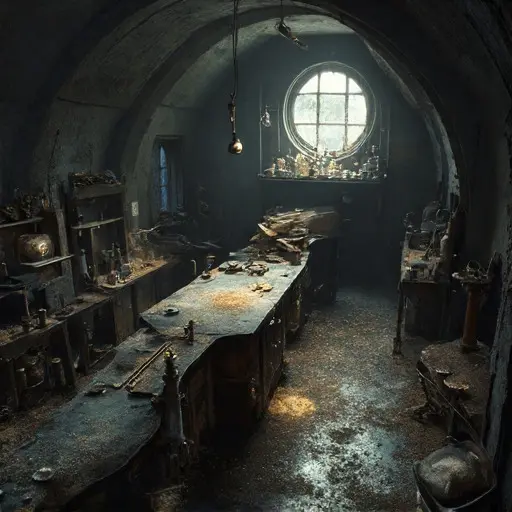
The moment the thick, triple-bolted steel door to Chronos-Grip was finally wrenched open, the air rushed out—cold, dense, and heavy with the pervasive, unsettling odor of petroleum spirits, aged leather, and the fine dust of pulverized gemstones. The name, combining the concept of time with a forceful hold, perfectly captured the manor’s function: a physical manifestation of an attempt to stop and control the flow of all moments. This abandoned Victorian house was structured not for ordinary domesticity, but for unwavering, mechanical precision, its internal layout a bewildering maze of small, constant-temperature rooms designed to eliminate all external variables that might affect a delicate mechanism.
The final inhabitant was Mr. Elias Hourglass (a name he took professionally), a brilliant, but intensely paranoid master chronometer maker and horologist of the late 19th century. Mr. Hourglass’s profession was the design and creation of perfectly accurate, temperature-compensated timepieces for navigational and scientific purposes. His singular obsession, however, was the creation of the ‘Final Regulator’—a single, perfect clock that would measure time with zero error, a mechanism so flawless it would run forever and synchronize with the true, ultimate rhythm of the cosmos. After a lifetime of struggling with the unavoidable inconsistencies of material science, he retreated to the manor. He dedicated his final years to constructing this ultimate, final mechanism, believing that true control lay only in absolute, unyielding chronological order. His personality was intensely meticulous, withdrawn from human interaction, and utterly consumed by the pursuit of temporal finality.
The Synchronization Chamber
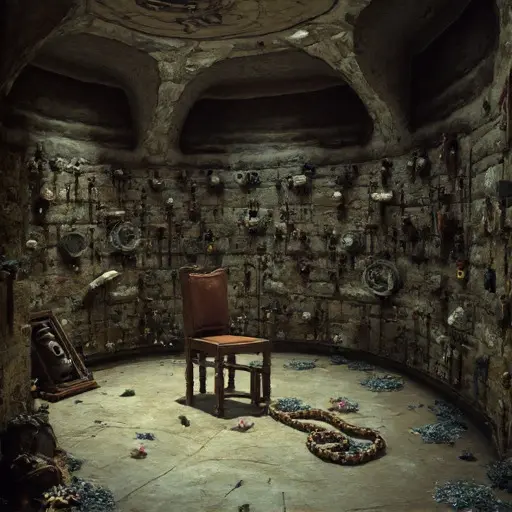
Mr. Hourglass’s mania culminated in the Synchronization Chamber. This secure, temperature-regulated room was where he spent his final days, testing and retesting his mechanisms against astronomical data. His journals, written on thin, numbered parchment and found sealed inside a hollowed-out clock weight, detailed his terrifying conclusion: the only way to achieve the Final Regulator’s zero error was to remove the influence of earthly observation entirely. He decided that the final, critical balance spring must be integrated into the mechanism while running, thereby physically and permanently linking the object to the flow of time. “The flaw is in the hand that winds,” one entry read. “The final tick requires the complete surrender of the measurer. I must seal the spring and become the final, unmoving anchor of the mechanism.”
The house preserves his mechanical rigor. Many internal doors are fitted with small, precisely calibrated geared mechanisms that control the speed at which they can be opened, forcing an unnaturally slow and deliberate entry and exit.
The Final Gear in the Abandoned Victorian House
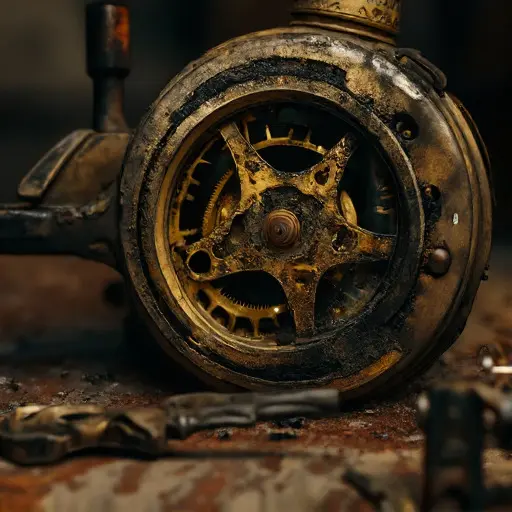
Mr. Elias Hourglass was last heard working in the workshop, followed by a sudden, incredibly loud CRUNCHING of metal, instantly followed by an absolute, profound silence. He did not leave the manor. The next morning, the workshop was still, the tools laid out, and the man was gone. No body was found, and the only evidence was the singular, physical alteration to his final mechanism.
The ultimate chilling clue is the immobilized clockwork. The steel gear, violently fused into the brass assembly, represents the moment time was forced to stop at the watchmaker’s command. This abandoned Victorian house, with its silent chambers and countless stopped clocks, stands as a cold, imposing testament to the master horologist who pursued the perfect measurement of time, and who, in the end, may have successfully constructed the Final Regulator, vanishing into the absolute, unmoving moment that he engineered as his final, most perfectly secured escape from the flow of existence.