Alga-Loom: The Botanist’s Final Bloom
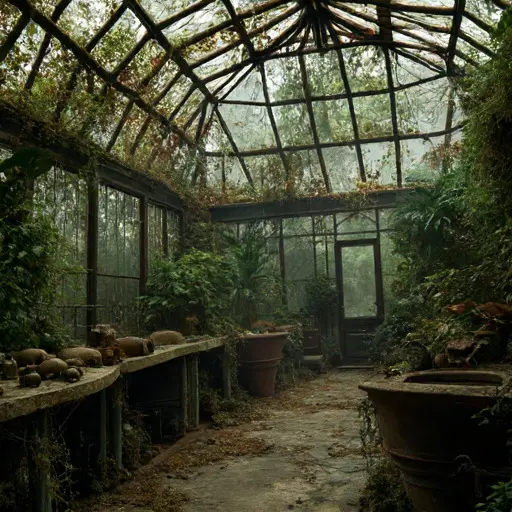
The moment the massive, iron-framed glass door to Alga-Loom was forced open, the air that rushed out was suffocatingly humid, warm, and thick with the unsettling, cloying odor of a collapsed hothouse—a blend of fermentation, wet moss, and something unnaturally sweet. The name, combining a simple aquatic plant with a weaving machine, suggested a synthetic, controlled origin for something naturally chaotic. This abandoned Victorian house was structured not for dry comfort, but for controlled, moist, and tropical environments, its elaborate heating and misting systems now corroded and silent, leaving behind a profound sense of natural life gone terribly, dangerously wrong.
The final inhabitant was Dr. Linnaeus Grove, a brilliant, but intensely reclusive master botanist and hybridist of the late 19th century. Dr. Grove’s profession was the study and cross-breeding of exotic flora, seeking to optimize and perfect natural forms. His singular obsession, however, was the creation of the ‘Eternal Bloom’—a single, new species of plant life that would possess no natural senescence, perpetually regenerating its cells to achieve biological immortality. After a devastating blight destroyed his main research collection, he retreated to the manor. He dedicated his final years to constructing this ultimate, self-renewing species, believing that the truth of life lay not in the animal kingdom, but in the silent, persistent power of plant regeneration. His personality was intensely patient, solitary, and utterly consumed by the pursuit of biological permanence.
The Hybridization Lab
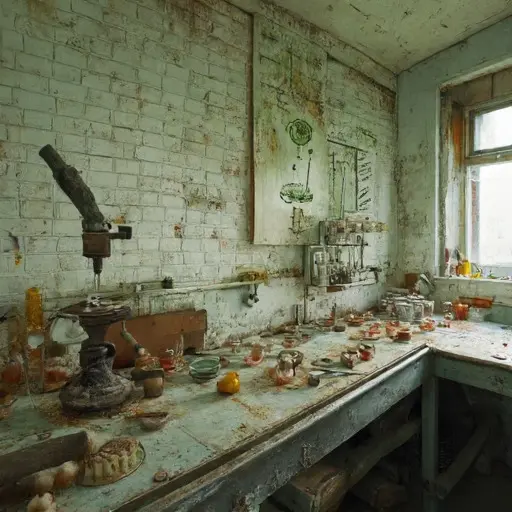
Dr. Grove’s mania culminated in the Hybridization Lab. This secure, light-controlled room was where he spent his final days, attempting to combine the genetic material of dozens of species into the Eternal Bloom. His journals, written in a cramped, scientific script that eventually gave way to dense, Latin botanical classifications, were found submerged in a cracked terracotta pot. He stopped seeking to influence nature and began trying to become the subject, believing that only the perfect host could sustain the Eternal Bloom. “The vessel is weak; the species demands a purer, more complex medium,” one entry read. “The final growth requires the complete assimilation of the observer, so that the life force flows unchecked into the final, perfect root.”
The house preserves his scientific methods. Many internal walls are subtly marked with numbered moisture gauges and temperature charts, remnants of his obsessive attempts to monitor and regulate the minute environmental conditions throughout the manor.
The Final Seed in the Abandoned Victorian House
Dr. Linnaeus Grove was last seen working in his conservatory, the sound of glass breaking and a loud, wet cracking sound reported by the local night watchman, followed by immediate, profound silence. He did not leave the manor. The next morning, the conservatory glass was cracked in a single, large fissure, the heating system was cold, and the man was gone. No body was found, and the only evidence was the singular, physical alteration to his final workspace.
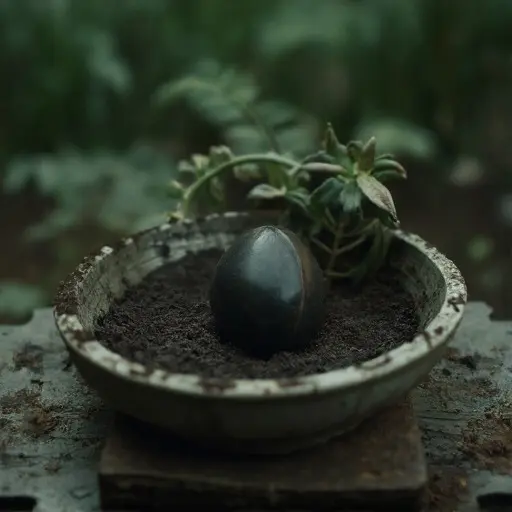
The ultimate chilling clue is the bowl containing the single, black seed. It is the Eternal Bloom in its potential state—perfectly formed, but unnourished. This abandoned Victorian house, with its humid, decaying glass rooms and sterile laboratories, stands as a cold, imposing testament to the master botanist who pursued biological immortality, and who, in the end, may have successfully created the perfect genetic unit, only to sacrifice his own life force to its ultimate, final, and silent germination.