Quanta-Sepulcher: The Physicist’s Zero Point
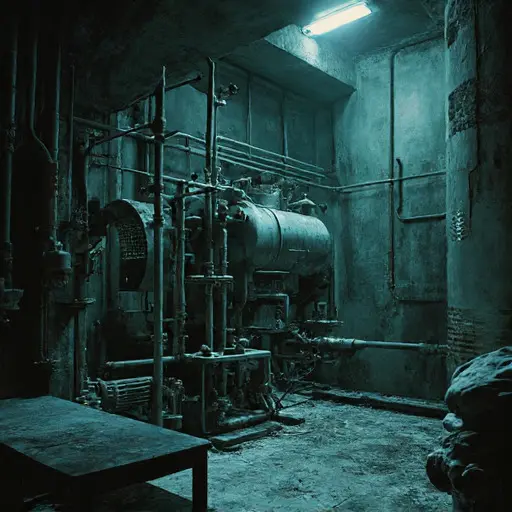
The moment the massive, insulated steel vault door to Quanta-Sepulcher was finally breached, the air that rushed out was not warm or stale, but intensely, unnaturally cold and dry, carrying the sharp, sterile scent of ionized air and deep-freeze. The name, combining a measure of energy with a tomb, perfectly captured the manor’s function: a place dedicated to pushing the limits of physical reality, now frozen in eternal stillness. This abandoned Victorian house was structured not for human habitation, but for absolute scientific control, its thick walls and complex internal systems designed to isolate and maintain extreme environments.
The final inhabitant was Professor Gideon Kael, a brilliant, but intensely reclusive theoretical and experimental physicist of the late 19th century. Professor Kael’s profession was the study of thermodynamics and the nature of matter at extreme conditions. His singular obsession, however, was the creation of the ‘Zero Point State’—the existence of a physical environment where all molecular motion would cease, leading to a state of absolute inertia and perfect, stable non-existence. After failing to reconcile the persistent quantum fluctuations in his experiments, he retreated to the manor. He dedicated his final years to constructing a massive apparatus designed to achieve and sustain absolute zero, believing that in this state, he could find the ultimate, unmoving truth of the universe. His personality was intensely logical, severely detached from emotional warmth, and utterly consumed by the pursuit of physical finality.
The Condensation Core
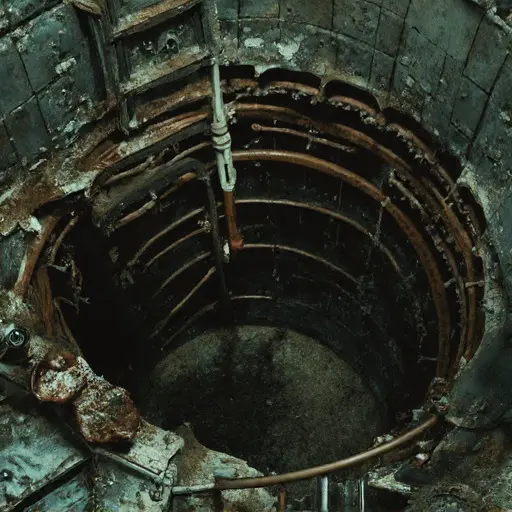
Professor Kael’s mania culminated in the Condensation Core. This subterranean chamber was the heart of his apparatus, designed to achieve the lowest possible temperature. His journals, written in a cramped, precise hand that eventually gave way to complex thermodynamic equations, were found tucked into the casing of a pressure gauge. He stopped charting temperature and began charting the absence of all phenomena, concluding that the only way to achieve true zero point was to remove the ultimate variable: heat. “The only remaining heat source is the observer,” one entry read. “To measure the truth, I must render the subject and the object into the same final, unmoving state.”
The house preserves his scientific rigor. Many internal walls are subtly warped, suggesting the extreme temperature fluctuations caused by his experiments placed an enormous, invisible stress on the building’s core structure.
The Final Quantum in the Abandoned Victorian House
Professor Gideon Kael was last heard working in his laboratory, followed by a sudden, intense hissing sound—like rapidly escaping gas—and then immediate, deep silence. He did not leave the manor. The next morning, the laboratory was cold, the apparatus frozen, and the man was gone. No body was found, and the only evidence of his final experiment was the sudden drop in local air temperature registered by a weather station miles away.
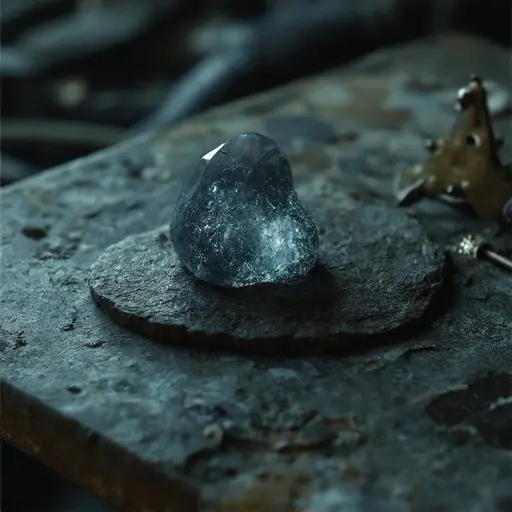
The ultimate chilling clue is the small, luminous crystal on the metal disc. It is a piece of matter rendered so cold, it exists in a state of perfect quantum stasis. This abandoned Victorian house, with its frozen chambers and complex, silent machinery, stands as a cold, imposing testament to the physicist who pursued the ultimate limit of matter, and who, in the end, may have successfully found the Zero Point State, vanishing into a profound, perfect, and absolute stillness.