Cipher-Aegis: The Cryptographer’s Unbreakable Lock
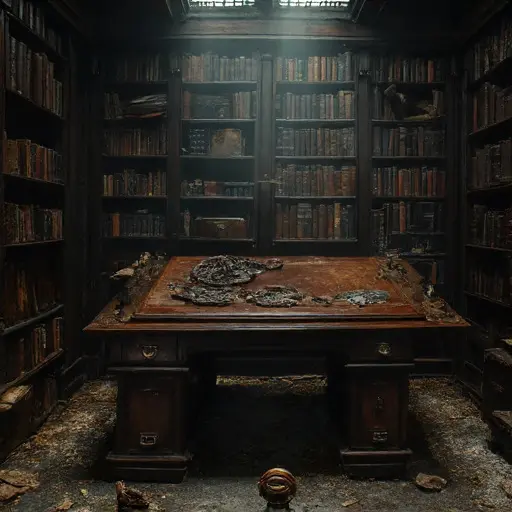
The air inside Cipher-Aegis was uniquely dry, cold, and possessed a faint, metallic odor, like old iron and machine oil, strangely mixed with the dusty scent of charcoal. The name, combining a secret code with a shield, immediately signaled the manor’s function: absolute protection of a hidden truth. This abandoned Victorian house was not designed for comfort; it was a physical manifestation of a psychological defense system, its thick, unadorned walls creating a sense of impregnable security and profound solitude.
The final inhabitant was Professor Valerian Sharpe, a brilliant, but deeply paranoid cryptographer of the late 19th century. Professor Sharpe’s profession was the creation and breaking of complex codes, but his singular obsession was achieving absolute, perfect secrecy. After working for various governments and realizing the fundamental fragility of all known ciphers, he retreated to the manor. He dedicated his final years to creating the ‘Unbreakable Cipher,’ a mathematical and mechanical lock that would render any piece of information immune to discovery, even by himself. His personality was intensely meticulous, distrustful, and consumed by the fear of exposure and the ultimate violation of his private world.
The Key Chamber
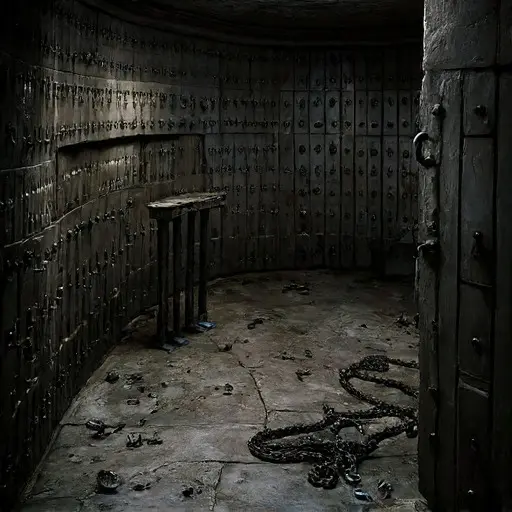
Professor Sharpe’s mania culminated in the Key Chamber. While he designed the Unbreakable Cipher, he knew its only vulnerability was the key. He decided to fragment the key into dozens of intricate pieces, hiding each one in a separate, mechanically complex lockbox. His journals, written in a personal, unbreakable substitution cipher that remains unsolved, chronicled his descent. He stopped trying to hide information from the world and started trying to hide the key from himself. “The secret is safe only if the pathway is lost,” read one of the few decipherable notes found in the room. “I must forget the algorithm to ensure the ultimate protection of the truth.”
The house preserves his paranoia structurally. Many internal doorways have three distinct locks—a key, a combination, and a bolt—all from different eras and manufacturers, forcing a constant, triple-layered ritual of entrance and exit.
The Final Combination in the Abandoned Victorian House
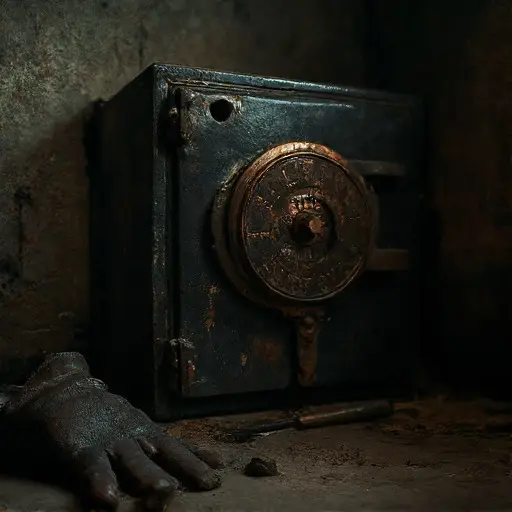
Professor Valerian Sharpe was last seen working in the Key Chamber. The sound of metal grinding and a muffled scream was reported by the last remaining servant, followed by absolute silence. The house was found entirely locked—every door bolted, every safe closed. The man himself had vanished without a trace, leaving his final, unsolved journal.
The ultimate chilling clue is the small safe in his study. The safe remains locked, and the combination dial bears a fresh, precise dent on the number ‘0’. It is the only place in the house where the Professor left a mark on a lock. This abandoned Victorian house, with its layers of metallic defense and coded chambers, stands as a cold, imposing testament to the man who sought absolute secrecy, and who, in the end, became the one secret that could never be decoded or retrieved.