Gossamer-Veil: The Seamstress’s Final Thread
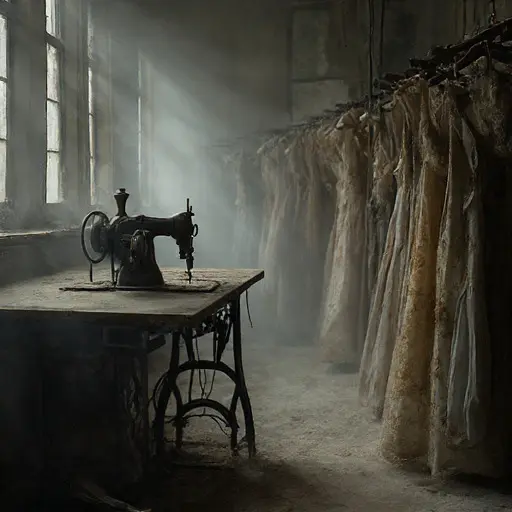
Stepping across the threshold of Gossamer-Veil felt like disturbing a perfectly laid pattern. The air was dry, cool, and held a faint, crisp scent of old linen, iron, and a delicate, dusty sweetness, completely lacking the usual odor of rot. The name, evoking the image of sheer fabric hiding a form, was apt. This abandoned Victorian house was not just neglected; it was suspended in a state of delicate, arrested preparation, its silence the heavy hush of a secret being kept by the very fibers of the building.
The final inhabitant was Miss Eliza Thornton, a brilliant, solitary couture seamstress renowned for her ability to create gowns that seemed to breathe. Eliza’s profession was the intricate art of textile manipulation, making cloth conform flawlessly to the human body. Her obsession, however, was with the structural flaw—she believed every garment contained a single, hidden weakness, much like every life. She built Gossamer-Veil with massive, light-filled workrooms to study and conquer this flaw. Her personality was intensely precise, fearful of error, and consumed by the pursuit of structural perfection in her delicate, fragile creations.
The Bolt Room
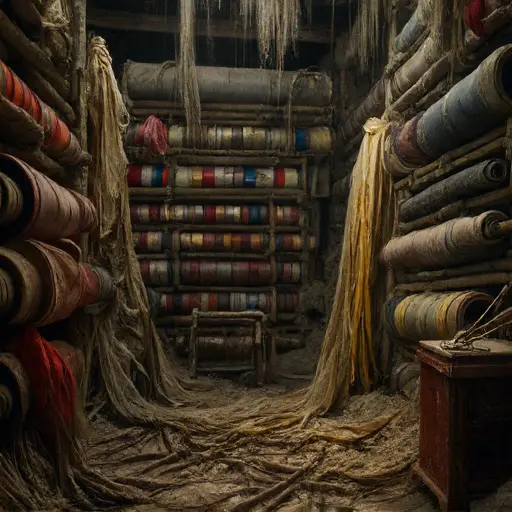
Miss Thornton’s mania was revealed in the Bolt Room. Her private ledgers, disguised as fabric inventory logs and found in a wooden measuring box, detailed her final, terrifying project: a complete, full-scale textile model of the house itself, a fabric shell designed to protect the building from all external flaws. She believed that by covering the house in a perfect, stitched replica, she could make it immortal. “The frame is weak, the wood will rot,” one entry was written across a bolt of muslin. “Only the thread is eternal. I must sew the ultimate, unbreakable seam.”
The house preserves her methods subtly. Many internal walls have small, barely visible pin-pricks and chalk lines running across them, remnants of her precise measurements as she charted the structure for her final, textile blueprint.
The Final Thimble in the Abandoned Victorian House
Miss Eliza Thornton was not seen after she placed her final order for thousands of yards of heavy sailcloth. When the delivery arrived, the manor was locked. Her final, partially completed fabric shell of the house was found draped across the attic rafters, waiting for its final panels.
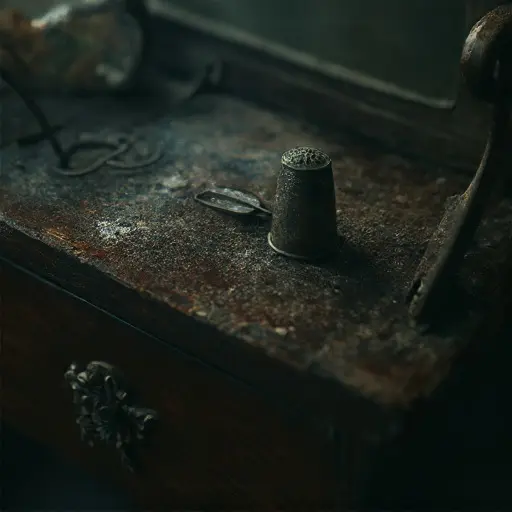
The ultimate chilling clue is the silver thimble. It was found next to the bloodstain, beside a loose floor panel. The single, clean silk thread leading into the darkness suggests the seamstress finally found the structural flaw she needed to conquer, and entered the very fabric of her home, attempting to stitch the unbreakable, final seam from within. This abandoned Victorian house stands as a magnificent, silent monument to the master seamstress who tried to sew herself into the immortality of her own fragile creation.