Lex-Obscura: The Jurist’s Final Verdict
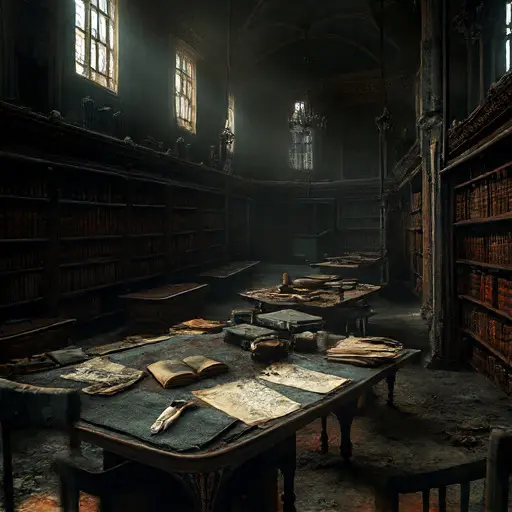
The air inside Lex-Obscura was uniquely dry, cold, and possessed the sharp, acetic tang of aged paper and dry leather, strangely reminiscent of a vast, forgotten courthouse. The name, roughly translating to “Hidden Law,” perfectly captured the manor’s oppressive, secretive atmosphere. This abandoned Victorian house was structured not for domestic warmth, but for intellectual combat and tireless, solitary study, its silence the heavy quiet of a jury room deliberating a life-or-death case.
The final inhabitant was Justice Elmsworth Pryce, a brilliant, but deeply reclusive jurist and legal scholar of the late 19th century. Justice Pryce’s profession was the interpretation and application of law, but his singular obsession was the concept of legal certainty—the removal of all ambiguity from justice. After presiding over a highly contentious, ambiguous case that ended in a tragic miscarriage of justice, he retired to the manor. He dedicated his final years to writing the ‘Ultimate Code,’ a single, comprehensive legal treatise that would ensure absolute, objective finality in every possible human conflict. His personality was intensely rigorous, unemotional, and consumed by the pursuit of an immutable, cold perfection in the law.
The Judgment Chamber
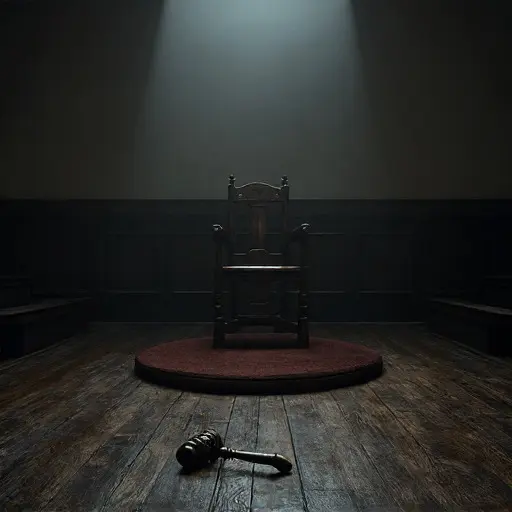
Justice Pryce’s final, desperate phase was focused entirely on his private chamber. His journals, found locked within his dusty, empty briefcase, detailed his growing conviction that the written law was fundamentally flawed, infected by the very human ambiguity it sought to control. He began using the Judgment Chamber to re-adjudicate his past cases, arguing all sides aloud to the empty room, trying to force his Code into existence through sheer rhetoric. “The Code is complete, but it has no voice,” one entry read. “I must find the immutable truth that will bind the words to the fact, the law to the soul, and seal the final, perfect verdict.”
The house preserves his legal rigor. In the main hall, every doorway and window frame is etched with minute, barely visible Roman numerals, a silent, constant tallying system for some forgotten, personal legal count.
The Final Document in the Abandoned Victorian House
Justice Pryce’s disappearance was noted only when he failed to appear for his meticulously arranged (though private) dinner. The house was immaculate, the Judge’s robes folded neatly on his chair in the Judgment Chamber. The man himself was gone.
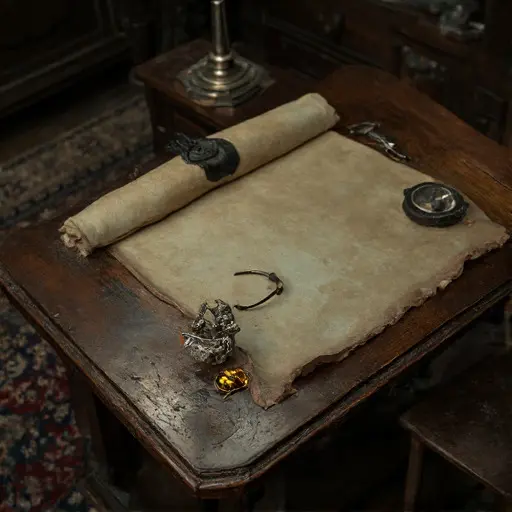
The ultimate chilling clue is the scroll on the desk. It contains his Ultimate Code, a document too perfectly sealed to ever be opened without violating its fundamental finality. This abandoned Victorian house is now a mausoleum of legal stasis. Its silence is the absolute quiet of a case that has been closed forever, leaving behind the chilling finality of the Justice who removed himself from the flawed, human system to become the pure, cold embodiment of his own unyielding law.