Iron-Chrysalis: The Clockmaker’s Broken Time
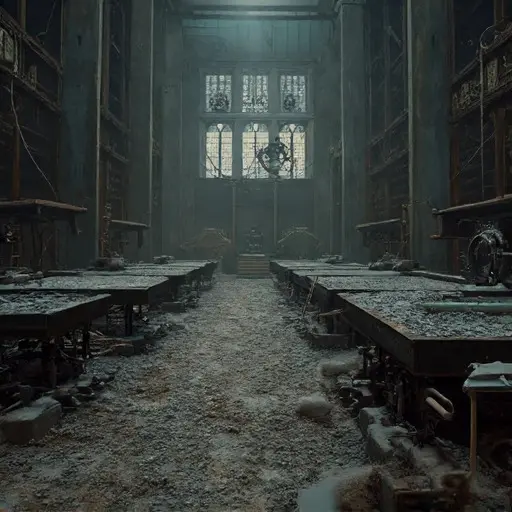
Stepping into Iron-Chrysalis was like entering a world where all motion had been suddenly and universally suspended. The house’s name, suggesting a metal shell designed for fragile transformation, was evident everywhere. The air was dry, cold, and possessed a distinct, sharp odor of tarnished metal and dry wood. This abandoned Victorian house was not merely quiet; it seemed to be actively muffling time itself, its thick walls built to contain the rhythmic, persistent sound of its owner’s life’s work. Every shadow was long and still, as if paralyzed mid-movement.
The sole inhabitant was Mr. Augustus Pendelton, a highly gifted, intensely perfectionist horologist (clockmaker) in the late 1800s. Pendelton’s profession was the creation of timepieces of impossible complexity and precision. His obsession was not just with keeping time, but with controlling it, believing that a perfectly engineered clock could influence the very flow of events. He built Iron-Chrysalis as a laboratory and showroom, isolating himself to work on his single, consuming goal: The Chronos Engine, a timepiece designed to measure not hours, but fate. His personality was methodical, rigidly scheduled, and deeply fearful of chaos and the unpredictable nature of chance.
The Mechanism Gallery
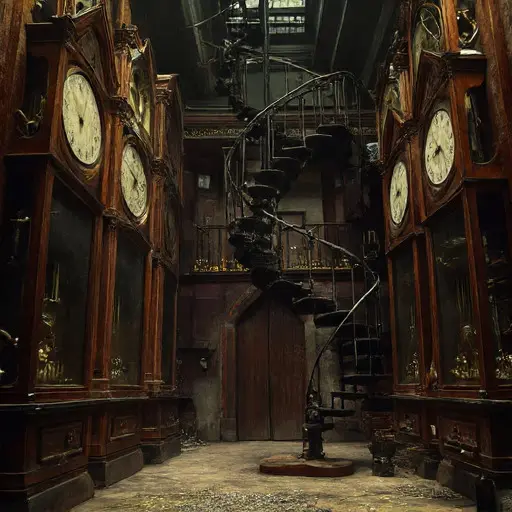
Pendelton’s magnum opus was housed in the Mechanism Gallery. His journals, found tucked inside the hollow base of a massive, uncompleted tower clock, charted his descent from precision to mania. He wrote not about springs and escapements, but about the philosophical implications of forcing order onto the future. He began adding non-functional, symbolic gears to his Chronos Engine, pieces he believed could capture chance. “The Engine nears completion,” one entry scrawled on a blueprint read, “Once the final gear is set, the chaos of tomorrow will be made measurable. The uncertainty will cease.”
The house preserves his methodology. Many internal doors are fitted with elaborate, visible clockwork mechanisms that tick softly when opened or closed, reminding the visitor that every action is a precisely measured event.
The Final Gear in the Abandoned Victorian House
Mr. Augustus Pendelton was last heard working late into the night. His apprentices, arriving the next morning, found the manor silent. The Chronos Engine stood on its pedestal, entirely complete—save for one final, critical gear. The man himself was gone. His chair was pulled neatly away from his desk, and his precision tools were all clean.
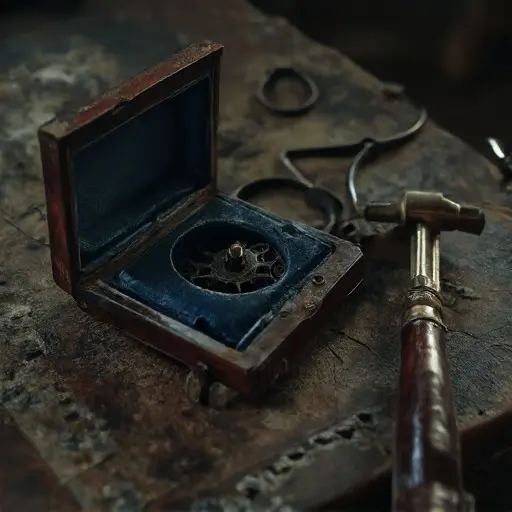
The ultimate, chilling clue is the small mahogany box. Inside, the final, crucial gear lies, but one of its teeth has been violently snapped. This abandoned Victorian house is now a mausoleum of frozen time. Its silence is absolute, broken only by the phantom tick that never arrives, the sound of a man who destroyed his life’s work at the moment of its completion, choosing chaos over the terrible, rigid predictability of his own perfect machine.