Whisperglass: The Architect’s Maddening Obsession
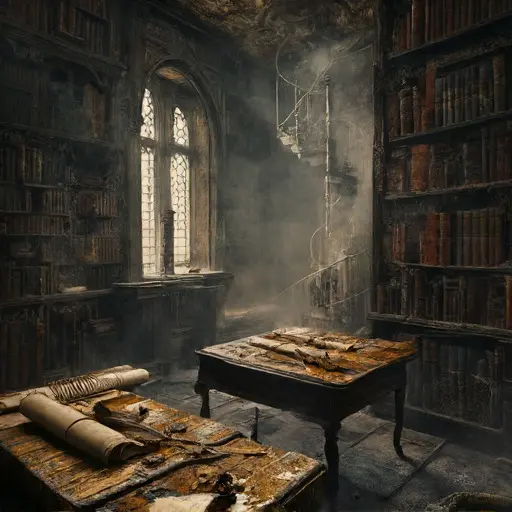
Stepping into Whisperglass felt less like entering an abandoned Victorian house and more like walking into the inside of a clock that had stopped at a moment of profound, terrible stillness. The name, given by the original owner, referenced the unusual, thin panes of colored glass he commissioned, designed to refract light in dizzying, geometric patterns. Now, the glass was opaque with grime and time, yet the stillness remained. The atmosphere was one of profound quiet, broken only by the delicate shh of dust settling and the distant, muffled sound of the wind sighing through broken roof slates far above. The house was a temple to precision and order, now surrendered entirely to chaos.
The architect who designed and occupied this mansion was Mr. Silas Finch. He was a renowned, obsessive architectural draftsman of the late 19th century, known for his meticulous detail and near-pathological fear of asymmetry. Finch built Whisperglass not as a home for a family, but as a living portfolio, a physical manifestation of his own perfect, uncompromising geometric world. His profession wasn’t just building; it was creating enclosed, controlled spaces. Finch never married and lived alone for decades, retreating further into the mathematical precision of his blueprints as the real world grew increasingly messy and imperfect around him.
The Chamber of Flawed Light
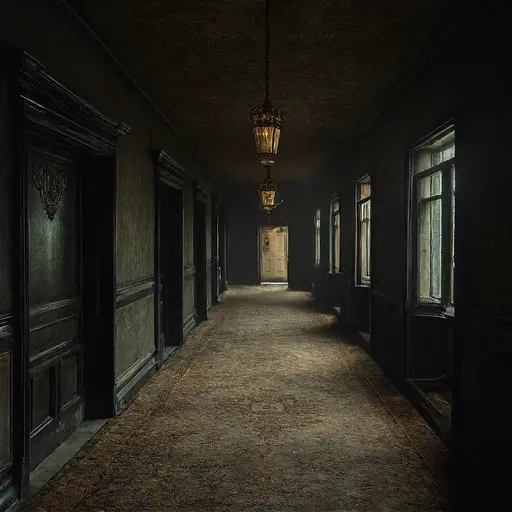
The house, in the end, became a record of Finch’s mental decline. He began altering the structure after its completion, obsessively changing minute details. Door frames were narrowed by an inch, stair risers were raised or lowered by a fraction of a centimeter, and windows were resized to deliberately imperfect proportions. He called this process “refinement,” but his journals, found scattered across the library floor, reveal his growing distress: “The perfection escapes me. I must capture the shape before it decays into chaos.”
One room, which he ominously labeled “The Chamber of Flawed Light,” was the most telling. It was an otherwise ordinary sitting room where Finch had installed ten mirrors, each cut and mounted at a slightly different, jarring angle, designed to break and distort any reflection, including his own.
The Last Ledger in the Abandoned Victorian House
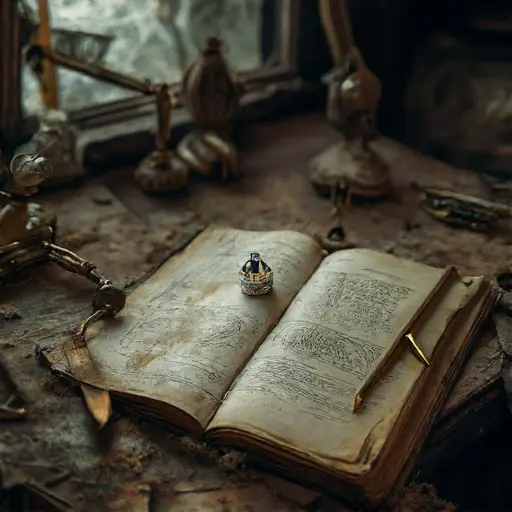
The end of Silas Finch remains a puzzle. His last entry in his master ledger, found open on his drafting table, was not a measurement or a design, but a single, bold, and illegible scribble that slashed violently through a complex calculation for the perfect roof pitch. He vanished shortly thereafter, leaving everything exactly as it was. The only trace of him is the house itself, a monument of magnificent design driven mad by its creator. Every skewed angle, every unnecessary detail in this abandoned Victorian house is a silent echo of the architect’s final, tortured search for an order he could never achieve. The silence of the mansion is absolute, broken only by the persistent, soft rattle of a loose window pane—the final, infuriating imperfection that Finch could never fix.