The Final Silence of Echo-Sepulcher Keep
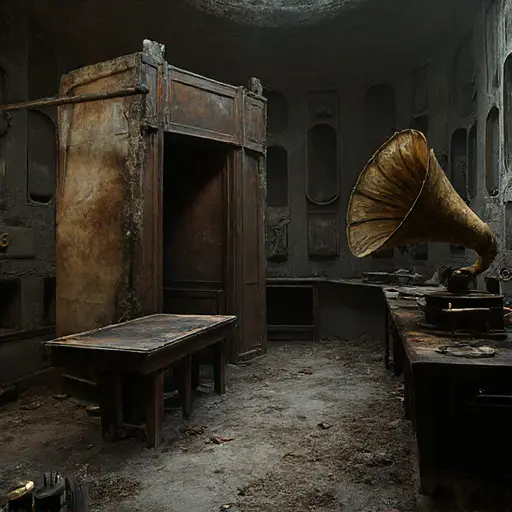
Echo-Sepulcher Keep was an architectural statement of auditory isolation: a massive, dome-like structure built of dark, heavy granite, characterized by numerous internal chambers designed to eliminate all ambient noise and stabilize vibration. Its name suggested a blend of resonant sound and a burial chamber. The house stood high on a remote, wind-swept plateau, giving it an isolated, sound-muffled environment. Upon entering the main recording studio, the air was immediately thick, cool, and carried a potent, almost dusty scent of aged wood, dry felt, and a sharp, metallic tang. The floors were covered in heavy, sound-dampening cork tiles that muffled all footsteps. The silence here was not merely quiet; it was an intense, auditory stillness, the profound hush that enforces the memory of a voice perfectly isolated, waiting for the final, definitive word. This abandoned Victorian house was a giant, sealed ear, designed to achieve and hold a state of absolute, unchangeable, sonic purity.
The Acoustician’s Perfect Tone
Echo-Sepulcher Keep was the fortified residence and elaborate laboratory of Master Acoustician Dr. Elias Vane, a brilliant but pathologically obsessive sound theorist and recording pioneer of the late 19th century. His professional life demanded the relentless study of sound propagation, the flawless elimination of noise, and the pursuit of absolute sonic fidelity—a recording utterly free of distortion, interference, or echo. Personally, Dr. Vane was tormented by a crippling fear of auditory decay and a profound desire to make the chaotic, ephemeral nature of sound and human voice conform to a state of pure, silent, permanent record. He saw the Keep as his ultimate phonograph: a space where he could finally design and record a single, perfect, final, uncorrupted tone that would encode the meaning of eternal, pure silence.
The Anechoic Vault
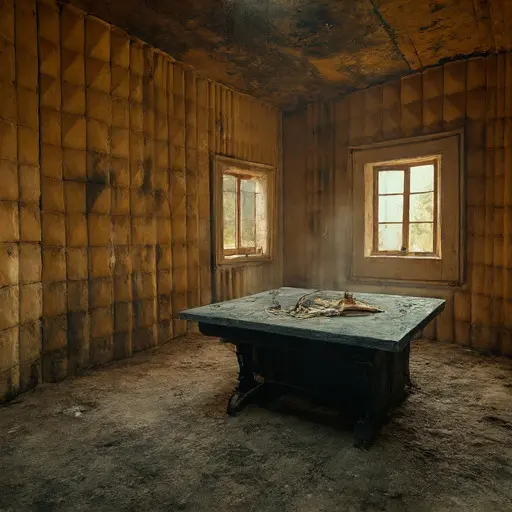
Dr. Vane’s Anechoic Vault was the engine of his obsession. Here, he worked to isolate and stabilize his final, most critical recordings. We found his final, detailed Auditory Compendium, bound in thick, heavily padded felt. His entries chronicled his escalating desperation to find the “Zero-Echo Tone”—a sound so pure it existed only once, without any lingering resonance. His notes revealed that he had begun to believe the most chaotic element was the human voice itself, which introduced unpredictable emotion and pitch into the record. His final project, detailed meticulously, was the creation of a massive, unique, internal “Master Cylinder”—a final, massive wax cylinder designed to record the sound of a completely perfect, absolute, unbroken silence, free of all noise and echo.
The Final Record
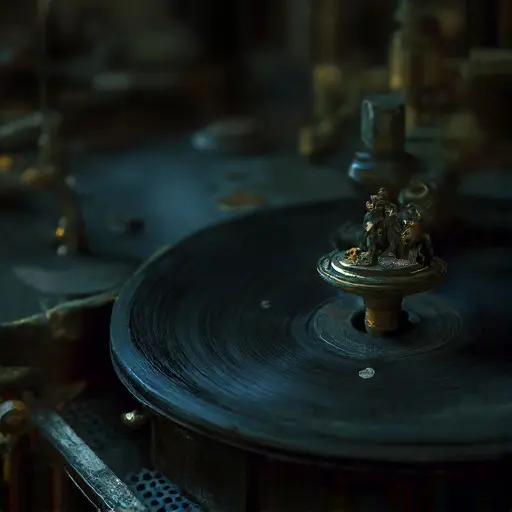
The most chilling discovery was made back in the main studio. Tucked carefully onto the spindle of the antique phonograph was the Master Cylinder. It was immense, thick, and made of perfectly smooth, unmarred black wax. The cylinder was visibly unscored—a perfect, continuous, smooth surface, indicating that nothing had been recorded upon it. Resting beside the phonograph was a single, small, tarnished recording stylus, its diamond tip worn smooth. Tucked beneath the phonograph was Dr. Vane’s final note. It revealed the tragic climax: he had successfully created his “Master Cylinder,” achieving the absolute, unblemished recording medium he craved. However, he realized that a perfect record of absolute silence is simply the absence of all sound, and that the beauty of a recording lies in the imperfect, resonant voice it contains. He had achieved eternal silence, but at the cost of all meaning. His final note read: “The cylinder is perfect. The silence is absolute. But the truth of a voice is in the echo it leaves.” His body was never found. The final silence of Echo-Sepulcher Keep is the enduring, cold, and massive, unmarred black wax cylinder, a terrifying testament to an acoustician who achieved sonic perfection only to find the ultimate, necessary flaw was the removal of the very possibility of sound and memory, forever preserved within the silent, sterile stasis of the abandoned Victorian house.}