The Final Paradox of Lumina-Shadow Keep
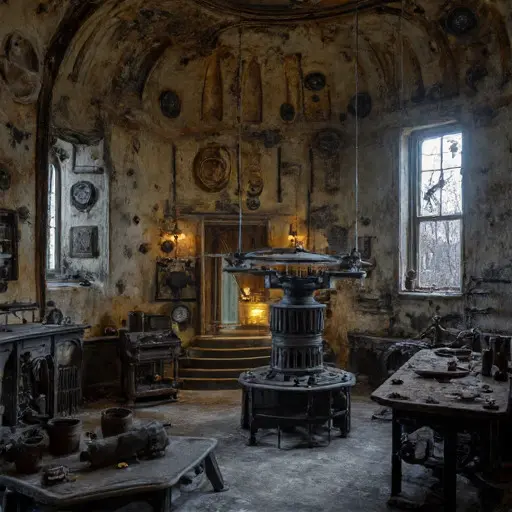
Lumina-Shadow Keep was an architectural statement of visual duality: a massive, dark-stone mansion built around a single, towering optical workshop. Its name suggested a blend of radiant light and absolute darkness. The house stood on a prominent, isolated rise, designed to capture the maximum amount of sunlight, yet its interior was characterized by numerous internal baffles and darkrooms. Upon entering the main light analysis chamber, the air was immediately cold, thin, and carried a potent, mineral scent of aged brass, glass dust, and a subtle, metallic aroma. The floors were covered in heavy, smooth tiles, now slick with dust and grinding residue, amplifying every faint sound into an unsettling echo. The silence here was not merely quiet; it was an intense, photonic stillness, the profound hush that enforces the memory of a focused beam of light suddenly extinguished. This abandoned Victorian house was a giant, sealed camera obscura, designed to achieve and hold a state of absolute, unchangeable, light-and-dark stability.
The Physicist’s Absolute Spectrum
Lumina-Shadow Keep was the fortified residence and elaborate laboratory of Dr. Elias Vane, a brilliant but pathologically obsessive optical physicist and color theorist of the late 19th century. His professional life demanded the precise measurement of wavelengths, the flawless separation of the color spectrum, and the pursuit of absolute monochromatic purity—a single color free of all other light. Personally, Dr. Vane was tormented by a crippling fear of ambiguity and a profound desire to make the chaotic, blended nature of color and light conform to a state of pure, silent, permanent definition. He saw the Hall as his ultimate prism: a space where he could finally design and isolate a single, perfect, final, monochromatic beam that would visually encode the meaning of absolute truth.
The Darkroom Vault
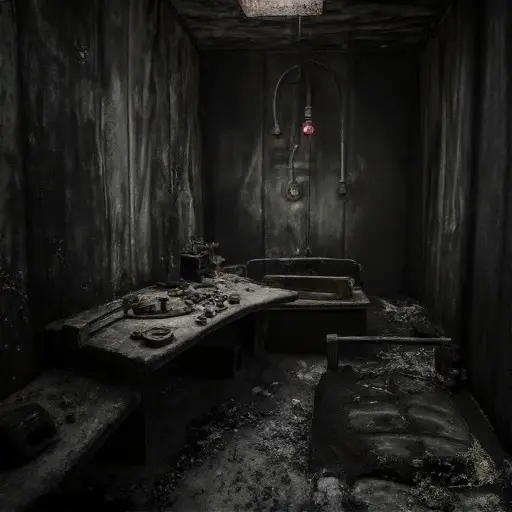
Dr. Vane’s Darkroom Vault was the engine of his obsession. Here, he worked to isolate and stabilize his final, most critical light experiments. We found his final, detailed Chromatic Compendium, bound in thick, featureless black leather. His entries chronicled his escalating desperation to find the “Zero-Wavelength Color”—a shade so pure it was essentially the absence of all others. His notes revealed that he had begun to believe the most chaotic element was the presence of color itself, which introduced ambiguity into vision. His final project, detailed meticulously, was the creation of a massive, unique, internal “Master Beam”—a final, perfectly pure, highly intense beam of monochromatic light, designed to be permanently focused on a single point: a perfectly white screen.
The Final Beam
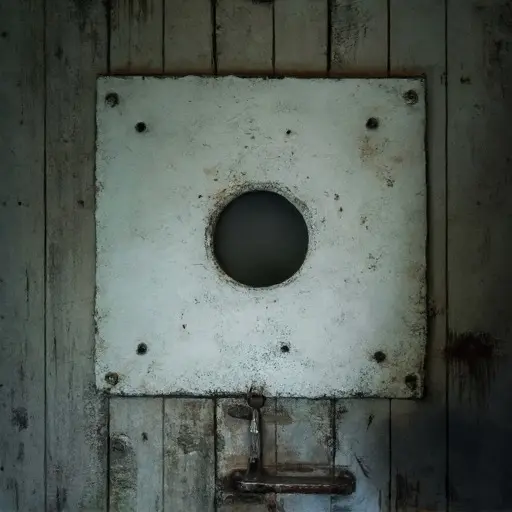
The most chilling discovery was made back in the main analysis chamber. Tucked directly beneath the shattered spectrometer was a massive, custom-machined brass apparatus, bolted firmly to the pedestal. The apparatus was intact and aimed at a target: a single, square sheet of pure, white plaster, affixed to the far wall. The plaster was covered by a single, perfectly round, unnaturally deep black spot—the residue of the Master Beam’s final focus. Resting beside the apparatus was a single, small, tarnished shutter control lever, frozen mid-operation. Tucked beneath the pedestal was Dr. Vane’s final note. It revealed the tragic climax: he had successfully generated and focused his “Master Beam,” a beam of light so pure it contained no other colors. However, when focused on the pure white screen, the intense purity of the light had reacted with the trace impurities in the plaster, burning an absolute, perfect spot of pure blackness—the permanent absence of all reflection. He had sought ultimate light and found ultimate shadow. His final note read: “The light is pure. The focus is absolute. But the truth of sight is in the blending of both.” His body was never found. The final paradox of Lumina-Shadow Keep is the enduring, cold, and massive black spot on the white screen, a terrifying testament to a physicist who achieved light’s perfection only to find the ultimate, necessary flaw was the creation of its opposite, forever preserved within the silent, photonic stasis of the abandoned Victorian house.}