The Final Silence of Vox-Ember Keep
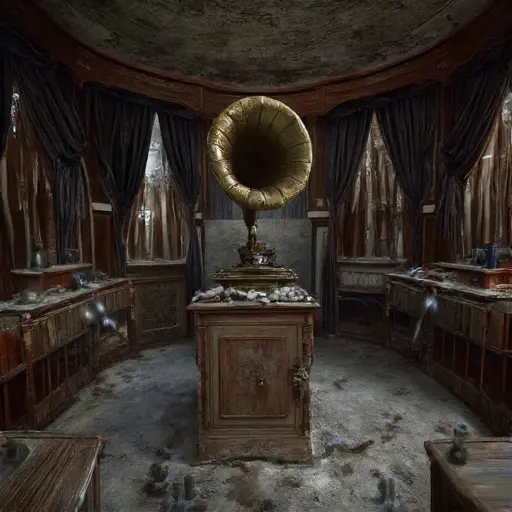
Vox-Ember Keep was an architectural statement of auditory isolation: a massive, windowless, circular structure built of dense, black brick, characterized by numerous internal sound traps and padded walls. Its name suggested a blend of living voice and dying fire. The house sat low in a valley, surrounded by dense, high foliage, which naturally muted all external sound. Upon entering the main recording studio, the air was immediately thick, cool, and carried a potent, almost dusty scent of aged felt, mineral oil, and a sharp, metallic odor. The floors were covered in heavy, sound-dampening rugs that muffled all footsteps. The silence here was not merely quiet; it was an intense, perfect stillness, the unnerving quiet that suggests all sound has been ruthlessly captured and absorbed. This abandoned Victorian house was a giant, sealed microphone, designed to record and hold a state of absolute, unchangeable aural perfection.
The Acoustician’s Final Record
Vox-Ember Keep was the secluded domain and elaborate laboratory of Dr. Alistair Finch, a brilliant but pathologically obsessive acoustician and early sound-recording engineer of the late 19th century. His professional life demanded the precise measurement of sound waves, the flawless isolation of noise, and the pursuit of absolute sonic fidelity—a recording without static, echo, or distortion. Personally, Dr. Finch was tormented by a crippling fear of impermanence in human speech and a profound desire to make a permanent, uncorrupted record of the human voice. He saw the Keep as his ultimate archive: a space where he could finally capture and preserve a single, flawless recording of the human voice, ensuring that the spoken word achieved eternal, unchangeable clarity.
The Anechoic Chamber
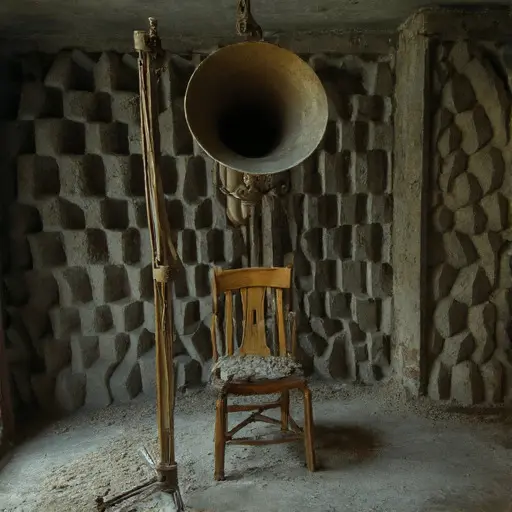
Dr. Finch’s Anechoic Chamber was the crucible of his auditory obsession. Here, he worked to eliminate all acoustic flaws from his recordings. We found his final, detailed Phonetic Log, bound in thick, sound-dampening rubber. His entries chronicled his escalating desperation to eliminate all acoustic ‘noise’—which, by the end, included all non-vocal environmental sounds. His notes revealed that he had begun to believe the only recording truly free of distortion was one that contained absolute silence. His final project, detailed meticulously, was the creation of a massive, unique, internal Recording Cylinder, designed to capture the acoustic environment of the anechoic chamber itself over a continuous 24-hour period, recording the “Sound of Nothing.”
The Final Wax Cylinder
The most chilling discovery was made back in the main recording studio. Tucked carefully into the massive phonograph’s spindle was a single, smooth, highly polished wax cylinder—his final recording medium. The cylinder was utterly silent, containing no visible grooves or etchings. Resting beside the cylinder was a small, tarnished brass stylus, its needle worn smooth. Tucked beneath the stylus was Dr. Finch’s final note. It revealed the tragic climax: he had successfully recorded the chamber’s acoustic void—the perfect, absolute silence he craved. However, upon playing the cylinder back, he realized that absolute silence was not pure sound, but the absolute absence of life and meaning. The only meaning in a voice is its imperfection, its echo, its presence. His final note read: “The record is perfect. The voice is destroyed. The truth is merely the lack of vibration.” His body was never found. The final silence of Vox-Ember Keep is the enduring, cold, and utterly smooth wax cylinder, a terrifying testament to an acoustician who achieved sonic perfection only to find the ultimate, perfect sound was the absolute, unhearing void preserved within the silent, abandoned Victorian house.}