The Echoing Chord of Sonus-Scroll Keep
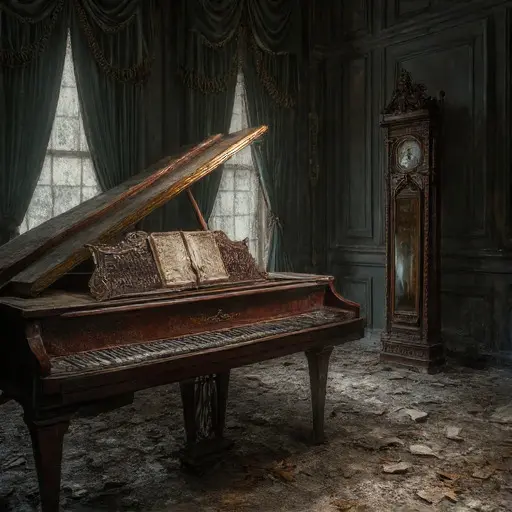
Sonus-Scroll Keep was an architectural statement of acoustic isolation: a mansion of heavy, thick-walled stone and numerous internal, padded alcoves. Its name suggested a blend of resonant sound and permanent, written record. The house sat deep in a remote, heavily forested valley, where the natural sounds of the world were already muted. Upon entering the main performance hall, the air was immediately thick, cool, and carried a potent, almost dusty scent of aged felt, dry wood, and a faint, sweet trace of beeswax. The floors were covered in thick, dust-laden rugs that muffled all footsteps. The silence here was not merely quiet; it was an intense, unnatural stillness, the kind that suggests that all resonance has been perfectly absorbed and contained. This abandoned Victorian house was a giant, sealed instrument, designed to achieve and hold a state of perfect, unchangeable musical harmony.
The Composer’s Absolute Cadence
Sonus-Scroll Keep was the secluded domain and elaborate workshop of Maestro Julian Thorne, a brilliant but pathologically obsessive composer and musical theorist of the late 19th century. His professional life demanded the meticulous crafting of melody, the flawless harmonization of notes, and the pursuit of absolute musical perfection—a composition without flaw, dissonance, or error. Personally, Maestro Thorne was tormented by a crippling fear of discord and a profound paranoia that all emotional expression was fundamentally chaotic and unharmonious. He saw the Keep as his ultimate score: a space where he could finally write and play a single, perfect, final chord that would ensure his existence ended in a state of unassailable, eternal harmony.
The Tuning Chamber
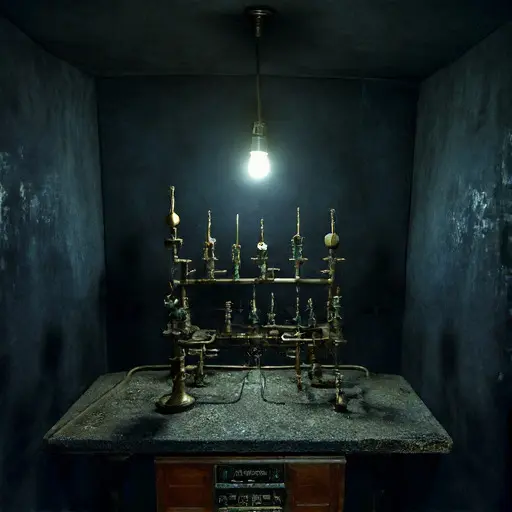
Maestro Thorne’s Tuning Chamber was the crucible of his auditory obsession. Here, he calibrated his instruments to an impossible standard. We found his final, detailed Harmonic Ledger, bound in smooth black leather. His entries chronicled his escalating desperation to eliminate all acoustic ‘noise’—which, by the end, included the human voice of his wife, Lady Elara, whom he believed had an ‘unharmonious’ speaking cadence. His notes revealed that he had begun to compose a single, final, massive chord that utilized every note possible on the piano, convinced that the sheer density of the sound would create a perfect, unmoving wall of harmony. His final project, detailed meticulously, was the creation of a massive, unique, internal Music Box designed to play this single chord one time, at the precise moment of his death.
The Final Resonance
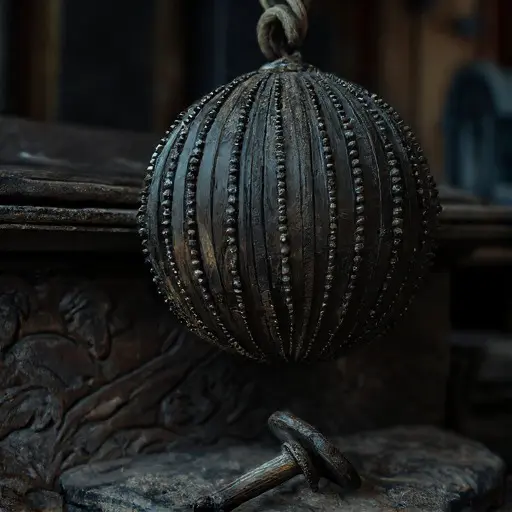
The most chilling discovery was made in the main performance hall, directly above the grand piano. Suspended from the ceiling beam by heavy, braided rope was a massive, intricately crafted wooden cylinder, resembling a giant, ornate music box barrel, its surface covered in thousands of tiny, brass pins. This was the mechanism for his final chord. Tucked beneath the piano keys, we found a single, small, iron crank handle for the barrel. Tucked beneath the handle was Maestro Thorne’s final note. It revealed the tragic climax: he had successfully constructed the mechanism for his final, perfect chord. However, he realized that to play the chord once and achieve eternal harmony, he had to accept the eternal silence that would follow. He had wound the massive cylinder but lacked the resolve to insert the handle and initiate the final, self-destructive sound. His final note read: “The chord is ready. The silence is the cadence. The music is eternal only if unplayed.” His body was never found. The echoing chord of Sonus-Scroll Keep is the enduring, cold stillness of that massive, wound cylinder, a terrifying testament to a composer who achieved musical perfection only to find the ultimate, terrifying harmony was the absolute, profound quiet preserved within the silent, abandoned Victorian house.}