The Static Echo of Vesper-Vane Keep
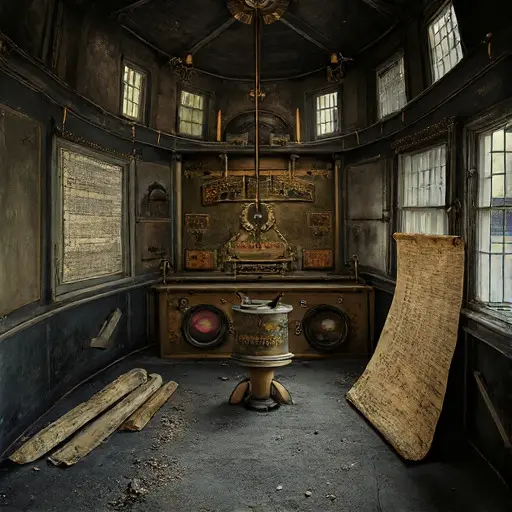
Vesper-Vane Keep was an architectural anomaly: a sprawling, low-slung mansion built of dull gray fieldstone, characterized by numerous small, external structures topped with weather vanes, measuring cups, and antennae. Its name suggested the combination of evening twilight and a directional indicator. The house was situated on a low, exposed promontory, constantly subject to the capricious nature of the weather. Upon entering the main observation deck, the air was immediately cold, thin, and carried a potent, mineral scent of damp rock, ozone, and a metallic tang. The floors were rough, slate flagstones, amplifying every faint sound into an unsettling echo. The silence here was not restful; it was the intense, waiting quiet that precedes a storm, a stillness that seemed to absorb all external motion. This abandoned Victorian house was a giant, sealed instrument, designed to measure and predict the very chaos of the atmosphere.
The Meteorologist’s Final Forecast
Vesper-Vane Keep was the fortified residence and elaborate laboratory of Dr. Elias Alcott, a brilliant but pathologically obsessive meteorologist and climate scientist of the late 19th century. His professional life demanded relentless scrutiny of atmospheric conditions, the meticulous logging of data, and the pursuit of absolute weather prediction. Personally, Dr. Alcott was defined by a crippling fear of the unpredictable and a profound desire to eliminate all natural chaos from his life, particularly after his small daughter, Lydia, was caught in a sudden, catastrophic storm. He saw the Keep as his ultimate control center, convinced that by collecting enough data, he could finally predict the “final state” of the world’s weather—a state of permanent, static calm.
The Data Archive
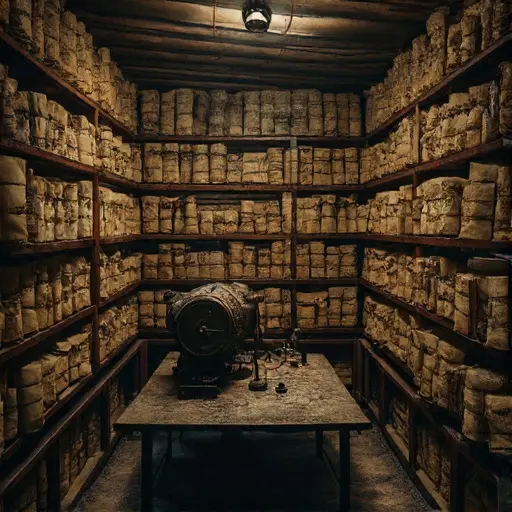
Dr. Alcott’s Data Archive was the repository of his life’s work. Here, among the dusty rolls of charts, we found his final, comprehensive Atmospheric Compendium, bound in heavy treated leather. His entries chronicled his escalating desperation to find the “Pattern of Finality” in the data, a predictable, concluding state of the climate. His notes revealed that he began to include highly personalized variables in his logs: “Lydia’s anxiety levels,” “Clara’s laughter frequency,” believing that the chaos of human emotion was directly tied to the chaos of the weather. His final project, detailed meticulously, was the creation of a massive, single, master chart that combined all data points to predict the world’s weather one year into the future.
The Final Chart Display
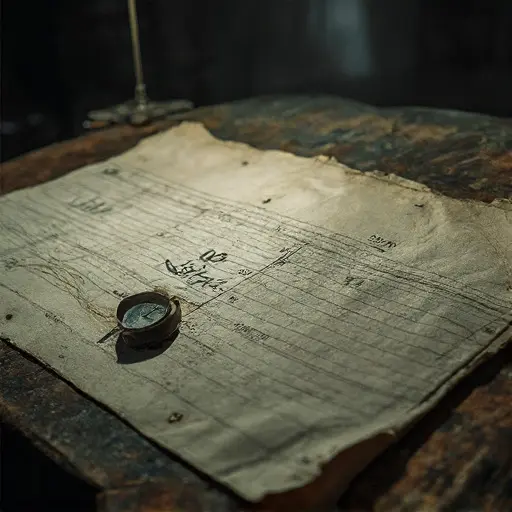
The most chilling discovery was back on the main observation deck. Resting on the massive drafting table was the Master Prediction Chart. It was a huge sheet of parchment, covered in hundreds of lines and figures, all meticulous and precise. However, the last third of the chart was completely blank, save for a single, final annotation scrawled by Dr. Alcott. The annotation read: “The Prediction is Constant: Nothing.” Tucked beneath the chart was his final note. It revealed the tragic climax: he had finally calculated the world’s final weather state, and the prediction was absolute, unchanging stasis—no wind, no rain, no pressure change, a perfect, eternal calm. Realizing the horror of a world without movement or change, he destroyed all remaining charts and notes save the final, blank one. His final note read: “The prediction is a grave. I choose the storm.” He vanished shortly after. The static echo of Vesper-Vane Keep is the profound, cold silence of a house built to predict the wind, now left with the terrifying, blank certainty of a perpetual calm preserved within the silent, highly sensitive instruments of the abandoned Victorian house.}