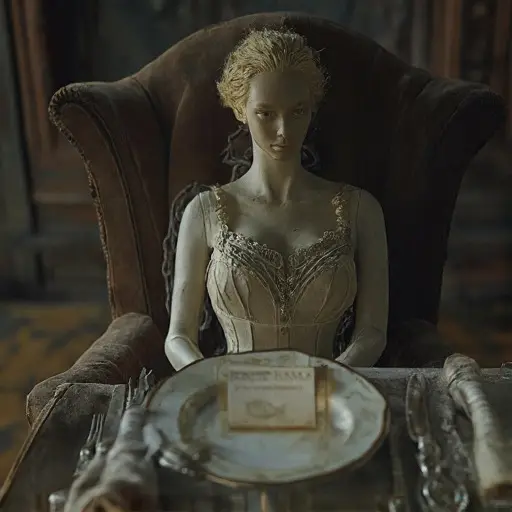
The Silent Feast of Marrow-Spire House
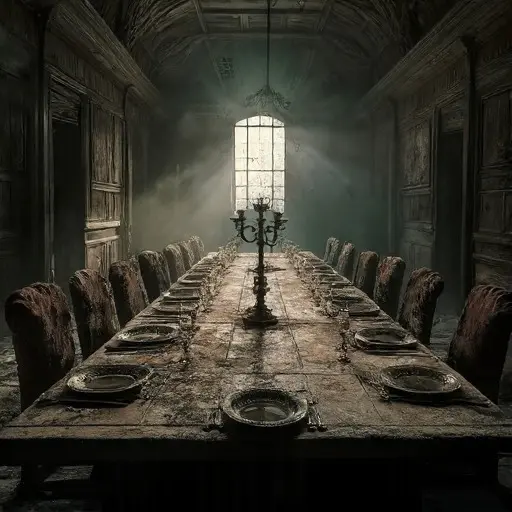
Marrow-Spire House was a mansion of unusual verticality, a narrow, dark structure built of granite with numerous sharp gables and a single, dizzyingly high central spire. Its name suggested a blend of deep, essential core and towering height. The house sat on a narrow, exposed outcrop, perpetually lashed by the wind. Upon entering the main dining wing, the air was immediately cold, dry, and carried a potent, almost chemical scent of old cooking spices, heavy linen, and a faint, acrid trace of dried wine. The floors were polished marble, now dull and cracked, amplifying every faint sound into an unsettling click. The silence here was ceremonial and suffocating, the profound hush that enforces a rigid, unbending social order. This abandoned Victorian house was a stage set for a perpetual, silent, and terrifying ritual of control.
The Host’s Calculated Ritual
Marrow-Spire House was the fortified residence and social prison of Lord Alistair Thorne, a brilliant but pathologically obsessive master host and purveyor of high-society etiquette in the late 19th century. His professional life demanded the impeccable staging of dinner parties, the flawless execution of social protocols, and the creation of absolute, controlled formality. Personally, Lord Thorne was tormented by a crippling fear of spontaneity and a belief that all human interaction, if not perfectly scripted, devolved into chaos. He saw the House as his ultimate social theater, convinced that by maintaining a perfect, static dining ritual, he could achieve a permanent, unchangeable form of social immortality for himself and his guests.
The Etiquette Vault
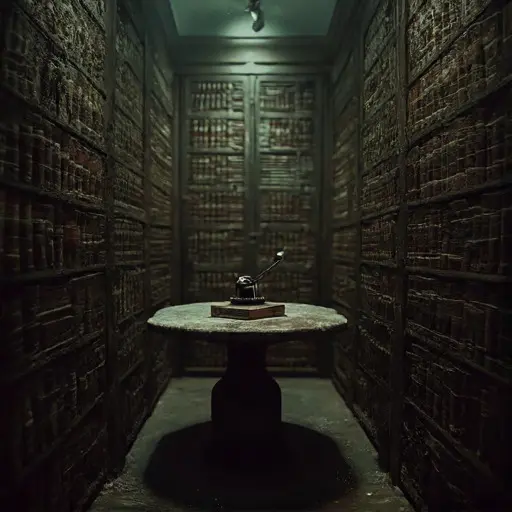
Lord Thorne’s Etiquette Vault was the control center of his household. Here, among the dusty registers, we found his final, detailed Protocol Ledger. His entries chronicled his escalating desperation to eliminate all variance from his weekly dinner ritual. He began to view the human guests themselves as the most unpredictable and dangerous variable. His notes revealed that he started replacing his staff and even his wife, Lady Elara, with life-sized, articulated mannequins dressed in formal attire, believing their silence and immobility guaranteed the protocol’s perfection. His final project was the preparation of the definitive, Unattended Feast—a final dinner where the setting alone would speak volumes.
The Perpetual Seating Chart
The most chilling discovery was back in the main dining hall. Tucked beneath the centerpiece candelabra, we found a final, sealed silver scroll. Inside, we found the Perpetual Seating Chart, a parchment listing only the names of the mannequins who filled the room’s chairs, meticulously placed according to rank. The final line of the chart was a handwritten note from Lady Elara: she had finally fled the house, leaving behind her own mannequin replica to sit at her place. Tucked beneath the chart was Lord Thorne’s last note. It revealed the tragic climax: he had finally achieved the perfect, silent, and controlled feast, only to realize that by eliminating all spontaneity, he had eliminated all life. His final entry read: “The Protocol is flawless. The silence is the audience. My role is finished.” His body was never found. The silent feast of Marrow-Spire House is the absolute, terrifying stillness of that perfect, dust-covered table, a monument to a host who, in his quest for social order, found the only lasting protocol was the static, cold presence of absence within the abandoned Victorian house.