The Silent Mirror of Glaze-Hollow House
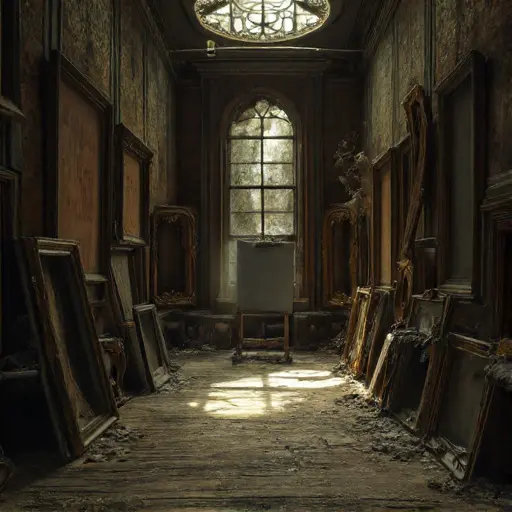
Glaze-Hollow House was a mansion built of smooth, pale brick and characterized by numerous large, south-facing windows. Its name suggested a place of bright, reflective surface and deep, empty space. The house stood on a gentle slope, highly exposed to the sun but perpetually prone to fog. Upon entering the main studio, the air was immediately cold, thin, and carried a potent, chemical scent of aged linseed oil, turpentine, and a faint, acrid trace of silver nitrate. The floors were polished hardwood, now dull and slick with dust, amplifying every faint sound into an unsettling echo. The silence here was oppressive and self-contained, a stillness that implied a deliberate attempt to stop external reality from intruding. This abandoned Victorian house was a visual fortress, designed to control and freeze all forms of sight and image.
The Photographer’s Perfect Image
Glaze-Hollow House was the residence and elaborate photographic studio of Lady Beatrice Vance, a brilliant but pathologically obsessive early photographer and experimental chemist of the late 19th century. Her professional life demanded the meticulous control of light and shadow, the chemical precision of developing, and the pursuit of absolute visual fidelity. Personally, Lady Vance was defined by an extreme fear of being observed or having her own fragile inner life exposed, leading to a deep paranoia about others’ intentions. She saw the House as her ultimate camera obscura: a space designed to allow her to see the world without being seen, and to capture a single, perfect image that contained the entire truth of her existence.
The Darkroom of Final Proof
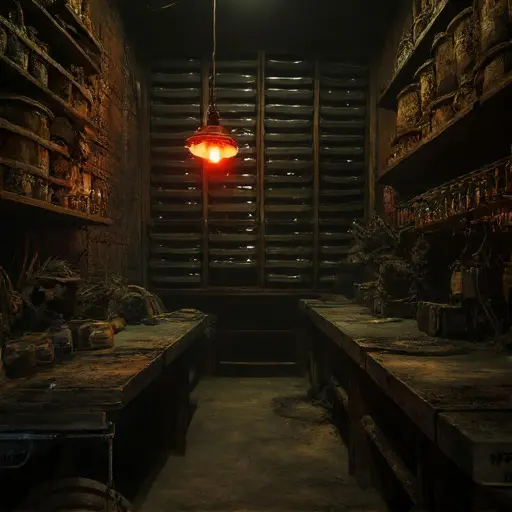
Lady Vance’s Darkroom was a small, absolute void in the heart of the house. Here, amidst the trays and chemicals, we found her final, detailed Exposure Log, bound in black, stiff cardboard. Her entries chronicled her escalating desperation to capture an image that was visually flawless, devoid of grain, blur, or shadow, which she termed “Pure Proof.” Her notes revealed that she stopped photographing the external world entirely and began photographing empty rooms within the house, believing the absence of objects was the only verifiable truth. Her final project, detailed meticulously, was the creation of a massive, single photographic plate designed to capture the entire image of the house’s main studio—the entire setting of her life—in one single, absolute exposure.
The Chamber of Self-Portrait
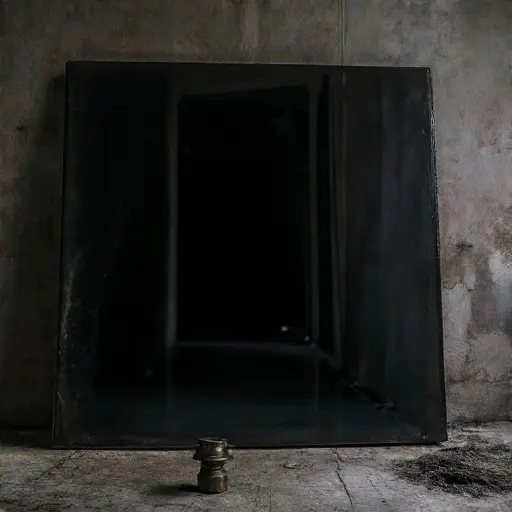
The most unsettling discovery was in a small, sealed closet located directly off the main studio, hidden behind a movable wall panel. The closet was completely dark. Inside, leaning against the back wall, was the massive, developed photographic plate mentioned in her log. It was completely, uniformly black, with only a faint, central shadow visible. Tucked beneath the plate was Lady Vance’s final note to her estranged husband, Charles, who was a patron of the arts and had funded her obsession but was never allowed to see her work. The note revealed the tragic climax: she had achieved “Pure Proof” by creating a plate so chemically sensitive that when she opened the closet door, the light of the main studio over-exposed the plate to absolute blackness. Her final, chilling conclusion was that the only perfect, verifiable image was the one that consumed all light, leaving only the shadow of the photographer herself, seen but unseen. Her final note read: “The Proof is absolute. I am entirely developed.” Her body was never found. The silent mirror of Glaze-Hollow House is the enduring, cold stillness of that final, over-exposed plate, a terrifying testament to a photographer who sought absolute truth in light, only to find the ultimate, black void of her own self-obsession preserved within the silent abandoned Victorian house.