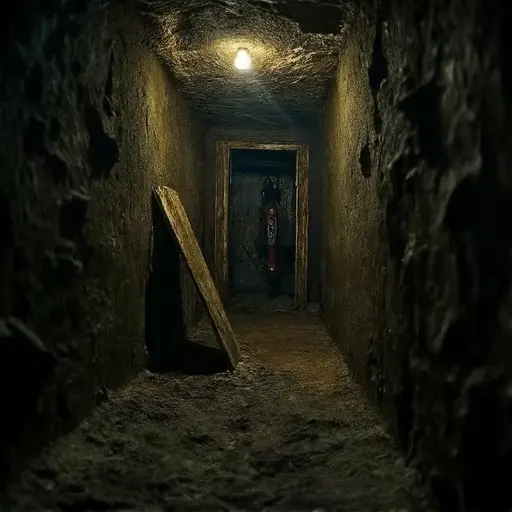
The Eerie Music of Glimmer-Chord Hall
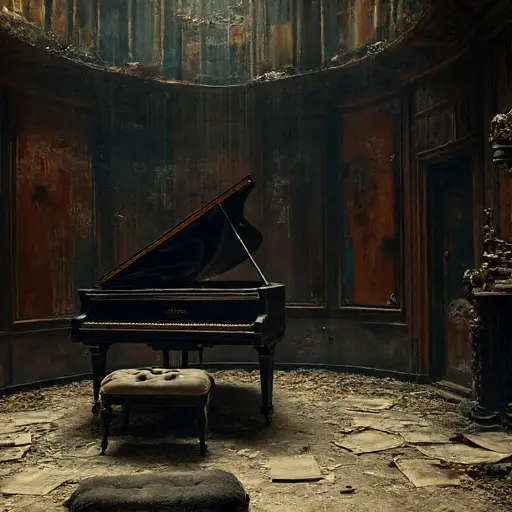
Glimmer-Chord Hall, a name suggesting fleeting, beautiful harmony, was a sprawling, acoustically ambitious mansion built on an isolated, wind-swept moor. Its architecture was characterized by unusual curves, high ceilings, and oddly placed alcoves, all designed to maximize sound propagation. The house looked less like a home and more like a vast, silent instrument. Upon opening the massive oak doors, the air was surprisingly dry and cold, carrying a sharp, metallic odor of oxidized brass and old resin. The silence was immediate and almost painful, the kind that follows a sudden, violent noise. Every surface seemed to hold a faint, lingering echo. This abandoned Victorian house was a symphony of neglect, where the vibrant past had been muffled into a profound, chilling stillness.
The Instrument Maker’s Perfect Ear
Glimmer-Chord Hall was the creation and studio of Elias Thorne, a renowned, yet fiercely perfectionist, violin and string instrument maker of the late 19th century. His professional life was spent in the meticulous calibration of sound, carving wood to achieve the single, perfect resonance. Personally, Elias was a man consumed by aural hyper-sensitivity—his world was painfully loud, and he sought refuge in the controllable, pure tones of his own instruments. He built the Hall as a giant resonator, a space where he could finally control the auditory environment, using the architecture itself to achieve a flawless, sustainable silence.
The Luthier’s Workshop of Quiet Wood
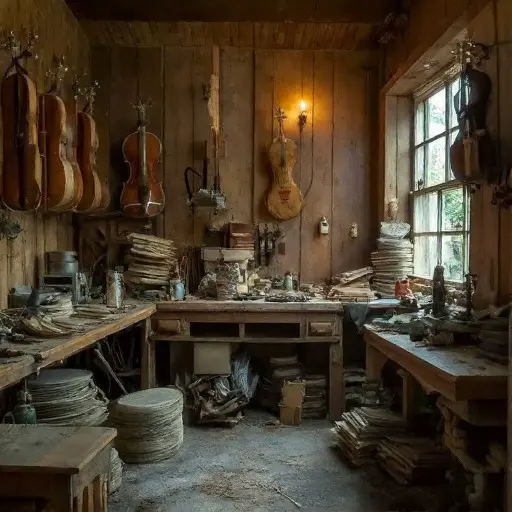
Elias’s workshop was a testament to his precision. Here, among the dusty, hanging violins and the scent of aged maple, we found his final, detailed diary. His entries chronicled his growing inability to tolerate any external sound, leading him to communicate with his wife, Lydia, solely through written notes, even when they were in the same room. His final project, detailed meticulously in the journal, was a violin he called “The Hush”—designed not to project sound outward, but to perfectly absorb it inward, creating an auditory vacuum around the player. He believed this instrument would finally grant him peace.
The Hidden Sound Chamber
The key to the Hall’s eerie silence lay in a small, hidden sub-room beneath the main music chamber, accessible only through a small hatch. This room was engineered with thick, layered walls and ceiling—a purpose-built isolation chamber. It contained no furniture, only a small, rough wooden box. Inside the box, we found the finished instrument: The Hush. It was beautiful, but utterly silent. Tucked beneath the violin was Elias’s final, brief note to Lydia: “I went where it is quiet. I am finally in tune.” However, a faint smear of dried blood was visible on the floor near the corner. Lydia’s diary, later discovered in a hidden compartment of the piano, told the heartbreaking end: Elias had tested the violin, found that even its internal vibrations were torturous, and, in a final act of despair, sealed himself within the isolation chamber. The eerie music of Glimmer-Chord Hall is the enduring, agonizing silence of a man who pursued a perfect quiet that could only be achieved through complete, final stillness within his abandoned Victorian house.