The Silent Promise of Fenwick-Ember

Fenwick-Ember was a strange, squat building of dark stone and deep eaves, built low into a hollow where perpetual dampness settled. Its name suggested a paradox: the life of a dying flame. The house possessed a heavy, brooding silence, amplified by the thick walls and small, deeply recessed windows. Stepping inside, the air was immediately oppressive, smelling intensely of stale fireplace smoke, wet earth, and a faint, sweet, metallic scent. The floorboards were thick, damp, and cold, muting every sound. The house felt less like a residence and more like a carefully sealed oven, designed to trap warmth and life, yet now only preserving a chilling vacuum. This abandoned Victorian house had traded human warmth for a cold, suffocating permanence.
The Doctor’s Fatal Vow
Fenwick-Ember was the sanctuary and final workplace of Dr. Thomas Gentry, a brilliant but isolated obstetrician and children’s doctor in the late 19th century. His professional life was spent bringing life into the world, mediating the fragile boundary between existence and loss. Personally, Dr. Gentry was defined by a single, catastrophic event: the death of his own infant son, Arthur, shortly after birth. This loss shattered him, turning his mission into an impossible, obsessive vow—that no child under his care would ever suffer the same fate. He became pathologically focused on pediatric preservation, turning his home into a highly controlled, sterile environment meant to defy all natural disease and decay.
The Preparation Chamber
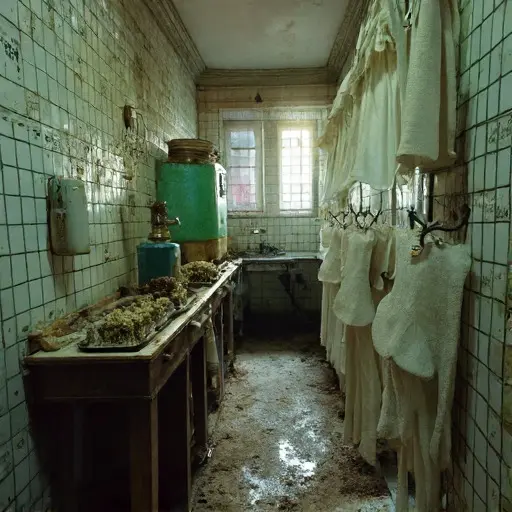
Dr. Gentry’s preparation chamber was an anomaly in the house: starkly modern, tiled, and designed for sterile precision. The counters held the frozen tools of his trade. His extensive medical journal, found lodged behind a cabinet, detailed his declining mental state. His entries tracked less about medical cases and more about the house itself, which he referred to as “The Incubation.” He believed the house’s controlled atmosphere—its temperature, humidity, and stillness—was the perfect environment for “permanent pediatric preservation.” His final, chilling entries described moving all his supplies and focus to the nursery, concluding: “I have prepared the space; the promise is kept.”
The Cradle’s Stillness
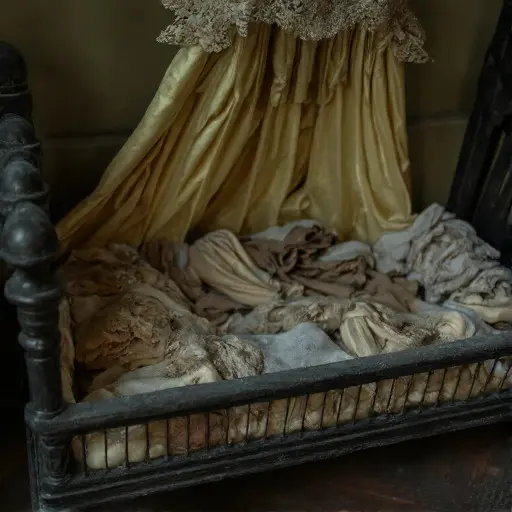
The tragic core of the house was the nursery, the room where his son Arthur had died. It was here that Dr. Gentry enacted his final, obsessive ritual. The rocking horse was motionless, the toys undisturbed. The centerpiece was a magnificent, antique wooden cradle draped with a tattered, lace-edged silk canopy. Beneath the canopy, nestled inside the cradle, we found not a body, but a carefully organized archive of baby clothes, blankets, and locks of hair, all meticulously labeled with the names and dates of every child Dr. Gentry had successfully delivered over his thirty-year career. The items were treated with a preservation chemical, leaving behind the faint, metallic scent that permeated the house. His final journal entry explained that by sealing the physical memory of their beginnings in the cradle, he was ensuring their permanent health and safety, honoring his vow to them. He vanished shortly after, leaving behind a testament to his guilt and failed obsession. The silent promise of Fenwick-Ember is the profound stillness of the cradle, a chilling monument to a love that could not accept loss, entombed forever within the abandoned Victorian house.