The Eerie Grime of Cinder-Veil Hearth

Cinder-Veil Hearth was a paradox—a huge, Gothic mansion built not for luxury, but for utility. Its architecture was stark, its windows narrow, and its gray stone exterior seemed perpetually coated in the soot of an unseen furnace. Located near the now-defunct railway lines, the house had a functional, joyless aesthetic. Upon entering, the cold was immediate and penetrating. The air smelled of stale tobacco smoke, damp coal dust, and residual cleaning chemicals. The silence was less of peace and more of exhaustion, as if the house had simply worked itself to death. Every surface in this abandoned Victorian house felt abrasive, coated in a fine, unsettling layer of dark, clinging grime that obscured the faded opulence beneath.
The Housekeeper’s Impossible Task
Cinder-Veil Hearth was ultimately run, and later consumed, by Mrs. Beatrice Lowell, the head housekeeper and chief steward. Her professional life was defined by an extreme, pathological commitment to cleanliness and order—a relentless, impossible battle against the soot-filled air of the industrial era. She saw the grime not just as dirt, but as moral decay and personal failure. Personally, Beatrice was a silent, stern woman, driven by a fear of exposure and poverty, having grown up in abject squalor. Her connection to the mansion was absolute: she was the meticulous engine that kept the wealthy owner’s chaotic life running, and the mansion became the physical manifestation of her futile, endless labor.
The Linen Room of Buried Obsession
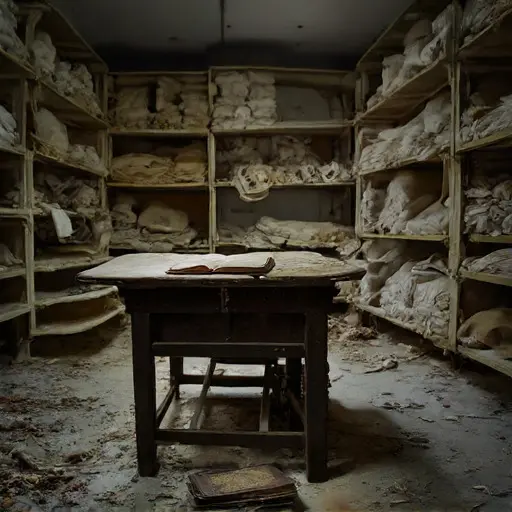
The linen room was Beatrice’s sanctuary and battleground. Even in decay, the remaining shelves held stacks of linen folded with unnerving precision. We found her meticulous inventory ledger, detailing every sheet, pillowcase, and tablecloth, cross-referenced with its laundering cycle and the type of stain it bore. The final pages, however, devolved from inventory into frantic philosophical musings about the nature of dirt. She started labeling stains by their supposed origin: “The Grime of Jealousy,” “The Stain of Untrue Love.” Her obsession climaxed when she began replacing the pristine white linens with cloth she had intentionally soiled with mud and soot, then cleaned, convinced she was purging the house’s moral filth. Her final entry, scrawled repeatedly across a page, was: “The Dirt Wins.”
The Private Wardrobe
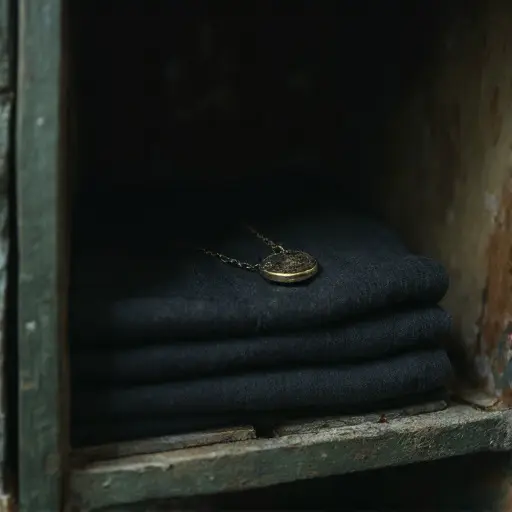
The owner’s opulent master suite was silent, but it was Beatrice’s small, hidden private wardrobe, built into the back of the linen room, that held the greatest secret. The small cupboard contained only one thing: a simple, unadorned, dark gray uniform dress—the exact one pictured in a faded photograph of a young Beatrice, standing with her stern mother outside a grim, industrial laundry. Tucked into the pocket of the uniform was a tiny, gold-plated locket. Inside the locket, we found two miniature, hand-painted portraits: one of Beatrice, and one of Mr. Aldous Cinder, the original wealthy owner of the Hearth. It was a silent, forbidden admission. The mansion wasn’t just her workplace; it was the repository of a secret, passionate, and doomed affair she had relentlessly tried to cleanse from her life through obsessive labor. Her final act was to abandon the house, leaving the filth and the secret forever entombed, knowing that the physical decay of the abandoned Victorian house was now the only thing protecting her forbidden truth.