The Tragic Tale of Shadowglen Loom
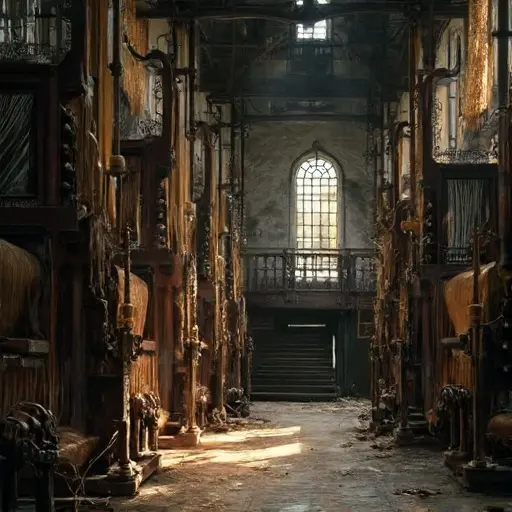
Shadowglen Loom, a name that fused nature with industry, was a jarringly ambitious estate. Built on a small, marshy plain, the house itself was a sprawling, industrial-Victorian hybrid, part stately home, part textile mill. The exterior was severe, gray brick softened only by the persistent fog that clung to the valley floor. The massive structure felt cold and resonating, as if the ghosts of machinery still vibrated through the floorboards. The moment one stepped across the threshold, the air was thick with the scent of stagnant water, mildew, and a faint, sweet overlay of dye and old wool. This abandoned Victorian house was a place of work and domesticity, where the lines between creation and madness had utterly blurred.
The Weaver’s Obsession with Color
The mansion was the creation of Mathilda Hawthorne, a brilliant but driven textile artist and factory owner of the mid-19th century. Her professional life was dedicated to mastering the complexities of natural dyeing and weaving, creating intricate patterns and colors considered revolutionary for the time. Personally, however, Mathilda was plagued by intense visual synesthesia—she saw emotions as overwhelming colors, a gift that became a curse. Her immense passion was controlled by her desperate need to externalize her inner chaos onto thread. She poured all her artistry and emotional turmoil into the Loom, convinced that the perfect tapestry could finally organize her mind.
The Dye House of Faded Hues
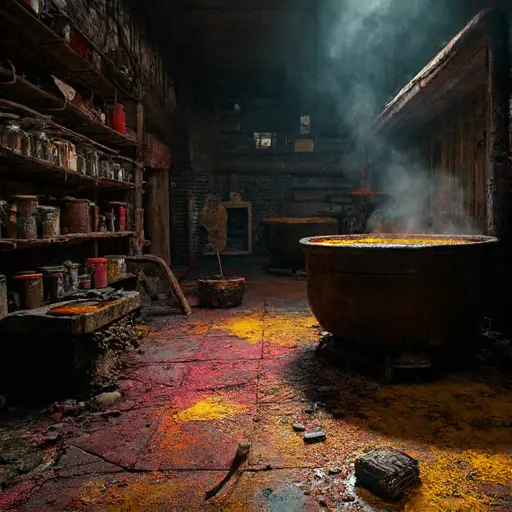
The dye house was a secretive, humid space. Here, the floor was stained with abstract, swirling patterns of rich, faded colors—the remnants of Mathilda’s emotional palette. Her final ledger, found beneath a pile of dry, brittle madder root, detailed her growing frustration. She was no longer naming colors after dyes, but after emotions: “The Hue of Jealousy,” “The Stain of Regret.” Her notes suggested she had begun dipping her own clothes, her furniture, even the paper she wrote on, into these emotional vats, attempting to saturate her entire world with external control. The final, chilling entry simply read: “I must weave the feeling itself.”
The Bedroom Tapestry
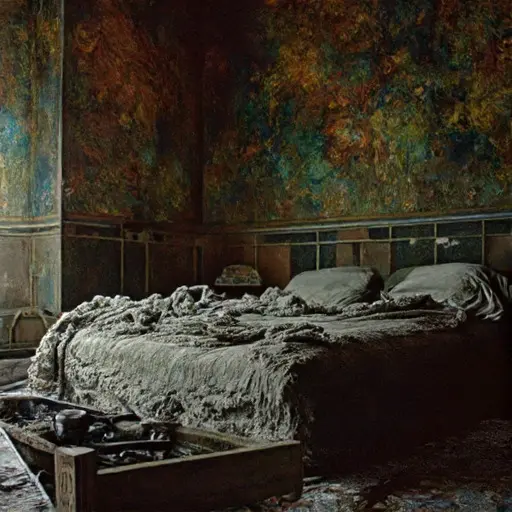
The master bedroom, where Mathilda slept, was the stage for her ultimate, tragic project. Against one wall, dominating the space, hung an immense, unfinished tapestry. Unlike her earlier, ordered works, this tapestry was a chaotic explosion of color and texture—raw wool, rough hemp, and fine silk were woven together in an incoherent, frenzied mess. Yet, woven directly into the heart of the fabric was a distinct, repeating pattern of her husband’s, Elias Hawthorne’s, favorite pipe tobacco blend and the embroidered, faded collar of his favorite dressing gown, now threadbare. Elias, who managed the business, had quietly disappeared months before the house was abandoned. Mathilda’s notes revealed her final, desperate belief: that by weaving his essence—his scent, his clothes, the fabric of his life—into her masterpiece, she could forever preserve his presence and control his absence. The tragic tale of Shadowglen Loom is the silence of the looms and the unfinished, colorful shroud of the man who was woven into the fabric of the house itself.