The Forbidden Past of Umber-Haven
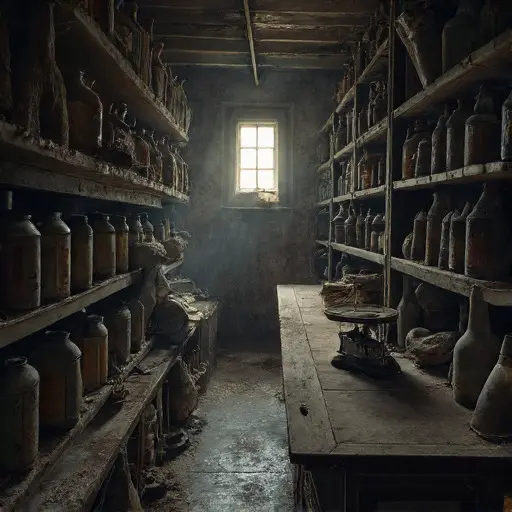
Umber-Haven was less a house and more a grim, brick fortress built into the side of a small, scrubby hill. Its dark, heavy stonework absorbed the light, giving it a permanent air of twilight, even under a bright sun. The air was perpetually damp and cold, carrying the earthy, mineral scent of deep cellars and old foundations. Entering the foyer, the overwhelming impression was one of methodical order yielding to chaotic decay; furniture stood shrouded in white sheets that resembled ghosts of their former selves. The floorboards were silent here, strangely solid, suggesting a depth of construction meant to endure far beyond the lives of its inhabitants. This abandoned Victorian house was a place where meticulous routine had suddenly and violently ceased.
The Historian’s Perfect Timeline
Umber-Haven was the creation and final refuge of Evelyn Thorne, a renowned, but deeply eccentric, historical archivist and chronologer. Her professional life revolved around absolute factual accuracy, the dating of artifacts, and the creation of perfect, linear timelines. Personally, Evelyn was burdened by the conviction that her own family’s history was fundamentally flawed—a mess of half-truths and embarrassing secrets. She built Umber-Haven as a meticulously organized, self-contained historical archive, intending to reconstruct a perfect, sanitized version of her lineage, free of human error and emotion. Her obsession was control, extending to every single object within the mansion.
The Chronology Room
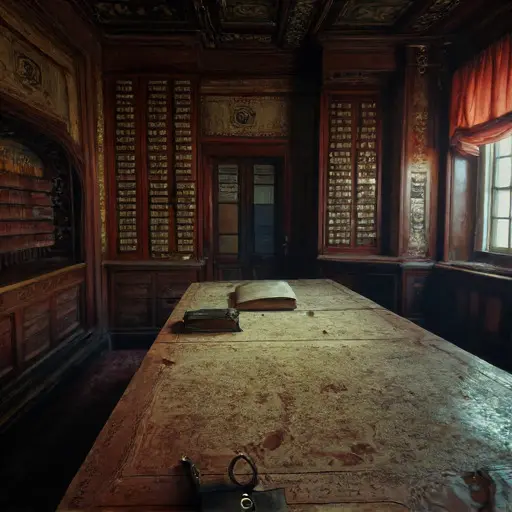
Evelyn’s Chronology Room was the architectural embodiment of her mania. Every object and every room in the house was cataloged and cross-referenced here. However, the last section of her meticulous index cards, dating to the final month of her residency, was not about external history, but about her younger brother, Silas, who had disappeared years prior. The final set of cards detailed her desperate search, referencing hidden compartments and false walls within the house itself. The notes reveal her discovery: Silas hadn’t fled; he had suffered a debilitating breakdown and, fearing his “flawed” existence would ruin her perfect archive, Evelyn had secretly committed him to a hidden, soundproof chamber built into the foundation. The perfect timeline required a perfect erasure.
The Hidden Archive in the Walls
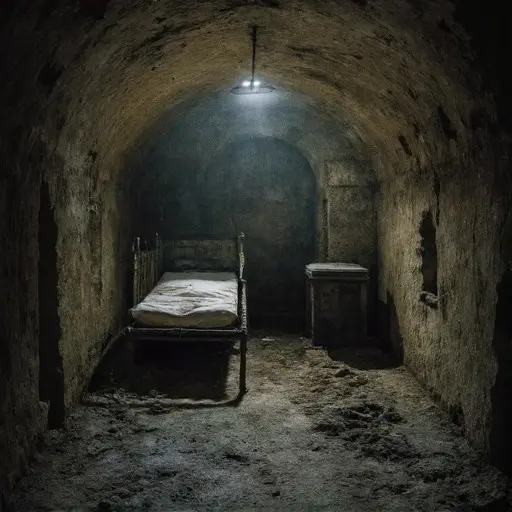
The true secret of Umber-Haven was not in the light-filled rooms, but in the depths. Following the clues in Evelyn’s final, frantic notes, we discovered a series of hollow spaces behind the walls of the grand parlor. These were not structural voids, but small, airless, meticulously organized archives—tiny, private rooms where the objects, clothes, and mementos of Silas were kept, labeled, and dated, but never meant to be seen. The last archive was merely an empty cot and a pair of worn leather slippers, perfectly placed in a small, damp chamber, suggesting that Silas eventually succumbed, his body later removed to maintain the “perfect” historical record of the house. Evelyn herself vanished a week after her last entry, unable to live with the contradiction of her controlled life and the terrible truth entombed within her walls. The eerie silence of Umber-Haven is the sound of a carefully manufactured history collapsing under the weight of a forbidden memory.