Ashcombe Court Letters Detail Missing Author
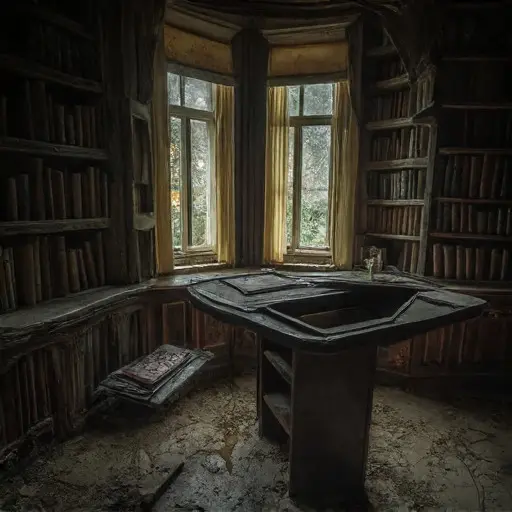
Ashcombe Court, a substantial stone-built Victorian residence in Surrey, was home to celebrated but controversial Author Elias Thornhill until his disappearance in the summer of 1883. The house itself is a monument to the historical beauty of a successful creative life, filled with the debris of a writer’s existence—stacks of uncorrected proofs, reams of watermarked writing paper, and the remnants of a sophisticated printing press in the basement. The quiet unease surrounding Ashcombe Court stems from the fact that Thornhill’s personal effects, including his famous spectacles and walking cane, were left neatly by the front door, yet the man himself was entirely missing. While official reports suggested a drowning accident during a solitary trip, no body was ever recovered, and the insurance claim was ultimately denied due to lack of conclusive evidence of death.
The Editor’s Conflicting Correspondence
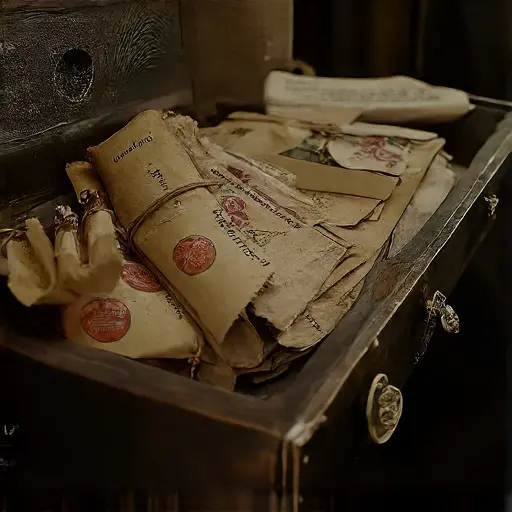
Among the preserved artifacts are a sequence of three telegrams sent by Thornhill’s Newspaper Editor in London, discovered wedged behind the drawing-room skirting board. The first two are congratulatory regarding an impending serialization. The third, dated July 29th, 1883—the day after his reported disappearance—reads simply: “CONTRACT TERMINATION IMPOSSIBLE. PUBLICITY DANGEROUS. RETURN IMMEDIATE.” This documented human complication introduces a severe motive for flight or foul play, directly contradicting the narrative of a casual accident. The editor’s insistence on Thornhill’s immediate return suggests that the man was not only alive after his purported disappearance but had actively attempted to terminate a contract that held significant financial and public risk. The physical evidence of the unopened letters from his Publisher confirms that Thornhill cut off all professional contact, suggesting premeditation, but the reason why remains missing.
Redacted Manuscript and Library Anomaly

The most profound piece of physical evidence is the half-finished, self-redacted manuscript found in the study. The pages, titled The Price of Privilege, contain a detailed, barely disguised exposé of corruption within a powerful industrial body. A crucial chapter, dealing with specific financial kickbacks, has been thoroughly obliterated with blue pencil, rendering the names and details permanently unreadable. This deliberate act of record destruction, carried out just before or during his departure, suggests a fear of exposure or reprisal. Moreover, a recent infrared analysis of the library wall revealed the faint outline of a previously filled-in doorway connecting Thornhill’s study directly to the exterior—a private exit route that was carefully rendered invisible by the house’s original Architect. The Author vanished without a trace, but the deliberate, redacted text and the secret doorway suggest he intended to go missing, leaving behind only the silence of his ruined work.