Oakhaven Manor Records Remain Concealed
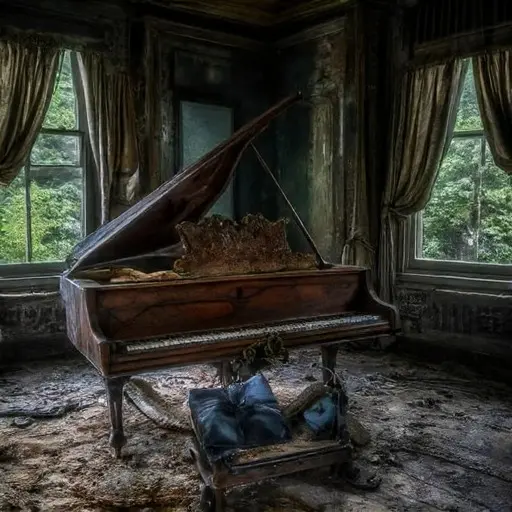
Oakhaven Manor, standing on the edge of the defunct Mid-West Rail Spur, represents a peculiar historical anomaly: a house built for immense wealth that dissolved from the public eye before its paint had fully dried. Constructed in the early 1870s for Lord Ashworth, a noted Railway Worker and investor in the expanding infrastructure, the property was a masterpiece of contemporary engineering and design. Its historical beauty is now dominated by a quiet unease—the sheer completeness of the house’s interior fittings, juxtaposed with the advanced, uninterrupted decay. Lord Ashworth was known for his obsessive attention to contractual details and record keeping. Yet, all municipal records concerning the property’s final four years of occupancy (1876-1880) are officially listed as ‘destroyed by water damage’ or ‘unfit for archive transfer.’ This comprehensive gap in documentation suggests an intentional administrative maneuver designed to keep a particular truth concealed.
Misplaced Engineering Blueprints
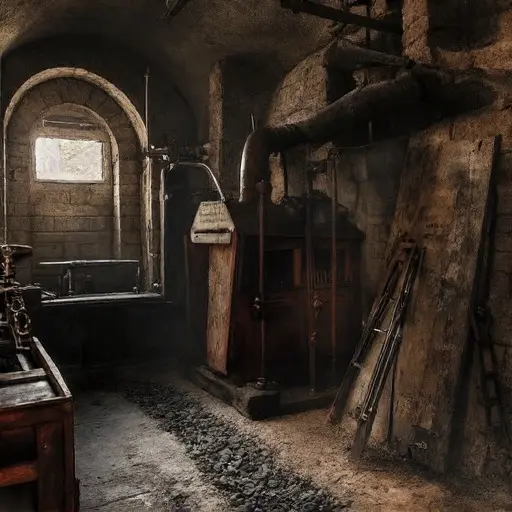
Physical evidence supporting a concealed motive was found not in furniture but in infrastructure. During structural assessments, a hidden compartment beneath the main staircase—designed, ironically, by a civil Engineer rather than a joiner—was uncovered. It contained six volumes of private correspondence and one heavily sealed, wooden cylinder containing technical drawings. The letters, dated 1878, document Lord Ashworth’s increasingly fraught legal battles over the acquisition of land for a crucial railway junction. The key complication, however, lies in the drawings. These detailed blueprints depict a non-standard, deep-set foundation system beneath Oakhaven Manor itself, incorporating a complex, heavy-duty iron girder network far exceeding necessary residential requirements. Furthermore, a detailed shaft is shown descending thirty feet below the main drawing room—a feature entirely absent from all approved construction permits.
The Discontinued Partnership Documents
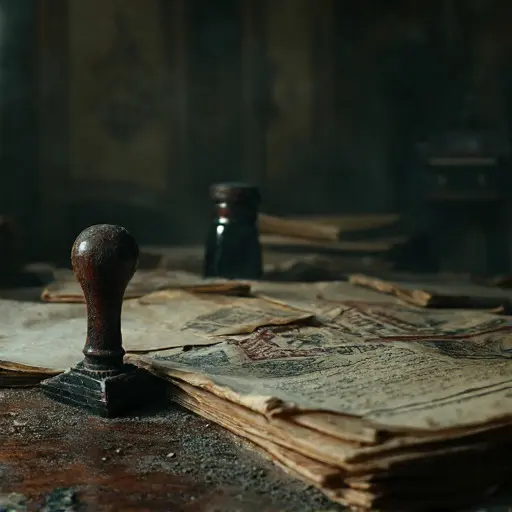
The contradiction between Ashworth’s meticulous nature and the total erasure of his final years’ paperwork is the core of the mystery. The private documents retrieved detail a massive financial commitment to a new technology for laying track through marshy ground—a high-risk venture that, if successful, would have secured him control of a lucrative route. The foundation plans, paired with the discovered professional tools (specialized surveying gear found in the coal chute), strongly suggest that Oakhaven Manor was not merely a house but a clandestine testing site or a secure, unlisted facility built directly into the groundwork. The final, concealed piece of evidence is a faded partnership contract, found tucked inside a detached wall panel, which outlines a partnership between Ashworth and a rival industrialist, abruptly terminated in 1879, exactly one year prior to the property’s abandonment. The partnership’s official reason for dissolution was ‘irreconcilable differences’—a vague, polite epitaph for what archival evidence strongly suggests was a catastrophic and intentional secret project that failed, leaving behind only the shell of a house and unanswered questions about the purpose of its hidden foundations.