Iron Haze: The Vanished Records of the Telegraph Operator
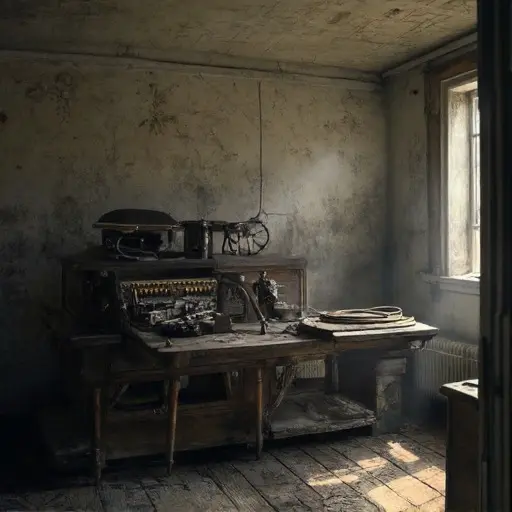
Iron Haze, a manor built atop a hill crucial for line-of-sight communications, was the critical posting for Mr. Elias Thorne, the estate’s dedicated Telegraph Operator from 1860 to 1872. Elias’s role was to be the instantaneous link between the remote estate and the financial and political centers of the country. His professional life was defined by the precise, rhythmic activity of his machine. His small, dedicated office, located in the highest turret for optimal line connection, still contained the tools of his trade. Along one wall, hooks once held message logs, now empty. On a narrow shelf, a rack of heavy, numbered glass battery jars sat idle, their chemical contents long since evaporated. The air in the turret was thin and strangely charged, retaining the Vanished energy of continuous, concentrated communication that was abruptly severed.
The Code Book’s Final Entry
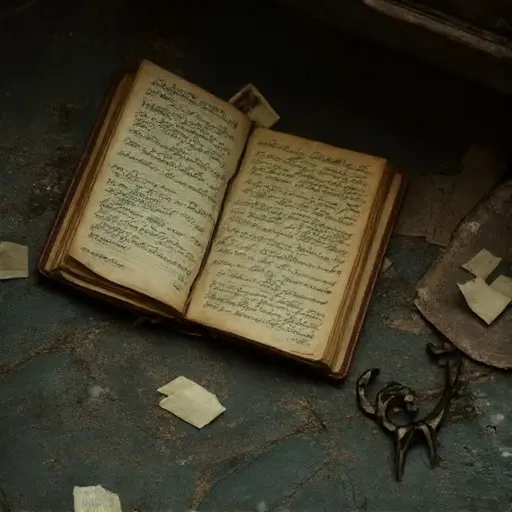
Elias Thorne’s professional log, unlike official records, detailed the sender and receiver of every message that passed through Iron Haze, often noting the tone or perceived urgency. The communications were predominantly financial, managing the manor owner’s complex investment portfolio. However, in the spring of 1872, the logs began to register a distinct shift. The tone of incoming messages grew increasingly frantic, often coded in high-level ciphers Elias rarely used. His private code book, discovered concealed beneath a loose floorboard, confirmed this. The final entry, dated May 1872, showed a frantic, hastily written sequence of numbers and letters, translating to a single, panicked message from a London contact: “Exposure imminent. All records destroyed. You must be Vanished.” Elias never recorded another message after that date. The communication simply ceased.
The Operator’s Private Effects

The final, compelling clue was found inside a hidden cavity beneath the chair’s seat—a space specifically designed for storing private papers. Inside, we found a collection of currency: a small roll of French francs and German marks, all dated to the previous year and tightly bound with a piece of twine. This was a clear indication of planned, international flight. Tucked in amongst the currency was a formal letter of employment for Elias, dated 1860, which required absolute confidentiality regarding all communications. Scrawled across the bottom of the document in red ink, was a single, defiant note, not signed, but clearly written by Elias: “I did not create the theft, but I reported the Vanished wealth.” Elias Thorne, having realized his machine was being used to facilitate a major financial crime, used his own code book to transmit the warning, securing his own escape before the inevitable collapse and subsequent official investigation. He walked out of Iron Haze, leaving his machine and his identity behind, becoming a Vanished footnote in the estate’s troubled financial history.
Would you like me to generate the Next article following the strict guidelines?