Gilt Barrow: The Hollow Practice of the Rural Physician
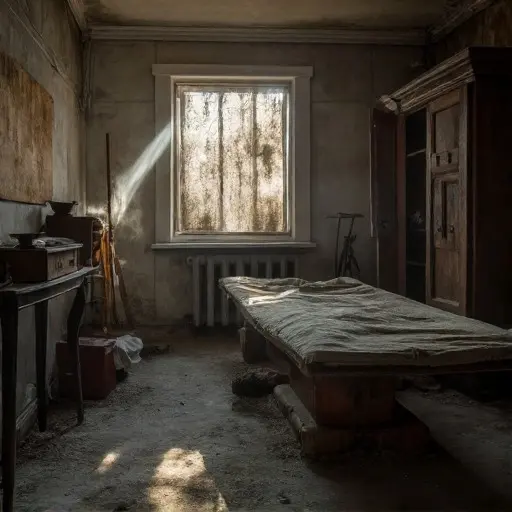
Gilt Barrow, a manor situated far from major towns, relied entirely on the presence of Dr. Edmund Vance, the resident Rural Physician from 1885 to 1901. Edmund’s life was defined by the relentless demands of the remote, scattered community, a duty that required both medical skill and immense self-reliance. His primary office and dispensary, a room adjacent to the main dining hall, still contained the spectral residue of his diligent, Hollow practice. Along one wall, hooks once held his satchel and heavy coat, now empty. On a sturdy, oak desk, a collection of empty glass bottles and flasks sat idle, their chemical labels faded, hinting at the powerful, often crude, medicines he prepared. The pervasive atmosphere was dry and strangely charged, retaining the palpable sense of continuous, focused medical labor that was abruptly ceased, leaving only a Hollow, dusty void.
The Physician’s Patient Ledger

Edmund Vance’s patient ledger, recovered from the iron lockbox, contained a chilling record of his medical practice. While the initial pages meticulously cataloged routine ailments and effective treatments, the later entries, beginning around 1898, shifted dramatically. Edmund began cross-referencing specific, recurring childhood illnesses—coughs, fevers, and developmental delays—with the locations of local textile mills and industrial runoff points. His notes grew increasingly detailed, charting not just the symptoms, but the Hollow cause: systematic environmental poisoning. He theorized that the manor’s primary financial benefactor, a local industrialist, was responsible for the widespread, low-level contamination of the local water supply. The notes culminated in a final entry, dated June 1901: “The cure is not chemical. The cost of naming the Hollow truth is too high. I can write no further prescriptions.”
The Final Deposit
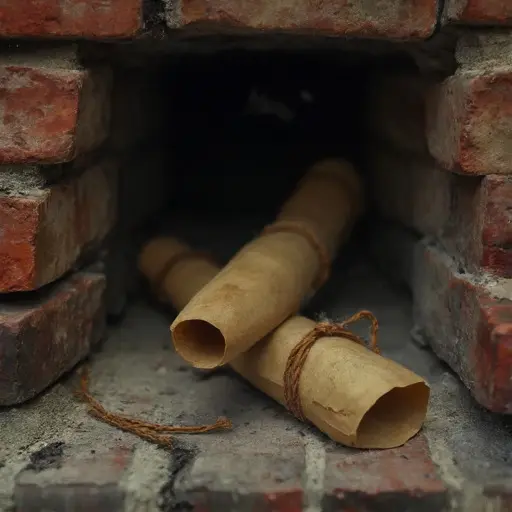
The document, carefully deposited by Dr. Vance within the chimney stack, was the final, definitive piece of evidence. It was not a medical log, but a detailed, hand-drawn map of the local industrial network, meticulously marking the locations of every effluent pipe and runoff sluice, cross-referenced with a list of affected patient addresses. Tucked inside the map was a small, crudely written note, not signed, but clearly written by Edmund: “The medicine is a lie. The sickness is engineered. I leave the Hollow truth here for the living.” Dr. Vance, having used his medical expertise to map the terrifying, Hollow truth of the industrial contamination, secured the evidence of the pollution network and then vanished, becoming himself a Hollow absence, leaving behind only the cold, hard map detailing the manor’s deadly secrets within the Hollow silence of Gilt Barrow.