Whisperwood Manor: The Lost Observations of the Library Curator
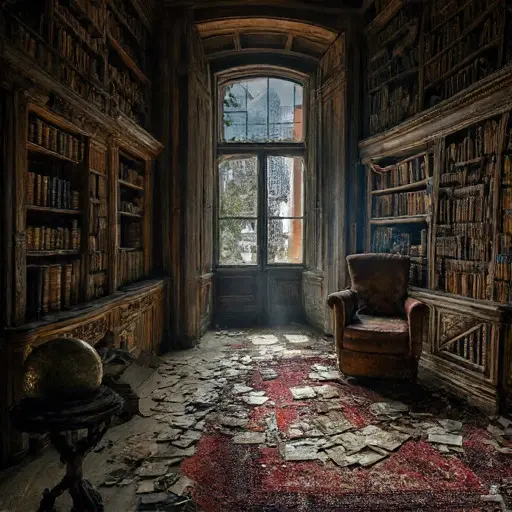
Whisperwood Manor, known for its extensive and esoteric collection of books, was the isolated domain of Mr. Alistair Finchley, the Library Curator from 1880 to 1905. Alistair’s life was dedicated to the preservation and cataloging of knowledge, a solitary existence amidst thousands of bound volumes. His small, internal office, tucked away behind a hidden door within the library, still contained the tools of his precise trade. Along one wall, shelves once held his hand-bound accession ledgers, now empty save for a few brittle, official stamps still affixed to the inside lining. The pervasive smell in the room was that of aged paper and dry leather binding. The most immediate sign of Alistair’s sudden absence was a small, high-backed wooden chair, overturned on the floor, its cushion flattened and covered in mildew, a silent disruption in a room defined by Lost order.
The Curator’s Annotations
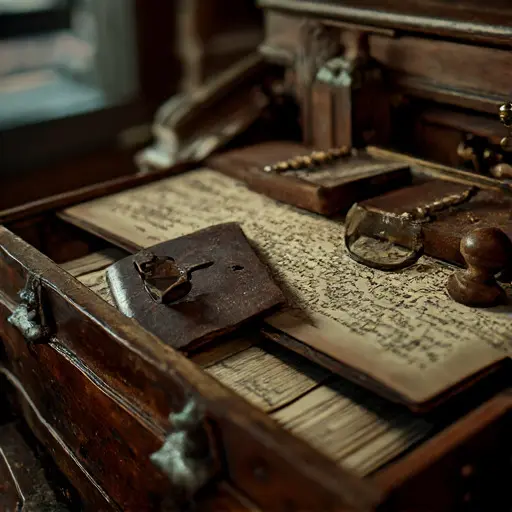
Alistair Finchley’s personal annotations, a collection of small, bound memorandum books recovered from one of the indexing drawers, did not contain official library records, but his private observations and anxieties. These notes detailed repeated difficulties in locating specific, rare volumes from the manor’s collection, particularly those concerning local history and natural sciences. The entries chronicled his escalating anxiety over inconsistencies in the library’s inventory, noting volumes that were recorded as present but physically missing, and others that appeared unexpectedly without accession records. By 1905, the tone was frantic, with notes referencing the possibility of systematic removal of specific texts and the covert replacement of others with facsimiles. The notes culminated in a final entry, dated October 1905: “The collection is compromised. The truth of the manor’s Lost history is being actively erased. I have identified the source, but the risk is too great to remain.”
The Hidden Volume
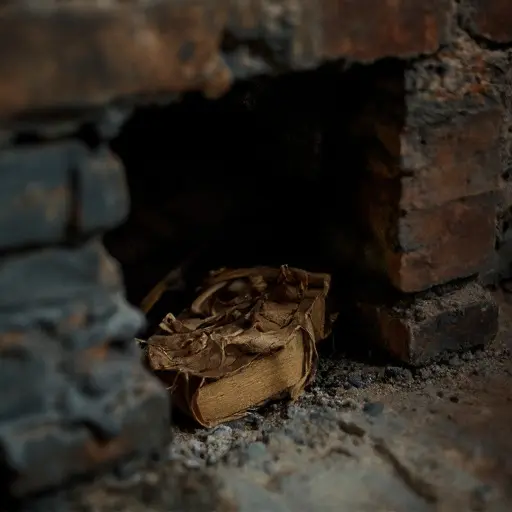
The volume, carefully deposited by Alistair Finchley, was the final, definitive piece of evidence. It was not a grand historical tome, but a small, hand-bound journal written by a previous owner of Whisperwood Manor, detailing the original construction of the house and, more significantly, the discovery of a hidden mineral vein beneath the estate’s foundations in the 18th century, a resource of immense value that had never been publicly declared or extracted. Tucked inside the journal was a small, crudely drawn map indicating a sealed-off mine shaft beneath the old stable house. The journal’s existence explained the systematic removal of books on geology and local history: the family was actively suppressing any knowledge of their Lost subterranean wealth. Alistair Finchley, having uncovered the true, Lost secret of Whisperwood Manor, did not expose it within the manor itself. Instead, he hid the evidence, securing the truth for later discovery, and then vanished, becoming himself a Lost individual, leaving behind only the evidence of the manor’s genuine, Lost fortune within the cold walls of the library.
Would you like me to generate the Next article following the strict guidelines?